



| HEADLINE |

|
Exporters pin hopes on poll stability to reignite garment-led growth
Published : Thursday, 12 February, 2026 at 12:00 AM
Business Correspondent


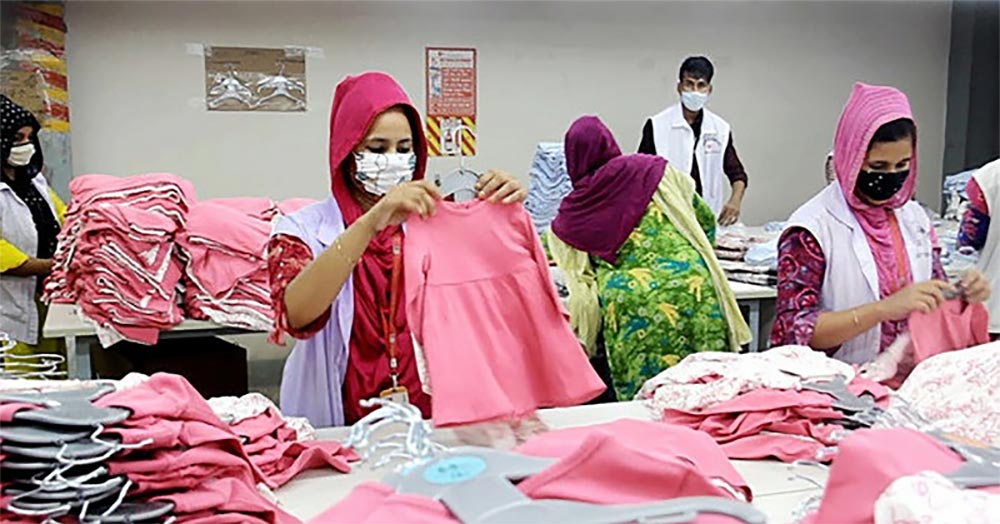 Millions of garment workers and factory owners headed to the polls today, with exporters banking on a peaceful election to restore stability and revive momentum in Bangladesh's crucial garment-led export engine after months of uncertainty.
The country's export sector finds itself at a delicate juncture. New US tariff measures, subdued buyer response and production disruptions linked to political unrest since the July 2024 movement have weighed heavily on business confidence. Industry leaders say the election outcome could prove pivotal in reversing the slowdown and reassuring international partners.
Over the past six months, export performance - particularly in the readymade garment (RMG) sector - has come under strain. Several factories have reported operating below capacity as sporadic unrest disrupted production schedules and delayed shipments. At the same time, shifting global trade dynamics and cautious purchasing patterns among Western retailers have further tightened margins.
The RMG industry, which generates more than 80 per cent of Bangladesh's export earnings and employs around four million workers, has been especially exposed to these pressures. Business leaders argue that while underlying demand in key markets remains intact, higher tariffs in the United States - Bangladesh's largest single export destination - have eroded price competitiveness at a time when global buyers are negotiating aggressively.
"Reliability is the first thing international buyers look for," said a senior exporter in Dhaka. "If there are concerns about instability or shipment delays, orders can quickly be diverted elsewhere. A credible and peaceful election would send a strong message that Bangladesh is stable and ready for business."
Industry associations stress that exporters are seeking more than short-term calm. They want the incoming administration to articulate a clear economic roadmap, including diplomatic engagement with Washington over tariff structures, streamlined customs procedures, improved port efficiency and supportive financial policies to help manufacturers manage cash-flow pressures.
Competing manufacturing hubs across Asia are actively courting global brands, offering incentives and highlighting political stability as a competitive advantage. Bangladeshi exporters warn that without decisive steps to restore confidence, the country risks losing market share in an increasingly competitive environment.
Domestic challenges are compounding the strain. Rising energy tariffs, wage adjustments and higher logistics costs have pushed up production expenses. Although many leading factories have invested significantly in green technology, workplace safety and compliance upgrades to retain premium buyers, uncertainty over policy direction has complicated long-term planning and investment decisions.
Economists caution that the implications extend well beyond the garment sector. Export earnings are central to Bangladesh's foreign exchange reserves, currency stability and broader macroeconomic balance. A sustained downturn could intensify pressure on reserves, fuel inflationary risks and dampen overall growth prospects.
"There is a direct correlation between political stability and economic confidence," said an economist at a leading private bank. "Buyers, investors and lenders all respond to signals of predictability. A smooth electoral process could help unlock deferred orders and restore momentum in the coming quarters."
For workers, the stakes are immediate and personal. Millions depend on steady export growth for job security and wage stability. Trade union representatives say that while political debates may dominate headlines, factory floors are focused on continuity of orders and uninterrupted production.
As voting continues nationwide, exporters are united in a clear expectation: stability must translate into policy clarity and proactive economic diplomacy.
Once the ballots are counted, they hope the new government will prioritise restoring buyer confidence, addressing trade barriers and accelerating reforms to strengthen competitiveness.
For a sector that has transformed Bangladesh into one of the world's leading apparel exporters, today's election represents more than a political milestone.
Exporters see it as a defining moment to steady the ship, rebuild trust with global partners and reignite garment-led growth in an increasingly demanding global marketplace.
Loading...
Loading...
Also read



Editor : Iqbal Sobhan Chowdhury
Published by the Editor on behalf of the Observer Ltd. from Globe Printers, 24/A, New Eskaton Road, Ramna, Dhaka.
Editorial, News and Commercial Offices : Aziz Bhaban (2nd floor), 93, Motijheel C/A, Dhaka-1000.
Phone: PABX- 41053001-06; Advertisement: 41053012; 01793317829, 01550707291, E-mail: [email protected], [email protected] Online: email: [email protected] 41053014; 01550707297 Advertisement: 01550707296
Published by the Editor on behalf of the Observer Ltd. from Globe Printers, 24/A, New Eskaton Road, Ramna, Dhaka.
Editorial, News and Commercial Offices : Aziz Bhaban (2nd floor), 93, Motijheel C/A, Dhaka-1000.
Phone: PABX- 41053001-06; Advertisement: 41053012; 01793317829, 01550707291, E-mail: [email protected], [email protected] Online: email: [email protected] 41053014; 01550707297 Advertisement: 01550707296


