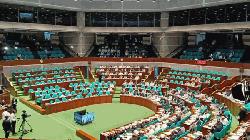
Home Minister Salahuddin Ahmed has stated that the inaugural session of 13th National Parliament is expected to be held in the second week of March, with the election of Speaker and Deputy Speaker topping the agenda.
The minister, who is also a member of the BNP Standing Committee, said on Saturday evening that the first session would likely convene on March 12 or two to three days earlier.
He added that ordinances issued during the interim government period and condolence motions would also be tabled during the session.
Under the constitutional framework, the President is required to summon the first session of a newly elected parliament within 30 days of the gazette notification of election results, acting on the written advice of the Prime Minister.
The parliamentary elections and referendum were held on February 12, with the gazette of winning candidates published the following day. This means the first session must be convened by March 14 at the latest. Newly elected lawmakers were sworn in on Tuesday.
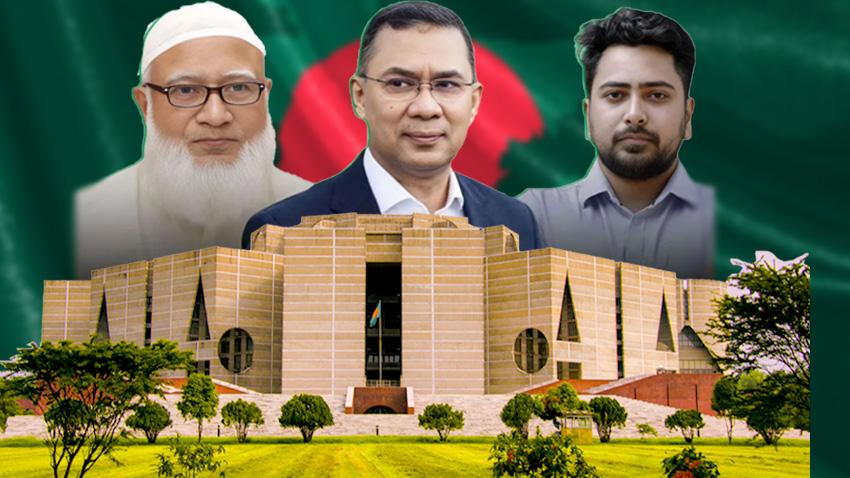
BNP Chairman Tarek Rahman has already been elected leader of the parliamentary party and has assumed the role of Prime Minister, with the new government already functioning. However, the ruling party is yet to finalize its choices for Speaker, Deputy Leader of the House and Chief Whip.
On the opposition side, Jamaat-e-Islami Ameer Shafiqur Rahman has been elected Leader of the Opposition, with Syed Abdullah Mohammad Taher serving as Deputy Leader and Nahid Islam as Opposition Chief Whip.
A key point of discussion ahead of the session is who will preside over the proceedings before a Speaker is elected. Both the Speaker and Deputy Speaker positions from the outgoing 12th Parliament are vacant.
Former Speaker Shirin Sharmin Chowdhury resigned in September 2024 following the July uprising, while former Deputy Speaker Shamsul Haque Tuku was arrested. In the absence of both, Chief Election Commissioner AMM Nasir Uddin administered the oath to the new lawmakers.
According to the Rules of Procedure of Parliament, when both the Speaker and Deputy Speaker positions are vacant, a person nominated by the President may preside over the session and administer oaths until a new Speaker is elected. There is also a precedent from 1973, when ruling and opposition parties agreed to appoint a senior member to chair the proceedings of the first parliament.
A similar approach may be followed this time, with a senior lawmaker presiding over the election of the Speaker and Deputy Speaker before the session proceeds with the formation of the panel of chairpersons, condolence motions and the President's address.
Under the July National Charter adopted after the mass uprising for state reform, the Deputy Speaker is expected to be appointed from the opposition. BNP's election manifesto also includes commitments to institutional reform.
In the February 12 elections, voting was held in 299 of the 300 parliamentary seats. Results for two Chattogram seats remain pending following court orders, while voting in Sherpur-3 was postponed due to the death of a candidate.
Of the 297 declared results, BNP won 209 seats and its allies secured three. Jamaat-e-Islami won 68 seats, while its 11-party alliance partners National Citizens Party secured six, Bangladesh Khelafat Majlish two and Khelafat Majlish one. Islami Andolan won one seat and independent candidates took seven.