



| HEADLINE |

|
'July Charter' implementation a big challenge for JS: Jamaat MP
Published : Saturday, 28 March, 2026 at 12:00 AM
Staff Correspondent


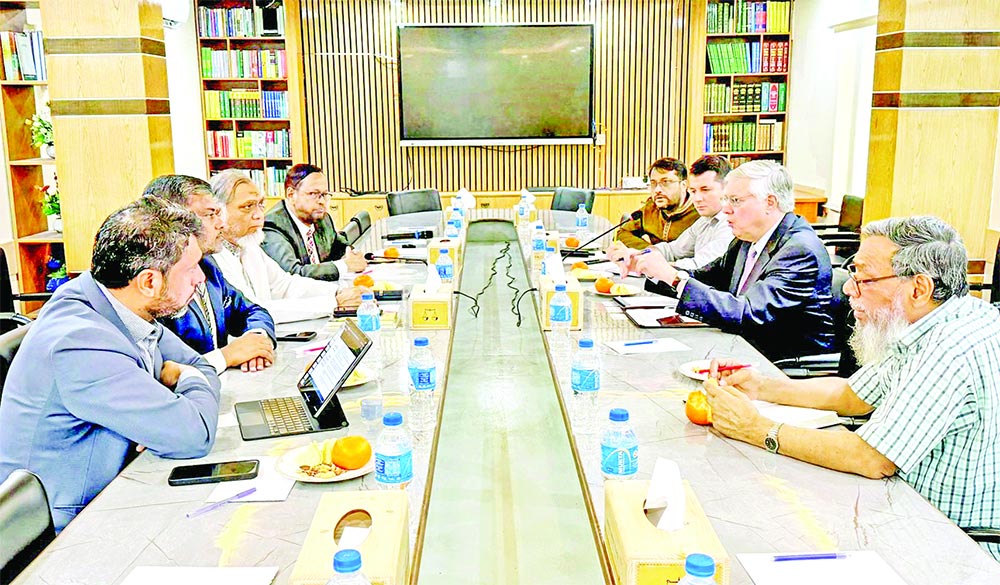 Bangladesh Jamaat-e-Islami MP Saiful Alam Khan Milon has described the implementation of the "July Charter" as the biggest challenge facing the parliament, alleging that the government is not taking the expected steps and is instead moving to repeal the referendum ordinance.
Speaking at a press briefing after a view exchange meeting with the International Foundation for Electoral Systems (IFES) Bangladesh in Dhaka, Milon also expressed frustration over the lack of opposition representation in various parliamentary committees. A Jamaat delegation, led by him, attended the meeting.
He said the 13th Jatiya Sangsad, formed after the July movement, must be made effective and aligned with public expectations, with parliament serving as the central platform for resolving national issues and ensuring equal roles for both the government and the opposition.
After a year of discussions during the interim government's tenure, a national reform charter was finalised and signed on October 17 last year. However, disagreements later emerged among political parties over its implementation.
An order issued on November 13-the day of the 13th parliamentary elections-set a timeline for implementing the charter through a referendum. A separate ordinance was also promulgated to facilitate the process.
Under the plan, a "Yes" vote would lead to the formation of a Constitutional Reform Council comprising elected representatives from the new parliament, empowered to carry out constitutional reforms. Members of parliament were also required to take a separate oath as council members.
In the February 12 referendum, held alongside the elections, the "Yes" vote prevailed. However, complications arose when lawmakers of the Bangladesh Nationalist Party (BNP), who secured a two-thirds majority, took oath only as MPs on February 17 and declined to be sworn in as council members.
Loading...
Loading...
Also read



Editor : Iqbal Sobhan Chowdhury
Published by the Editor on behalf of the Observer Ltd. from Globe Printers, 24/A, New Eskaton Road, Ramna, Dhaka.
Editorial, News and Commercial Offices : Aziz Bhaban (2nd floor), 93, Motijheel C/A, Dhaka-1000.
Phone: PABX- 41053001-06; Advertisement: 41053012; 01793317829, 01550707291, E-mail: [email protected], [email protected] Online: email: [email protected] 41053014; 01550707297 Advertisement: 01550707296
Published by the Editor on behalf of the Observer Ltd. from Globe Printers, 24/A, New Eskaton Road, Ramna, Dhaka.
Editorial, News and Commercial Offices : Aziz Bhaban (2nd floor), 93, Motijheel C/A, Dhaka-1000.
Phone: PABX- 41053001-06; Advertisement: 41053012; 01793317829, 01550707291, E-mail: [email protected], [email protected] Online: email: [email protected] 41053014; 01550707297 Advertisement: 01550707296


