A red alert has begun flashing across Bangladesh's remittance frontier as an unprecedented global crackdown on irregular migration collides with shrinking labour demand abroad, threatening the foreign currency artery that keeps the nation's economy alive.
From the United States to the United Kingdom, from Italy and Greece to Saudi Arabia and the Gulf, host nations are tightening immigration laws, accelerating deportations and slamming doors on undocumented or low-skilled foreign workers.
For Bangladesh - a country whose migrant workers sent home more than $30 billion in remittances in FY2024-25 - the implications are grave.
Economists warn that if remittance inflows fall even 20 per cent under sustained deportation and labour-market contraction, Bangladesh could face an acute foreign exchange squeeze, severe import stress and a devastating income shock across rural households that survive on what is locally known as the "migrant dollar".
The warning signs are no longer abstract.
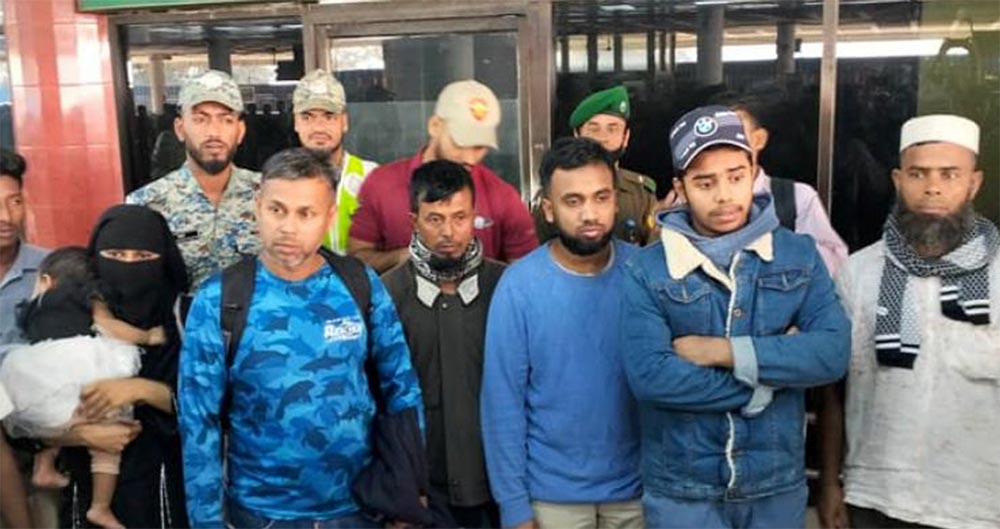
At Hazrat Shahjalal International Airport, the arrival lounges are increasingly witnessing the silent procession of shattered dreams - handcuffed and exhausted deportees stepping off chartered repatriation flights after failed attempts to settle abroad.
The United States has emerged as one of the most aggressive enforcers. On 28 February this year, Washington deported another 29 Bangladeshis on a special chartered flight, taking the total number of Bangladeshi nationals repatriated from the US since the beginning of 2025 to 322. Earlier batches included 36 returnees in January, 39 in November and several others through special military flights.
Most had travelled legally to Brazil or South Africa before risking the notorious "donkey route" through Mexico, spending between Tk 40 lakh and Tk 70 lakh borrowed from land sales, jewellery mortgages and local moneylenders. After months in detention and rejected asylum pleas, many were flown back in shackles.
The European front is turning equally hostile.
Official European asylum data show that 96 per cent of Bangladeshi asylum claims are now being rejected, with approval rates collapsing to near-zero in several countries under the bloc's emerging hardline returns regime. Between January 2024 and June 2025 alone, 57,550 Bangladeshis filed first-time asylum applications in Europe, but the overwhelming majority now face removal proceedings.
Italy, Greece, Cyprus and France - once seen as fallback destinations for undocumented Bangladeshi workers - have sharply increased processing and deportation drives. Thousands who crossed the Mediterranean in flimsy boats are now trapped in detention centres awaiting forced repatriation.
The United Kingdom, too, has activated a fast-track return mechanism after signing deportation Standard Operating Procedures with Dhaka, enabling swift removal of failed asylum seekers, visa overstayers and those with exhausted legal appeals.
Yet the bigger strategic danger lies in the Middle East, historically Bangladesh's remittance fortress.
Saudi Arabia, the UAE, Oman and Bahrain have all tightened labour permit regimes while intensifying "nationalisation" policies to reserve jobs for their own citizens. Saudi Arabia alone repatriated tens of thousands of irregular Bangladeshi workers over permit and iqama violations in the last year, while several Gulf destinations have imposed near-freeze conditions on fresh low-skilled recruitment.
This means Bangladesh is being hit from both ends: the West is expelling undocumented migrants, while the Gulf is curbing future manpower absorption.
Migration specialists say this double squeeze could rupture the country's external sector stability.
"Bangladesh's reserve comfort now depends heavily on uninterrupted remittance recycling. If destination markets begin ejecting workers faster than we can legally send them, the balance-of-payments pressure will return with force," said a senior migration economist, requesting anonymity.
The social consequences are already surfacing in Sylhet, Noakhali, Cumilla, Chattogram and parts of Madaripur - districts where remittance-built houses stand as monuments to overseas toil.
Now many of those homes are turning into debt traps.
Families that borrowed Tk 10 lakh to Tk 70 lakh to finance illegal passage are suddenly left with no foreign earner, no land, no savings and a deported son branded as a failure. Reintegration workers say returnees often face "social death" - humiliation, suspicion and complete exclusion from village credit networks.
Community frustration is also becoming visible.
The growing public sentiment reflects a deeper policy anxiety: Bangladesh has spent decades celebrating manpower export numbers, but has paid far less attention to migrant legality, skill certification, destination diversification and post-return rehabilitation.
Officials at the Ministry of Expatriates' Welfare admit privately that the era of easy irregular migration is effectively over as host countries deploy biometric surveillance, digital border intelligence and zero-tolerance asylum filters.
That leaves Bangladesh confronting an uncomfortable truth: its $30 billion remittance engine, long treated as an inexhaustible economic cushion, is entering its most vulnerable phase in decades.
If Dhaka fails to rapidly pivot toward high-skilled legal migration, tougher broker regulation and diplomatic labour-market repair, today's deportation flights may soon translate into tomorrow's dollar drought - with consequences far beyond airport arrival gates.





