



| HEADLINE |

|
Southeast Asian leaders seek strategy to ease impacts of Iran war
Published : Saturday, 9 May, 2026 at 12:00 AM


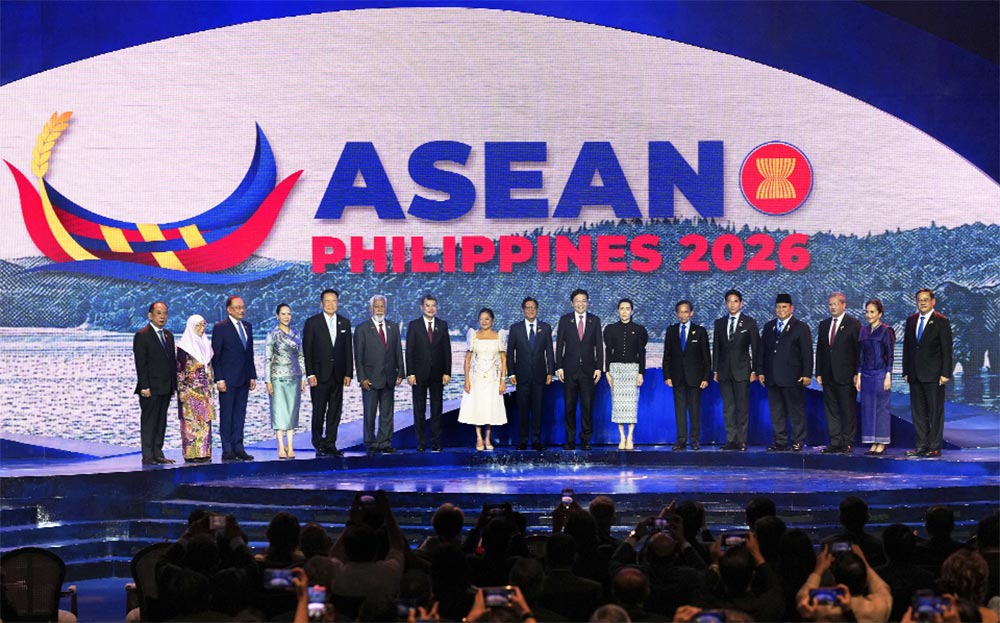 CEBU, May 8: Southeast Asian leaders were united on Friday in calling for a regional fuel-sharing framework to be ratified quickly, as their summit ended without a plan for a more immediate response to the impacts of the Middle East crisis.
Leaders meeting on the Philippine island of Cebu stressed the urgency of a joint approach beyond the oil-sharing pact for the region that depends heavily on oil imports, making it particularly exposed to the unprecedented energy supply disruption caused by the effective closure of the Strait of Hormuz.
Chair of the Association of Southeast Asian Nations, Philippine President Ferdinand Marcos Jr, expressed optimism that the members' ratification of the voluntary, commercial-based framework would be completed as soon as possible, but said the mechanics needed to be worked out.
"We're trying to examine everything we can do," he told a press conference when asked about frustrations that the plan could not be implemented immediately.
"How is the sharing? Who gets what? How do you pay for it? Do you pay for it? Is it an exchange? ... We haven't done it before," he said.
"And what do we do about the others who are also in need? Who comes first? Those are the questions that still need to be decided."
As efforts continue to try to end the Middle Eastern conflict, the leaders are expected to issue a statement calling for a negotiated settlement between the United States and Iran.
It will also urge a reopening of the Strait of Hormuz, a conduit for about 130 vessels a day and a fifth of the world's oil and gas supplies before the conflict.
ASEAN, with a population of nearly 700 million people and economies worth a combined $3.8 trillion, faces significant risks from the war, and the Philippines - among the first countries in the world to declare an energy emergency - has pushed for the ASEAN oil framework to be introduced more swiftly.
But coordination is a challenge for ASEAN. Despite rapid growth of its individual economies, integration has been slow, with vast differences between its 11 members and no central authority to ensure compliance with ASEAN agreements and initiatives.
Economic ministers on Thursday "identified practical, concrete response measures" to ensure energy and food security, such as diversifying suppliers and routes, but the proposals lacked specific details and it was unclear what, if any, action might be taken. �"REUTERS
Loading...
Loading...
Also read



Editor : Iqbal Sobhan Chowdhury
Published by the Editor on behalf of the Observer Ltd. from Globe Printers, 24/A, New Eskaton Road, Ramna, Dhaka.
Editorial, News and Commercial Offices : Aziz Bhaban (2nd floor), 93, Motijheel C/A, Dhaka-1000.
Phone: PABX- 41053001-06; Advertisement: 41053012; 01793317829, 01550707291, E-mail: [email protected], [email protected] Online: email: [email protected] 41053014; 01550707297 Advertisement: 01550707296
Published by the Editor on behalf of the Observer Ltd. from Globe Printers, 24/A, New Eskaton Road, Ramna, Dhaka.
Editorial, News and Commercial Offices : Aziz Bhaban (2nd floor), 93, Motijheel C/A, Dhaka-1000.
Phone: PABX- 41053001-06; Advertisement: 41053012; 01793317829, 01550707291, E-mail: [email protected], [email protected] Online: email: [email protected] 41053014; 01550707297 Advertisement: 01550707296


