



| HEADLINE |

|

Beyond Peacekeeping: How Bangladesh Army’s UN Missions Contribute to National Economy, Soft Power, and Strategic Diplomacy
Published : Sunday, 10 May, 2026 at 12:00 AM
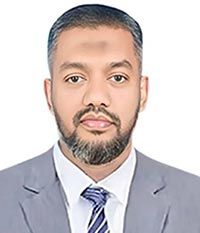
Lt Col Shah Mostofa Hadiul Islam, psc


 Bangladesh is currently one of the world's leading troop contributors to UN peacekeeping missions. As of January 2025, Bangladesh is the world's third largest peacekeeping force with 5,689 troops. As an emerging power in South Asia, Bangladesh plays an important role in global security, alongside Nepal and Rwanda. This military participation has opened up new horizons for Bangladesh in three main areas: economic benefits, international recognition, and the development of strategic diplomatic relations. This strong commitment to Bangladesh's peacekeeping efforts is primarily rooted in the memories of the horrific experiences, genocide, and humanitarian catastrophes of the Great War of Independence in 1971. This unwavering commitment to peace and solidarity is also clearly reflected in Article 25 of the Constitution of Bangladesh, which further consolidates Bangladesh's position in the advancement of world peace and security.
Historical Context & Evolution: Bangladesh's peacekeeping journey began in 1988 with the deployment of just 15 military observers to the Iran-Iraq War (UNIIMOG). Over the past 36 years, this program has evolved greatly and Bangladesh has now become a leading peacekeeping country in the world. This journey can be divided into three main phases. In the first phase (1988-1998), Bangladesh proved its capabilities in the international arena by participating in 11 major missions including Rwanda, Somalia and Haiti. The deployment of a full battalion of 1,002 soldiers to Cambodia (UNTAC) in 1993 was a milestone for Bangladesh. In the second phase (1998-2008), Bangladesh's efficiency and rapid deployment capability (LSRD) in Sierra Leone won global acclaim. In the third phase (2008-present), Bangladesh is successfully operating in highly risky and complex environments such as Mali, South Sudan and the Central African Republic. Between 1988 and 2024, Bangladesh has participated in 63 missions in 43 countries and set a unique precedent in maintaining world peace by sending nearly 200,000 troops.
Economic Contributions: Participation in UN peacekeeping missions has a strong impact on Bangladesh's national economy, both directly and indirectly. Currently, the UN pays $1,428 per month for each peacekeeper, a 7% increase from 2024. The 5,619 soldiers currently deployed generate direct revenue of about $96 to $127 million annually. Over the past 20 years (2000-2023), Bangladesh has earned a total of Tk 27,941 crore (about $3.35 billion) in remittances from this sector.
“Bangladesh Army's participation in UN peacekeeping missions has a strong impact on Bangladesh's national economy, both directly and indirectly. Currently, the UN pays $1,428 per month for each peacekeeper, a 7% increase from 2024. The 5,619 soldiers currently deployed generate direct revenue of about $96 to $127 million annually.”
At the individual level, an ordinary soldier can earn 5 to 7 times more in peacekeeping missions than what he or she earns at home. The monthly income of a soldier increases from Tk 8,000-15,000 to $780-1,365 during the mission. This additional income is spent on investment in the rural economy, education, and housing, which has increased the poverty alleviation rate of military families by 35% compared to the national average. As an institution, the Bangladesh Army is using this fund to modernize its forces by purchasing modern fighter jets, helicopters, and high-tech equipment. In addition, Bangladesh Bank provides a 2.5% cash incentive on remittances sent by peacekeepers, which is playing a helpful role in strengthening foreign exchange reserves. Overall, the income earned through this mission is contributing to a 0.5% increase in Bangladesh's gross domestic product (GDP), while the government expenditure rate behind it is only 0.02-0.03%.
Macroeconomic Multipliers: Income earned from peacekeeping missions not only increases foreign exchange reserves, but also creates a strong 'multiplier effect' on the rural and national economies. Soldiers returning from missions spend about 60-70% of their earnings at the local level, which directly boosts local sectors such as food, transport and construction. This money is used by families to invest in education, improved housing and small businesses, which are creating opportunities for skilled training and entrepreneurship in rural areas.
According to statistics, this steady flow of peacekeeping remittances has resulted in a poverty alleviation rate for military families that is 35% higher than the national average. In addition, through these missions, Bangladesh has contributed to the construction of schools, clinics and agricultural infrastructure in various countries, including Africa. The advanced technical knowledge and specialized training that soldiers bring with them when they return from abroad are later exchanged with ordinary citizens of the country, which plays a role in human resource development in the long term. This process achieved 0.5% growth in Bangladesh's GDP, which is a huge achievement against very little government investment.
Soft Power & Humanitarian: According to Joseph Nye, Bangladesh has created a unique example of 'soft power' in the international arena through its cultural heritage and humanitarian principles. The world media currently calls Bangladeshi peacekeepers "the best alternative to UN peacekeeping". Due to the heroism and professionalism of Bangladeshi forces in Rwanda and Sierra Leone, Sierra Leone declared Bengali as one of its official languages in 2002, which is a unique example of cultural diplomacy.
Bangladeshis' contribution to humanitarian work is immense. In South Sudan, Bangladeshi engineers have distributed school equipment and provided medical care to hundreds of people at the Kujok State Hospital. Doctors deployed in Mali provide health check-ups, hygiene education and agricultural projects to an average of 180 patients every day. These "Hearts and Minds" initiatives have created a positive and responsible image of Bangladesh among the local population. Bangladesh's current 11% female peacekeeper participation and "zero tolerance" policy against sexual harassment are internationally acclaimed. Between 2021 and 2024, 35 Bangladeshi peacekeepers were awarded the prestigious UN 'Dag Hammarskjöld Medal' for their supreme sacrifice, which proves Bangladesh's institutional commitment.
Strategic Diplomacy: Peacekeeping missions have established the motto of Bangladesh's foreign policy of "friendship with all" in the world. It is not just a military deployment, but a powerful tool for developing bilateral relations with African and Middle Eastern countries. Participation in more than 40 missions in Africa has opened new doors for Bangladeshi business and trade in countries like Senegal, Ivory Coast and South Sudan. Bangladesh's agricultural and social development partnership with South Sudan and the political declaration of joint peacekeeping deployment with Gambia are major successes of strategic diplomacy.
In addition, joint investment and trade agreements worth about $1.33 billion with South Africa have further strengthened Bangladesh's economic diplomacy. At the multilateral level, Bangladesh has been able to establish itself as a strong candidate for a non-permanent seat on the United Nations Security Council (UNSC). Bangladesh's leadership in international organizations like the G-77 and the OIC and as a member of NAM have made it possible to maintain an independent foreign policy free from the influence of major powers. This strategic location has established Bangladesh not only as a troop-contributing country, but also as an important partner in world peace and global decision-making.
Challenges & Limitations: Although Bangladesh's success in UN peacekeeping missions has been incredible, several challenges and limitations have become apparent. First, the risk to the lives of peacekeepers has increased manifold due to the increase in the use of 'asymmetric threats' and IEDs or improvised explosive devices in modern battlefields. According to information, 172 Bangladeshi peacekeepers have lost their lives in the line of duty so far. Second, there is a major deficiency in the modernization and maintenance of military equipment deployed in the mission. The lack of its own helicopters and advanced equipment often hinders effectiveness.
Third, international politics and the reduction in the UN budget are reducing the financial allocation for the peacekeeping sector. Fourth, there is intense competition with neighboring countries like Nepal and Rwanda in supplying troops. Finally, the issue of mental health of peacekeepers has emerged as a major challenge. Many are suffering from problems like 'post-traumatic stress disorder' or PTSD as a result of being away from their families for long periods of time in a hostile environment, for which there is a lack of adequate psychological support.
Comparative Analysis: Bangladesh's position in maintaining international peace is quite unique compared to other major troop-contributing countries (such as India, Pakistan, Nepal and Rwanda). According to the document, Bangladesh is the world's third largest peacekeeping country as of January 2025. While India's military policy is mainly based on regional and strategic dominance, Bangladesh's goals are mainly humanitarian and developmental. Where major powers often prioritize political interests, Bangladesh has gained greater acceptance by the UN and local populations as a neutral mediator.
Bangladesh has been much more successful in using 'soft power' than other countries in South Asia. For example, the status of the Bengali language in Sierra Leone is a unique achievement, which has not been seen in India or Pakistan. In addition, Bangladesh is playing a leading role in maintaining gender equality. Currently, the participation of women in Bangladesh's peacekeeping forces is 11%, which is in line with international goals and significant compared to neighboring countries. Economically, Bangladesh is using its peacekeeping income directly for the modernization of the military (2.2-3.2% of the budget), which is considered a model among small countries. Essentially, the strategy of "winning hearts and minds" that Bangladesh uses distinguishes the country from other 'military-dependent' countries and establishes it as a trusted partner to the United Nations.
Conclusion & Recommendations: In conclusion, the UN peacekeeping mission is not just a military operation for Bangladesh, but an integral part of the national economy and global diplomacy. It has contributed to the country's GDP and has also created a positive and responsible image of Bangladesh around the world. However, some specific steps are needed to sustain this success in the long term.
As a recommendation, the use of modern mine-resistant vehicles (MRAP) and advanced drone technology should be increased for the protection of peacekeepers. For economic sustainability, it has been suggested that at least 30% of the peacekeeping welfare fund should be spent directly on the welfare of soldiers in the field. In addition, it is necessary to increase the rate of female peacekeepers to 15% by 2028, as per international standards. As a long-term strategy, more Bangladeshi officials should be included in the high-level policy-making level (Force Commander/Strategic Policy) of the UN Headquarters, rather than just providing troops. Only through this concerted effort will Bangladesh be able to maintain its "brand image" and leading position in peacekeeping in the changing global context of the 21st century.
The writer is an Army Officer
Loading...
Loading...
Also read



Editor : Iqbal Sobhan Chowdhury
Published by the Editor on behalf of the Observer Ltd. from Globe Printers, 24/A, New Eskaton Road, Ramna, Dhaka.
Editorial, News and Commercial Offices : Aziz Bhaban (2nd floor), 93, Motijheel C/A, Dhaka-1000.
Phone: PABX- 41053001-06; Advertisement: 41053012; 01793317829, 01550707291, E-mail: [email protected], [email protected] Online: email: [email protected] 41053014; 01550707297 Advertisement: 01550707296
Published by the Editor on behalf of the Observer Ltd. from Globe Printers, 24/A, New Eskaton Road, Ramna, Dhaka.
Editorial, News and Commercial Offices : Aziz Bhaban (2nd floor), 93, Motijheel C/A, Dhaka-1000.
Phone: PABX- 41053001-06; Advertisement: 41053012; 01793317829, 01550707291, E-mail: [email protected], [email protected] Online: email: [email protected] 41053014; 01550707297 Advertisement: 01550707296


