



| HEADLINE |

|
Energy shortages biggest deterrent to investment in Bangladesh: BIDA Chairman
Published : Monday, 11 May, 2026 at 11:04 PM
Observer Online Report


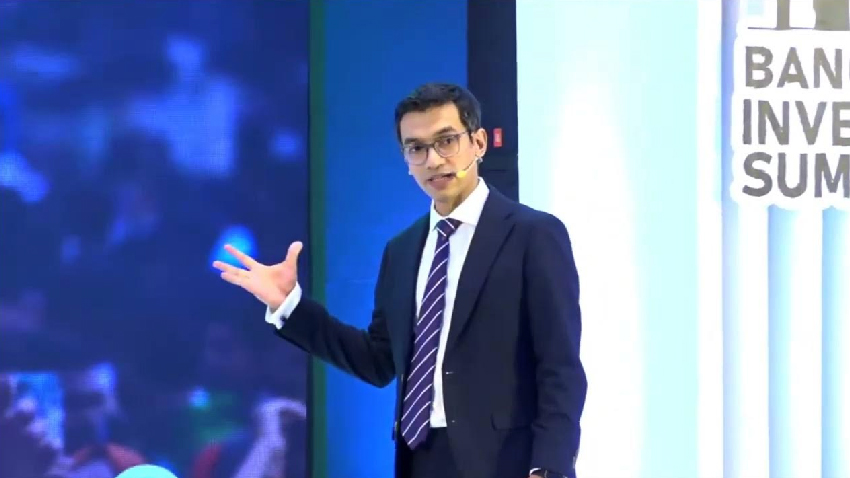
Bangladesh’s persistent energy crisis remains the most significant barrier to attracting investment, according to Chowdhury Ashik Mahmud Bin Harun, Executive Chairman of the Bangladesh Investment Development Authority.
Speaking at a policy roundtable in Dhaka on Monday, Ashik cautioned that without a dependable supply of electricity and gas, efforts to promote Bangladesh as an investment destination will struggle to gain credibility among both domestic and foreign investors.
“Unless the energy issue is resolved, it will be extremely difficult to convince investors to place their confidence in Bangladesh,” he said, stressing that reliable power is fundamental to industrial growth.
The discussion, titled Trade Policy, Industrial Protection, Investment Impacts, and Consumer Welfare, was organised by the Policy Research Institute’s Center for Trade Policy and Protection Research with support from the UK’s Foreign, Commonwealth and Development Office. The event was held at PRI’s office in Banani.
Ashik argued that Bangladesh’s investment bottleneck lies less in policy formulation and more in weak implementation. He pointed to recurring delays in clearing raw materials at Chattogram Port as an example of systemic inefficiencies. Although regulatory frameworks exist, he said, enforcement often falls short, undermining business confidence.
He also noted a shift in the government’s economic focus from pursuing headline GDP growth to fostering sustainable, employment-led expansion. As part of this effort, BIDA is working to consolidate and streamline investment promotion bodies to simplify procedures and reduce bureaucratic hurdles.
According to Ashik, investment agencies have submitted 46 reform proposals to the National Board of Revenue, including 19 focused on deregulation. Among the recommendations is the creation of a structured VAT slab system aimed at encouraging local value addition and reducing uncertainty in tax policy.
Responding to criticism that BIDA prioritises foreign investors, Ashik said the agency advocates for all investors within the government. While foreign direct investment contributes technology transfer and operational efficiency, he emphasised that domestic investment continues to form the backbone of the economy.
In his keynote remarks, PRI Chairman Dr Zaidi Sattar highlighted structural weaknesses in Bangladesh’s trade policy. He said high tariff protections have long shielded domestic industries at significant cost to consumers. Bangladesh’s average tariff rate stands at 28 percent, compared with a global average of 6 percent and 7.2 percent for lower-middle-income countries. When additional para-tariffs are included, the nominal protection rate rises to 27.9 percent in fiscal year 2026.
Such protection, he argued, makes selling in the domestic market more profitable than exporting, creating a systemic bias against export diversification.
The roundtable was chaired by Dr Sattar and featured contributions from Consumer Association of Bangladesh President AHM Shafiquzzaman, former National Board of Revenue member Md Farid Uddin, Dhaka Chamber of Commerce and Industry President Taskeen Ahmed, and Policy Exchange Bangladesh Chairman and CEO M Masrur Reaz.
Speaking at a policy roundtable in Dhaka on Monday, Ashik cautioned that without a dependable supply of electricity and gas, efforts to promote Bangladesh as an investment destination will struggle to gain credibility among both domestic and foreign investors.
“Unless the energy issue is resolved, it will be extremely difficult to convince investors to place their confidence in Bangladesh,” he said, stressing that reliable power is fundamental to industrial growth.
The discussion, titled Trade Policy, Industrial Protection, Investment Impacts, and Consumer Welfare, was organised by the Policy Research Institute’s Center for Trade Policy and Protection Research with support from the UK’s Foreign, Commonwealth and Development Office. The event was held at PRI’s office in Banani.
Ashik argued that Bangladesh’s investment bottleneck lies less in policy formulation and more in weak implementation. He pointed to recurring delays in clearing raw materials at Chattogram Port as an example of systemic inefficiencies. Although regulatory frameworks exist, he said, enforcement often falls short, undermining business confidence.
He also noted a shift in the government’s economic focus from pursuing headline GDP growth to fostering sustainable, employment-led expansion. As part of this effort, BIDA is working to consolidate and streamline investment promotion bodies to simplify procedures and reduce bureaucratic hurdles.
According to Ashik, investment agencies have submitted 46 reform proposals to the National Board of Revenue, including 19 focused on deregulation. Among the recommendations is the creation of a structured VAT slab system aimed at encouraging local value addition and reducing uncertainty in tax policy.
Responding to criticism that BIDA prioritises foreign investors, Ashik said the agency advocates for all investors within the government. While foreign direct investment contributes technology transfer and operational efficiency, he emphasised that domestic investment continues to form the backbone of the economy.
In his keynote remarks, PRI Chairman Dr Zaidi Sattar highlighted structural weaknesses in Bangladesh’s trade policy. He said high tariff protections have long shielded domestic industries at significant cost to consumers. Bangladesh’s average tariff rate stands at 28 percent, compared with a global average of 6 percent and 7.2 percent for lower-middle-income countries. When additional para-tariffs are included, the nominal protection rate rises to 27.9 percent in fiscal year 2026.
Such protection, he argued, makes selling in the domestic market more profitable than exporting, creating a systemic bias against export diversification.
The roundtable was chaired by Dr Sattar and featured contributions from Consumer Association of Bangladesh President AHM Shafiquzzaman, former National Board of Revenue member Md Farid Uddin, Dhaka Chamber of Commerce and Industry President Taskeen Ahmed, and Policy Exchange Bangladesh Chairman and CEO M Masrur Reaz.
Loading...
Loading...
Also read





Editor : Iqbal Sobhan Chowdhury
Published by the Editor on behalf of the Observer Ltd. from Globe Printers, 24/A, New Eskaton Road, Ramna, Dhaka.
Editorial, News and Commercial Offices : Aziz Bhaban (2nd floor), 93, Motijheel C/A, Dhaka-1000.
Phone: PABX- 41053001-06; Advertisement: 41053012; 01793317829, 01550707291, E-mail: [email protected], [email protected] Online: email: [email protected] 41053014; 01550707297 Advertisement: 01550707296
Published by the Editor on behalf of the Observer Ltd. from Globe Printers, 24/A, New Eskaton Road, Ramna, Dhaka.
Editorial, News and Commercial Offices : Aziz Bhaban (2nd floor), 93, Motijheel C/A, Dhaka-1000.
Phone: PABX- 41053001-06; Advertisement: 41053012; 01793317829, 01550707291, E-mail: [email protected], [email protected] Online: email: [email protected] 41053014; 01550707297 Advertisement: 01550707296


