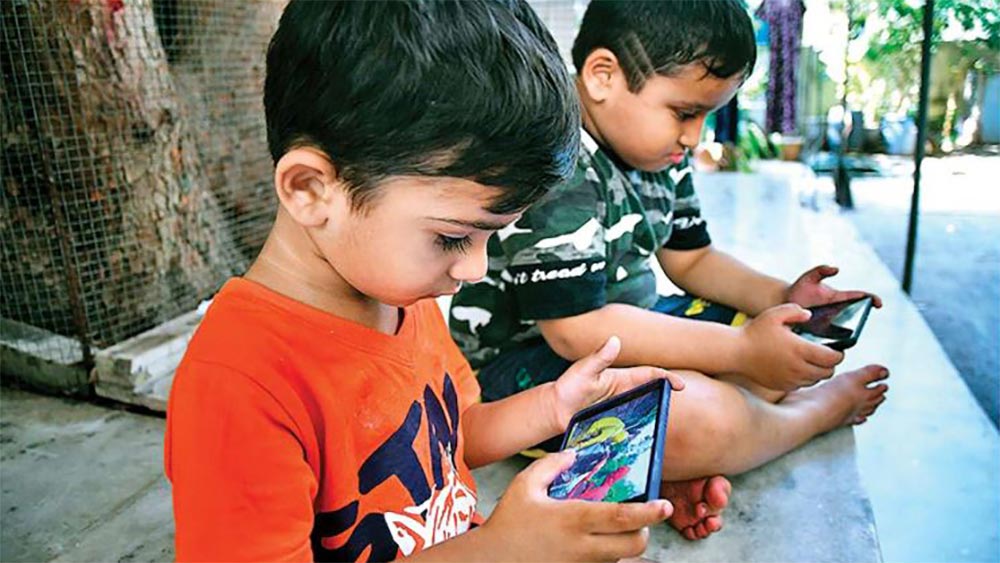
A study by the International Centre for Diarrhoeal Disease Research, Bangladesh (icddr,b) has found that excessive screen exposure among children in Dhaka is contributing to sleep disruption, physical health complications and rising mental health concerns.
The findings were published in the Journal of Medical Internet Research (JMIR) Human Factors, based on a study conducted between 2022 and 2024 on 420 children aged 6 to 14 years from six schools in Dhaka, including three Bengali medium and three English medium institutions.
The study found that 83 per cent of children use screens for more than two hours daily, exceeding the recommended limit for recreational screen use. On average, children spend 4.6 hours a day on smartphones, televisions, tablets, computers and gaming devices.
It also found that more than one third of children suffer from eye related problems, while 80 per cent report frequent headaches. Children using screens for over two hours sleep only 7.3 hours on average, below the recommended 8 to 10 hours for their age group. Around 14 percent were found to be overweight or obese, with higher rates among heavy screen users.
Health experts warned that chronic sleep deprivation in childhood can affect memory, attention, learning ability, emotional regulation and physical development.
The study further revealed that nearly two in five children show signs of mental health issues, including anxiety, hyperactivity and behavioural problems. Researchers noted that excessive screen use, particularly at night, disrupts sleep cycles by overstimulating the brain, while prolonged sedentary behaviour reduces physical activity and increases obesity risks. Reduced face to face interaction was also linked to poorer emotional and social development.
Lead researcher and icddr,b Assistant Scientist Dr Shahria Hafiz Kakan said parents should not ignore warning signs such as late sleeping, frequent headaches, eye discomfort, irritability, social withdrawal or reduced attention. "These may indicate excessive screen exposure that is already affecting children's physical and mental health," he said. Researchers recommended the "20-20-20" rule for eye care, advising that after every 20 minutes of screen use, children should look at an object 20 feet away for at least 20 seconds.
ICDDR,B Executive Director Dr Tahmid Ahmed said that digital devices are now part of daily life, but limits are necessary for children's wellbeing. Citing World Health Organization guidance, he said recreational screen time for school aged children should be limited to two hours daily. He also urged parents to encourage outdoor activity, adequate sleep, physical exercise and device free family time.
He added that children should be engaged in creative and educational activities such as debates, group study, library use and gardening. Researchers stressed that the solution is not to eliminate technology, but to promote balanced digital habits through awareness among parents, teachers and students, alongside stronger public health interventions.





