



| HEADLINE |

|
Historical importance of Farakka march
Published : Saturday, 16 May, 2026 at 12:00 AM
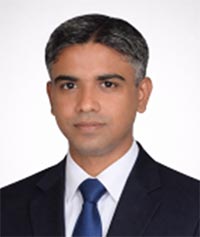
Rasel Ahmed


 Few leaders in Bangladesh's political history possessed the ability to transcend their own time and anticipate the future. Maulana Abdul Hamid Khan Bhashani was one of those rare statesmen who organized and led massive Farakka Long March on this day, March 16, in 1976 to protest against India's unilateral withdrawal of the Ganges water through the construction of the Farakka Barrage, triggering severe ecological damage and water shortages in Bangladesh.
 Maulana Bhashani understood not only the dynamics of political power, but also the deep interconnection between land, people, rivers, agriculture, and nature. His politics, therefore, was never confined to the pursuit of state power; it was fundamentally about the politics of human survival. The Farakka Long March remains its most powerful expression.
Today, as the effects of the Farakka Barrage continue to dry up Bangladesh's rivers, increase salinity in the coastal south, lower groundwater levels in the Barind region, and intensify ecological instability amid climate change, Bhashani's warnings appear strikingly prophetic. Nearly half a century ago, he foresaw many of the crises that Bangladesh is confronting today.
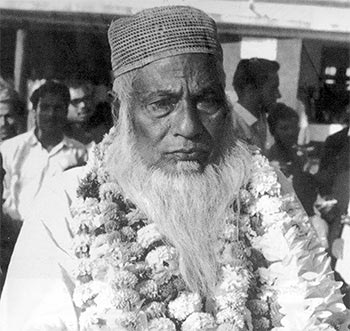 In 1976, when Bhashani called for the Farakka Long March, he was already in his nineties and suffering from serious age-related illness. Under ordinary circumstances, a man of his age would have remained confined to rest and medical care. Bhashani, however, was no ordinary political leader. Upon returning from hospital, he declared that if India continued to deprive Bangladesh of its rightful share of water, he would march towards Farakka.
 That declaration was not merely a political programme; it was a call to defend the very future of Bangladesh.
On May 2, in the same year, the "National Committee for Conducting the Farakka March" was formed under his leadership, and preparations began across the country. Before the march, Bhashani wrote to Indian Prime Minister Indira Gandhi, outlining the political and humanitarian implications of the Farakka issue.
He did not seek confrontation; he sought justice and dialogue. This was one of the defining strengths of his politics: uncompromising in protest, yet free from hostility.
The historic 64-kilometre Long March began on from Madrasa Maidan in Rajshahi and drew thousands of participants. It concluded the following day with a mass rally at Kansat High School Ground in Chapainawabganj. In what would become one of the last major public gatherings of his life, Bhashani spoke with deep anguish and affection for his people: "At this age, what more can I do for you? May my plea reach Allah." Those words captured not only his profound love for ordinary people, but also his anxiety over the nation's future.
The writer is a contributor
Loading...
Loading...
Also read



Editor : Iqbal Sobhan Chowdhury
Published by the Editor on behalf of the Observer Ltd. from Globe Printers, 24/A, New Eskaton Road, Ramna, Dhaka.
Editorial, News and Commercial Offices : Aziz Bhaban (2nd floor), 93, Motijheel C/A, Dhaka-1000.
Phone: PABX- 41053001-06; Advertisement: 41053012; 01793317829, 01550707291, E-mail: [email protected], [email protected] Online: email: [email protected] 41053014; 01550707297 Advertisement: 01550707296
Published by the Editor on behalf of the Observer Ltd. from Globe Printers, 24/A, New Eskaton Road, Ramna, Dhaka.
Editorial, News and Commercial Offices : Aziz Bhaban (2nd floor), 93, Motijheel C/A, Dhaka-1000.
Phone: PABX- 41053001-06; Advertisement: 41053012; 01793317829, 01550707291, E-mail: [email protected], [email protected] Online: email: [email protected] 41053014; 01550707297 Advertisement: 01550707296


