



| HEADLINE |

|

Microplastics in our fish
Published : Tuesday, 2 June, 2026 at 12:00 AM
AL Sharia


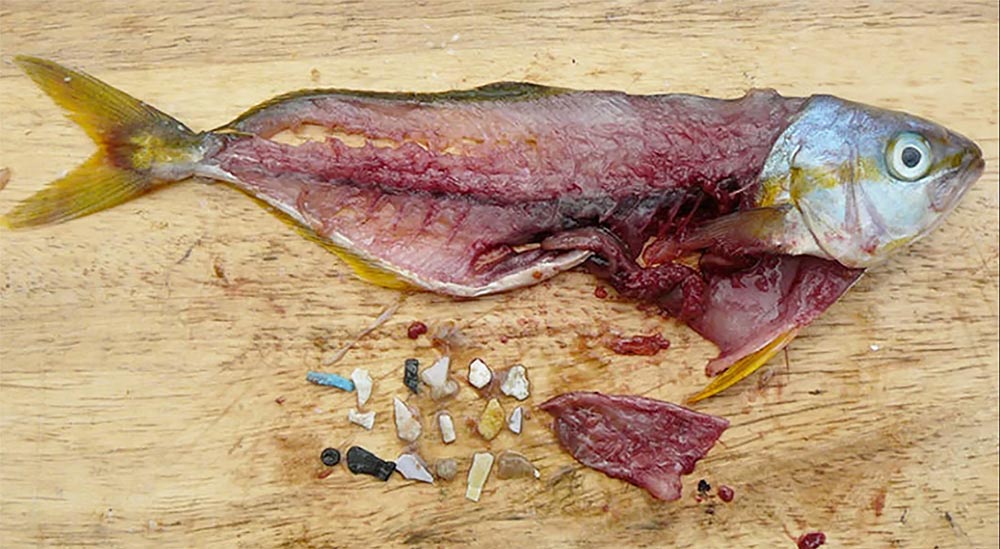
 Microplastics are now being found in alarming quantities inside our beloved Hilsa and other market fish. These invisible plastic particles have infiltrated our food chain in a way that sends shivers down the spine.
Microplastics are essentially plastic fragments smaller than five millimetres. Things we use daily like polythene bags, shampoo bottles and crisp packets eventually find their way into our canals and rivers. Over the years, harsh sunlight and water currents break them down into microscopic fragments. These are called secondary microplastics. On the other hand, microbeads found in face washes, toothpastes and cosmetics wash straight down the drain and into the rivers. These are primary microplastics. River fish mistake these tiny particles for food and swallow them. From there, the plastic enters the food chain and ultimately reaches our dining tables.
Hilsa is primarily a migratory fish. To spawn, it swims against the current from the Bay of Bengal into the Meghna and Padma rivers. During this long journey, it ingests huge amounts of microplastics from the polluted waters of the sea and rivers. Since Hilsa are filter feeders, they constantly sift water for plankton and inevitably draw in a massive amount of plastic particles. The silver Hilsa has become the ultimate victim of the tons of plastic waste flowing out of the rivers surrounding Dhaka straight into the Bay of Bengal.
Almost all the fish sold in our local wet markets are victims of polluted water in one way or another. We all know about the horrific pollution of the Buriganga, Shitalakhya and Balu rivers. Even fish farmed in such polluted waters are no longer safe. Sometimes, microplastics are even found in the commercial feed used in fish farms. This issue is not just a massive public health threat; it is a dire warning for our economy. Bangladesh exports a huge amount of fish every year, and Hilsa is our prestigious GI product. If international markets detect microplastics or heavy metals exceeding tolerable limits in our fish, our entire export market could crash overnight. Thousands of fishermen and traders would be ruined. Our promising blue economy would be utterly destroyed.
 The Extended Producer Responsibility (EPR) policy must be enforced on manufacturers. This means the company manufacturing the plastic wrapper or bottle must bear the responsibility and cost of recycling it. Multinational companies cannot be allowed to escape their environmental obligations.
There is no alternative to raising public awareness. Every day, people need to understand the true horrors of plastic pollution. Clean rivers mean safe fish and safe health. We must remember that rivers are not just habitats for fish; they are one of our primary lifelines. If we cannot keep our rivers plastic-free, the Hilsa in our markets will soon turn from a blessing into a curse. To ensure our right to safe food, this injustice against nature must stop immediately. For the sake of our own health and the wellbeing of future generations, stopping plastic pollution is our only option. We must turn things around while we still have time.
The writer is a student, Begum Rokeya University, Rangpur

Loading...
Loading...
Also read



Editor : Iqbal Sobhan Chowdhury
Published by the Editor on behalf of the Observer Ltd. from Globe Printers, 24/A, New Eskaton Road, Ramna, Dhaka.
Editorial, News and Commercial Offices : Aziz Bhaban (2nd floor), 93, Motijheel C/A, Dhaka-1000.
Phone: PABX- 41053001-06; Advertisement: 41053012; 01793317829, 01550707291, 01550707296
E-mail: [email protected], [email protected]. [email protected], [email protected], [email protected], [email protected], Online-email: [email protected]
Published by the Editor on behalf of the Observer Ltd. from Globe Printers, 24/A, New Eskaton Road, Ramna, Dhaka.
Editorial, News and Commercial Offices : Aziz Bhaban (2nd floor), 93, Motijheel C/A, Dhaka-1000.
Phone: PABX- 41053001-06; Advertisement: 41053012; 01793317829, 01550707291, 01550707296
E-mail: [email protected], [email protected]. [email protected], [email protected], [email protected], [email protected], Online-email: [email protected]


