Concluding Part
The Brahimi Report further advocated empowering peacekeepers to intervene when civilians face violence, while cautioning against overly broad mandates that could be unfeasible. These developments shaped a more practical, integrated approach to PoC,structured around four phases: Prevention, Pre-emption, Response, and Consolidation (UN DPKO-DFS CPTM, 2017).Eventually, UN peacekeeping has evolved into a broader commitment to civilian protection, underscoring its vital role in safeguarding vulnerable populations and fostering lasting peace.
Humanitarian agencies complement UN strategies with diverse protection approaches. The ICRC focuses on preventing violations of international humanitarian law, while UNHCR ensures refugee rights under international law. UNICEF and Save the Children emphasize freedom from violence, injury, or exploitation. OCHA and IRC promote respect for rights under international law, WFP designs dignity-centered programming, and OXFAM stresses safety from violence and deprivation (Bellamy & Williams, 2007). These agencies, though unable to physically guarantee civilian safety, contribute by addressing structural vulnerabilities through legal safeguards, governance, and development initiatives, thereby reinforcing UN efforts.
The Responsibility to Protect (R2P), unanimously adopted at the 2005 World Summit, further strengthened civilian protection. R2P rests on three responsibilities: states must protect populations from genocide, war crimes, crimes against humanity, and ethnic cleansing; the international community must assist states in fulfilling this duty; and, if states fail, collective action under the UN Charter must be taken. Peace operations have become a key mechanism for operationalizing R2P, offering practical solutions to save civilian lives. These principles underpin the UN's Three-Tier Framework for PoC: dialogue and engagement (Tier 1), physical protection (Tier 2), and establishing protective environments (Tier 3). While Tier 2 often dominates, all tiers collectively build resilience and long-term peace. Together, these evolving strategies highlight the UN's commitment to safeguarding civilians amid modern conflict complexities.
Jean-Pierre LaCroix, UN Under-Secretary for Peacekeeping Operations, has argued that all peacekeeping missions ultimately revolve around the protection of civilians (PoC). Since 1999, UN operations have made progress in this area, yet effectiveness remains constrained by persistent challenges. Translating mandates into operational practice is hindered by unclear directives, limited resources, and funding gaps. Host-country consent requirements often delay deployment and restrict freedom of movement, reducing access to vulnerable populations. Despite these obstacles, evolving strategies-such as clearer mandates, improved planning, enhanced training, and adequate resources-are essential to strengthen peacekeepers' ability to protect civilians in complex conflicts.
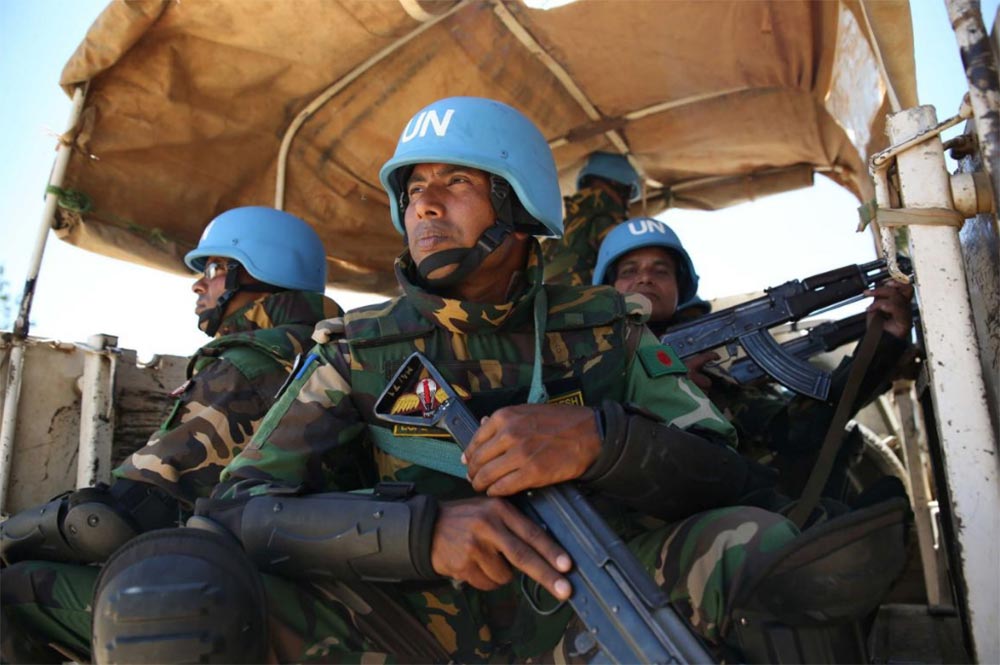
The UN's PoC strategy emphasizes several cardinal factors (HIPPO Report, 2015). First, mandates must be clear, credible, and achievable, with sufficient resources to match responsibilities (Brahimi Report, 2000). Inclusion of a legal framework rooted in International Humanitarian Law ensures legitimacy and constrains the use of force. Clear terminology and mission-specific Rules of Engagement (ROE) are critical to guide troops in fast-moving situations. Adequate funding is vital, as budget limitations reduce mobility and response capacity.The key factors include overcoming conflicts of interest through robust pre-deployment vetting, maintaining impartiality in dealing with actors, and defining areas of operation to avoid unrealistic expectations. Effective training, as highlighted in the Kigali Principles, prepares contingents for PoC responsibilities. Finally, reducing the gap between expectations and reality requires clarity of mandates, impartiality, sufficient resources, and strong ROE.Together, these measures form the foundation of an effective UN PoC strategy,enabling peacekeepers to better safeguard civilians in volatile environments.
The shift from traditional warfare to asymmetrical conflict has placed civilians at the center of violence, exposing them not only to direct attacks but also to devastating indirect consequences such as displacement, famine,economic collapse, and the destruction of vital infrastructure. Schools, hospitals, and residential areas are increasingly targeted, creating cycles of vulnerability and impoverishment. This evolution underscores the urgency of robust and adaptable Protection of Civilians (PoC) strategies as the UN refines peacekeeping frameworks to meet modern challenges.
The UN has progressively embedded PoC into mandates, reinforced by humanitarian agency approaches and the Responsibility to Protect (R2P) framework. Together, these efforts combine immediate intervention with long term resilience, aligning moral obligation with practical mechanisms. Despite progress,implementationof PoC remains fraught with challenges. Mandates often lack clarity, resources are inadequate, host state consent constrains operations, and dilemmas over impartiality undermine legitimacy. The gap between expectations and operational realities continues to test the credibility of peacekeeping missions, leaving them able to address only a fraction of threats. Recognizing these weaknesses, the UN has sought to strengthen its approach through clearer mandates, improved planning, enhanced training, and integration of humanitarian principles. Consequently, modern peacekeepers must continually navigate shifting operational landscapes and fluid political environments where non state armed groups regularly defy international norms and civilians remain disproportionately targeted.
PoC thus stands as both the most notable achievement and the most enduring challenge of UN peacekeeping. It embodies the vision of peacekeepers as guardians of civilian life, while simultaneously reflecting the evolving demands and complexities of modern conflict environments. In today's world, where complex nature of conflict, non state armed groups, and fluid political landscapes dominate, the PoC highlights the UN's commitment to humanitarian imperatives even amid operational constraints. Its dual nature-success in principle yet difficulty in practice-underscores the tension between aspiration and reality, making PoC not only a cornerstone of peacekeeping but also a constant test of its credibility and effectiveness in the present era.
The writer is an Army Officer





