



| HEADLINE |

|

Farmers need to receive timely weather, climate forecasts
Published : Monday, 15 June, 2026 at 12:00 AM
Niaz Md Farhat Rahman, PhD


 Agriculture, the bedrock of Bangladesh's economy and a direct source of sustenance for millions, is facing unprecedented challenges due to the escalating climate crisis. From the paddy fields of Dinajpur to the shrimp farms in Khulna, the nation's agricultural sector is grappling with heightened uncertainty, compelling farmers to question the reliability of existing weather and climate forecasts. This critical juncture brings into sharp focus the imperative for accurate and dependable meteorological data to safeguard harvests and ensure food security.
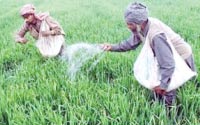
While the terms “weather” and “climate” are often used interchangeably, they refer to distinct concepts that play different roles in agriculture. Weather relates to short-term atmospheric conditions, like whether it will rain tomorrow or be sunny later this week and helps farmers make daily decisions. These include when to irrigate, apply fertiliser, or delay harvesting due to an approaching storm. Climate, on the other hand, concerns long-term patterns over decades.
It provides projections that help assess how rising temperatures, shifting rainfall, and salinity levels might affect agriculture over the next 10, 20, or even 50 years. This long-term view informs decisions about crop variety selection, suitable cultivation zones, and the adoption of new technologies for resilience.
In a country like Bangladesh, which is highly vulnerable to climate change, understanding both weather and climate is not a choice, it is a necessity. The key lies in using both effectively to ensure sustainability in agriculture.
Consider a farmer in Rajshahi, a region increasingly facing drought. For immediate planning, the farmer might rely on a five-day weather forecast to time irrigation or pest control. However, if climate projections indicate a 15 percent drop in rainfall over the next 20 years, continuing with water-intensive crops could prove risky. In such cases, climate forecasts offer valuable guidance for switching to drought-tolerant crops, adopting water-efficient technologies, or adjusting planting seasons. Ignoring these projections may lead to unsustainable farming practices.
Similarly, in the coastal regions of Satkhira and Bagerhat, rising salinity has made weather forecasts vital for storm preparedness. However, the long-term implications of sea-level rise and increasing salinity inland can only be understood through climate models. These projections suggest a transition toward saline-tolerant rice or aquaculture. Without integrating such insights, communities risk losing their livelihoods to creeping environmental changes.
Despite the rising importance of both weather and climate data, many Bangladeshi farmers lack access to timely and accurate information. The Bangladesh Meteorological Department (BMD) does provide weather updates, and institutions such as BRRI and BARI conduct climate-related research. However, the integration of this information into on-the-ground advisories remains limited.
What is needed is a nationwide agro-meteorological advisory system that combines near-term weather forecasts with long-term climate projections. Such a system would allow farmers to make informed decisions not only for the present but also for the coming decades. Effective communication channels such as mobile apps, community radio, agricultural extension services, and farmer trainingcan help deliver this information in formats that are easy to understand and act upon.
Bangladeshi agriculture has long been reactive, responding to events as they unfold. But with climate change growing more unpredictable, this approach is no longer sufficient. The sector must evolve into a more resilient systemone that anticipates and adapts to change. This shift calls for climate-smart agriculture that draws on both real-time weather updates and long-term climate forecasts. Key interventions include promoting crop diversification based on future suitability, developing and distributing climate-resilient seed varieties, investing in early warning systems and crop insurance, and training extension workers to interpret and share climate data effectively. These are not optional upgradesthey are crucial for ensuring food security and protecting rural livelihoods.
The government has made notable progress through the National Adaptation Plan (NAP) and the Delta Plan 2100. Yet, these frameworks need stronger linkages to farming communities. This involves allocating resources to develop accessible climate information services, fostering coordination among BMD, BWDB, BRRI, BARI, BINA, DAE, and local authorities, and embedding climate risk literacy into agricultural training programs. Investing in climate and weather awareness today can help avoid billions in crop losses tomorrow.
In an era of climate volatility, even a delayed monsoon or an early heatwave can wipe out months of effort. Yet, with accurate forecastswhether for the next week or the next 20 yearsfarmers can plan, adapt, and thrive. For Bangladesh, an agrarian economy, weather and climate forecasts must be seen not as abstract science, but as essential tools for survival. Every farmer, from the chars of Kurigram to the coastal plains of Barisal, must know not only if it will rain tomorrow, but whether their fields will still be viable in the decades ahead. Because ultimately, the forecast not just the seed, will shape the harvests of the future.
The writer is Principal Scientific Officer (Weather and Climate Change Researcher), Agricultural Statistics Division, BRRI

Loading...
Loading...
Also read



Editor : Iqbal Sobhan Chowdhury
Published by the Editor on behalf of the Observer Ltd. from Globe Printers, 24/A, New Eskaton Road, Ramna, Dhaka.
Editorial, News and Commercial Offices : Aziz Bhaban (2nd floor), 93, Motijheel C/A, Dhaka-1000.
Phone: PABX- 41053001-06; Advertisement: 41053012; 01793317829, 01550707291, E-mail: [email protected], [email protected] Online: email: [email protected] 41053014; 01550707297 Advertisement: 01550707296
Published by the Editor on behalf of the Observer Ltd. from Globe Printers, 24/A, New Eskaton Road, Ramna, Dhaka.
Editorial, News and Commercial Offices : Aziz Bhaban (2nd floor), 93, Motijheel C/A, Dhaka-1000.
Phone: PABX- 41053001-06; Advertisement: 41053012; 01793317829, 01550707291, E-mail: [email protected], [email protected] Online: email: [email protected] 41053014; 01550707297 Advertisement: 01550707296


