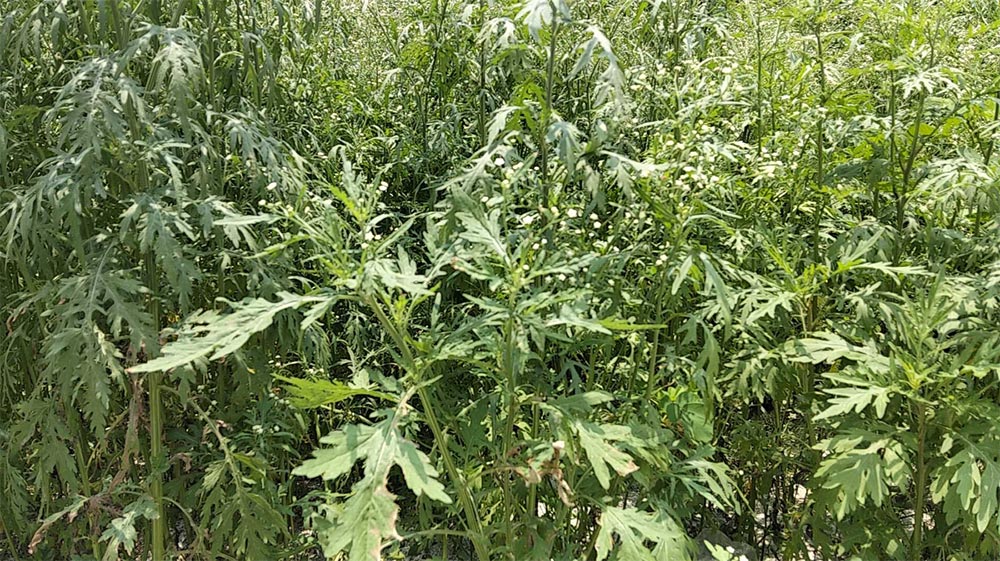
DEBIGANJ, PANCHAGARH, June 5: The rapid spread of the highly invasive and harmful weed Parthenium hysterophorus in Debiganj Upazila of Panchagarh has sparked growing concern over threats to public health, agriculture and environment.
Large patches of the weed have been found around the Lichutola area near the Upazila Parishad and along several sections of the Sonahar-Debiganj regional road.
Debiganj is a busy hub where thousands of people move daily. Major educational institutions, including Debiganj Government College, Nripendra Narayan Government High School, Debiganj Women's College, Debiganj Technical College and Aladini Government Girls' High School, are located in the area. Students and residents regularly use these roads, where the weed is now spreading extensively.
Experts and locals say awareness about the harmful effects of Parthenium remains limited, while a lack of coordinated action by authorities has allowed the weed to spread unchecked.
Debiganj Upazila Nirbahi Officer (UNO) Sabuj Kumar Basak said he was not previously aware of the issue. "I will look into the matter and take necessary steps," he said.
Upazila Agriculture Officer Naeem Morshed said the weed has been spotted in several areas of the upazila. "We are helping farmers identify Parthenium and raising awareness about its harmful impact on crops," he said.
Professor Dr Parvez Anwar of the Department of Agronomy at Bangladesh Agricultural University said Parthenium is a highly aggressive invasive species that rapidly spreads in new environments, severely damaging local biodiversity.
He said its spread in cropland reduces seed germination, plant growth and crop yield, while also decreasing fodder availability in grazing areas and posing health risks to livestock.
"The plant can cause skin diseases, allergies and respiratory problems in humans. Therefore, urgent awareness and integrated management are needed before it spreads further," he added.
Local residents expressed concern after learning about its harmful effects and urged immediate removal of the weed along with steps to prevent further spread and increase public awareness.
According to a 2021 study published in the international journal Agronomy, Parthenium hysterophorus is one of the world's most harmful weeds, posing significant risks to human health, livestock, soil and agriculture.
The study notes that its pollen and plant parts can cause allergies, asthma, skin irritation, eye irritation, breathing difficulties and chronic allergic bronchitis in humans. It also severely affects agricultural productivity by inhibiting seed germination and crop growth.
Experts warn that without timely and effective control measures, Parthenium could pose a serious long-term threat to local agriculture, biodiversity and public health in the region.





