



| HEADLINE |

|

Seconds that matter: Android warning system proves effective
Published : Thursday, 25 June, 2026 at 6:29 PM
Observer Online Report


Collected Photo
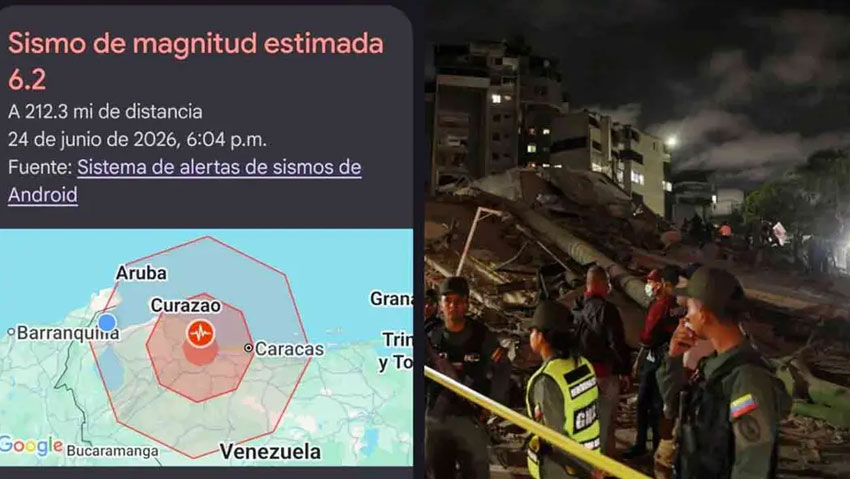
Millions of Android users in Venezuela received earthquake alerts on their smartphones seconds before a powerful tremor struck, demonstrating how modern technology can provide crucial warning time during natural disasters and potentially save lives.
The incident has sparked renewed discussion about the role of technology in disaster preparedness. Experts say the alerts were not earthquake predictions but rather early warnings generated after the system detected the first seismic waves before stronger shaking reached populated areas.
Google's Android Earthquake Alerts System uses motion sensors embedded in millions of smartphones to detect ground movement. When multiple devices register similar seismic activity, the system rapidly estimates the earthquake's location and magnitude and sends warnings to users in nearby areas.
Nikhar Arora, Director of Bots.ai at HR Annex, said the Venezuela event highlights the significant progress made in earthquake early-warning technology.
"Many people assume Google predicted the earthquake, but that is not the case," he said. "The system detected the initial seismic signals and issued alerts before the more destructive shaking began."
According to experts, Android phones function as a large-scale sensor network. Their built-in accelerometers can detect primary seismic waves, or P-waves, which travel faster than the stronger and more damaging secondary waves known as S-waves.
By analysing data from numerous devices simultaneously, the system can quickly determine whether an earthquake is occurring and notify people who may be in its path.
Although the warning time may be limited to only a few seconds, experts say those moments can be invaluable. People can move away from unstable structures, stop hazardous activities, seek shelter, or take other safety measures before stronger tremors arrive.
The significance of the technology extends beyond earthquakes, specialists say.
Hrishit Panthri, Co-founder of Envirocare Foundation, noted that the Venezuela experience demonstrates how digital technologies can strengthen disaster preparedness and improve community resilience.
While earthquakes remain impossible to predict accurately, real-time detection systems can help reduce casualties and damage by ensuring that warnings reach affected populations as quickly as possible, he said.
Experts also point out that as cities become more densely populated and infrastructure networks increasingly interconnected, investments in early-warning technologies are becoming essential. The widespread use of smartphones has created an effective channel for delivering critical safety information directly to citizens during emergencies.
The Venezuela alert serves as a reminder of a broader transformation in disaster management, with governments and technology companies increasingly relying on connected devices, cloud computing and real-time data networks to improve emergency response capabilities.
While no technology can prevent an earthquake, experts agree that even a few seconds of advance warning can make a meaningful difference. For many people in Venezuela, those brief moments may have been the critical margin between danger and safety.
TZ
The incident has sparked renewed discussion about the role of technology in disaster preparedness. Experts say the alerts were not earthquake predictions but rather early warnings generated after the system detected the first seismic waves before stronger shaking reached populated areas.
Google's Android Earthquake Alerts System uses motion sensors embedded in millions of smartphones to detect ground movement. When multiple devices register similar seismic activity, the system rapidly estimates the earthquake's location and magnitude and sends warnings to users in nearby areas.
Nikhar Arora, Director of Bots.ai at HR Annex, said the Venezuela event highlights the significant progress made in earthquake early-warning technology.
"Many people assume Google predicted the earthquake, but that is not the case," he said. "The system detected the initial seismic signals and issued alerts before the more destructive shaking began."
According to experts, Android phones function as a large-scale sensor network. Their built-in accelerometers can detect primary seismic waves, or P-waves, which travel faster than the stronger and more damaging secondary waves known as S-waves.
By analysing data from numerous devices simultaneously, the system can quickly determine whether an earthquake is occurring and notify people who may be in its path.
Although the warning time may be limited to only a few seconds, experts say those moments can be invaluable. People can move away from unstable structures, stop hazardous activities, seek shelter, or take other safety measures before stronger tremors arrive.
The significance of the technology extends beyond earthquakes, specialists say.
Hrishit Panthri, Co-founder of Envirocare Foundation, noted that the Venezuela experience demonstrates how digital technologies can strengthen disaster preparedness and improve community resilience.
While earthquakes remain impossible to predict accurately, real-time detection systems can help reduce casualties and damage by ensuring that warnings reach affected populations as quickly as possible, he said.
Experts also point out that as cities become more densely populated and infrastructure networks increasingly interconnected, investments in early-warning technologies are becoming essential. The widespread use of smartphones has created an effective channel for delivering critical safety information directly to citizens during emergencies.
The Venezuela alert serves as a reminder of a broader transformation in disaster management, with governments and technology companies increasingly relying on connected devices, cloud computing and real-time data networks to improve emergency response capabilities.
While no technology can prevent an earthquake, experts agree that even a few seconds of advance warning can make a meaningful difference. For many people in Venezuela, those brief moments may have been the critical margin between danger and safety.
TZ

Loading...
Loading...
Also read






Editor : Iqbal Sobhan Chowdhury
Published by the Editor on behalf of the Observer Ltd. from Globe Printers, 24/A, New Eskaton Road, Ramna, Dhaka.
Editorial, News and Commercial Offices : Aziz Bhaban (2nd floor), 93, Motijheel C/A, Dhaka-1000.
Phone: PABX- 41053001-06; Advertisement: 41053012; 01793317829, 01550707291, E-mail: [email protected], [email protected] Online: email: [email protected] 41053014; 01550707297 Advertisement: 01550707296
Published by the Editor on behalf of the Observer Ltd. from Globe Printers, 24/A, New Eskaton Road, Ramna, Dhaka.
Editorial, News and Commercial Offices : Aziz Bhaban (2nd floor), 93, Motijheel C/A, Dhaka-1000.
Phone: PABX- 41053001-06; Advertisement: 41053012; 01793317829, 01550707291, E-mail: [email protected], [email protected] Online: email: [email protected] 41053014; 01550707297 Advertisement: 01550707296


