The government of Bangladesh government is set to introduce compulsory vocational education, third-language learning, and cultural studies as part of a comprehensive reform of the country's education system aimed at preparing students for a modern, skills-based future.
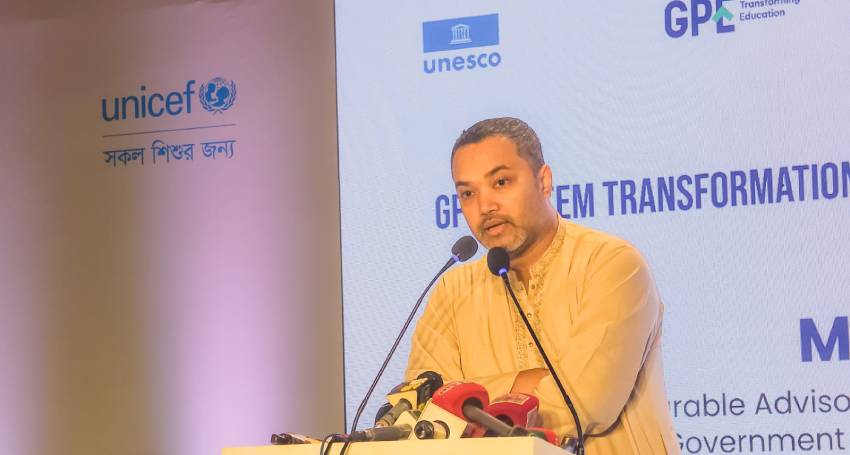
Prime Minister’s Adviser on Education, Primary and Mass Education, Mahdi Amin said this at a UNESCO-hosted event titled ‘Global Partnership for Education System Transformation Grant and Multiplier Grant for Bangladesh’ at Hotel Intercontinental in Dhaka on Thursday, July 2, 2026.
Under the proposed reforms, technical and vocational education will become compulsory from Grade VI to equip students with practical skills from an early stage. The government also plans to gradually introduce a third language from Grade VI to strengthen students’ global competitiveness and communications abilities.
In addition, Culture and Sports will be mandatory subjects from Grade IV, reflecting the government's emphasis on holistic education alongside academic learning.
Mahdi Amin said the reforms are part of the government’s commitment to building an education system based on values, inclusivity and modern learning. The vision, he said, is to promote “Learning with Happiness” by creating collaborative classrooms where students can develop their talents instead of relying on rote learning.
The adviser also highlighted several technology-driven initiatives designed to improve educational access and quality, including the “One Teacher, One Tab” programme, multimedia classrooms, a nationwide Mid-Day Meal programme, and the introduction of a common school uniform, school bag and shoes for students across the country.
Stressing that teachers are central to successful reform, Mahdi Amin said continuous professional training and development aligned with international best practices would be essential to improving education standards.
He thanked UNESCO and Bangladesh's development partners for their continued support and the newly announced education grant, expressing confidence that the funding would help implement the government's reform agenda.
Education and Primary and Mass Education Minister Dr A N M Ehsanul Haque Milon, State Minister for Primary and Mass Education Bobby Hajjaj, Secondary and Higher Education Secretary Abdul Khaleque, and senior officials from the education ministries and UNESCO attended the programme among others.
JB/IF