



| HEADLINE |

|
Crackdown on land grabbers, fraudsters vital for FDI growth
Bangladeshi Expatriates Are Losing Faith in the Dream of Homeownership
Published : Saturday, 4 July, 2026 at 12:00 AM


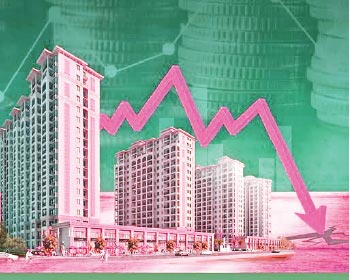 As Bangladesh seeks foreign direct investment, rogue developers and land grabbers are inflicting serious damage on the country’s investment climate, driving away expatriate capital and turning the dream of a home back home into a costly battle for justice.
When the government is straining to attract foreign direct investment, a cohort of unscrupulous developers and land grabbers is doing untold harm �" deterring expatriate Bangladeshis from investing in homes and projects at home and eroding a vital source of FDI.
Across Europe, the Middle East and North America, disappointed and disillusioned Non-Resident Bangladeshis are abandoning plans to build houses or buy flats for their families. Many have fallen victim to fraud or land seizures; others have watched housing projects financed with their hard-earned savings stall indefinitely. For them, the promise of owning a home in Bangladesh has given way to anxiety, financial loss and prolonged legal frustration.
Pakhi, who has lived in Sweden for many years, is one such victim. Born in Noakhali and raised in Dhaka, she bought a plot in the capital several years ago, only to be informed later that a major developer had taken over the site. When she and her husband challenged the claim, they were offered a token sum for land that had already been folded into a luxury scheme. Their appeals to regulators and industry bodies failed to bring redress.
Expatriates who once regarded Bangladeshi real estate as a safe and emotionally rewarding investment are increasingly reluctant to commit.
A similar ordeal befell Abdur Rashid, a businessman based in the Middle East, who paid around Tk80 lakh for a fourth-floor flat in Uttara from a prominent developer. The apartment, due for handover in 2014, never materialised. Rashid later learned that the developer’s managing director had borrowed about Tk7 crore from a bank using the building’s flats as collateral. When the loan remained unpaid, the bank moved to auction the property, leaving Rashid and hundreds of other buyers locked in a legal struggle to secure possession.
No official tally is available, but thousands of buyers �" including many expatriate Bangladeshis �" are believed to have been affected by property fraud and land disputes. One related report says around 9,000 cases were filed over plot-related irregularities in a wider real-estate fraud context, though it does not isolate expatriates. Another report cites allegations involving 459 Bangladeshis linked to Dubai property ownership, but that concerns offshore assets rather than complaints filed against developers at home.
These are far from isolated cases. Buyers routinely allege that developers sell the same unit to multiple purchasers, misrepresent title, delay delivery for years or use project properties as security for loans that later collapse under legal scrutiny. High-profile investigations and money-laundering allegations, including claims linked to a Banani project and transfers totalling more than BDT 115 crore, have only deepened public unease.
The consequences are serious. Expatriates who once regarded Bangladeshi real estate as a safe and emotionally rewarding investment are increasingly reluctant to commit. Abdul Ahad, an expatriate from Nabiganj, is a stark example. He built a house in Sylhet at considerable cost, only to sell it five years later for Tk1.7 crore �" a fraction of what he had spent. In Sylhet and elsewhere, many NRBs are now selling off assets and pulling capital out of the country despite repeated attempts by local business groups to draw them back.
This erosion of confidence sits against a troubling backdrop. A recent rural land study found that nearly seven in ten rural households lost land over the past decade, with land grabbing and forced acquisition identified as key causes. Bangladesh’s housing market still holds immense long-term promise, driven by rapid urbanisation, a rising middle class and continued infrastructure growth, yet that promise is being blunted by fraud, weak enforcement and deep inequities in land ownership.
This has put negative impact on the whole industry. Bangladesh’s real estate sector is facing one of its deepest downturns in recent years, marked by a wave of booking cancellations following the political shift on 5 August 2024, while rising construction costs, high interest rates, and global instability have pushed default loans in the sector to nearly 27%.
Three interlinked pressures are shaping the present crisis: confidence, financing and cost. Home-loan rates have risen from roughly 9% in early 2022 to around 14% today, after peaking at about 17% in 2024, and the lack of long-term mortgage products has narrowed the pool of buyers able to afford a home. At the same time, prices for steel, cement and other key materials have climbed sharply, inflating project costs and squeezing developers’ pricing flexibility. Political and economic uncertainty has also encouraged a wait-and-see approach among buyers and investors, slowing activity even where the underlying demand remains intact.
Regulatory gaps and bureaucratic inertia make the situation worse. Foreign investors expect transparency and dependable legal safeguards, yet repeated reports of fraud, drawn-out disputes and slow enforcement continue to deter inflows and tarnish Bangladesh’s property market. Even honest developers face a harder task in attracting international capital when the wider sector is perceived as risky and opaque.
The legal consequences for developers who cross the line from poor practice into fraud can be severe in principle, even if enforcement is often uneven. Criminal proceedings involving land grabbing, forgery and money laundering can lead to imprisonment, heavy fines and lasting reputational damage. Civil remedies are also available, including writ petitions, injunctions and claims for possession or damages, while courts can freeze transactions or halt auctions pending resolution of ownership disputes.
Regulatory penalties can be equally damaging. Authorities may restrict access to finance, order special audits, refer suspicious transactions for anti-money-laundering investigation or block new project approvals in serious cases. Tax officials can also impose penalties where transactions appear designed to conceal real values, while anti-corruption probes may run alongside criminal cases if public officials are implicated.
The problem is not the absence of legal remedies, but the weakness of enforcement. Cases often drag on for years, evidence is obscured by forged documents or poor record-keeping, and powerful interests can delay or dilute accountability. For many victims, justice exists more on paper than in practice.
Restoring confidence will demand decisive and coordinated policy action. Fast-tracking dispute resolution in land and property cases, closing loopholes that permit title fraud and illegal appropriation, and strengthening title verification would all help. Developing a functioning mortgage market with refinancing mechanisms or specialised housing finance institutions would allow loans to be extended over 20 to 30 years at far lower rates, making home ownership affordable for a much wider section of the population. Rationalising registration fees, stamp duties and related charges would also stimulate transactions and broaden the tax base, while bringing underused state land into planned public-private partnerships could reduce project costs and accelerate the delivery of affordable homes.
There are some signs of transition. Regulators have increased oversight, Bangladesh Bank has tightened scrutiny of developer finance and law-enforcement agencies have pursued money-laundering probes. But piecemeal measures will not be enough. What the sector needs is a National Housing Policy with a clear long-term roadmap under the guiding vision of “Home for All”, bringing together fiscal, legal and planning tools to support inclusive and orderly urban growth.
For genuine developers, the present slowdown is also an opportunity for reinvention. Progressive firms are moving towards greener, technology-driven and service-oriented models, including solar integration, smart building systems, stronger property management and mixed-use projects that deliver lasting value rather than short-term profit. Income-linked and investment-generating products can broaden appeal and reduce speculative risk, while better delivery timetables and accountability will help rebuild trust.
Ultimately, bringing expatriate investors back will depend on restoring confidence through swifter justice, clearer regulation, affordable long-term finance and an unwavering commitment to transparency. If policymakers and industry leaders seize the moment, Bangladesh’s real estate sector can still become a major engine of inclusive growth rather than a brake on foreign investment and a source of expatriate disillusionment.
Loading...
Loading...
Also read



Editor : Iqbal Sobhan Chowdhury
Published by the Editor on behalf of the Observer Ltd. from Globe Printers, 24/A, New Eskaton Road, Ramna, Dhaka.
Editorial, News and Commercial Offices : Aziz Bhaban (2nd floor), 93, Motijheel C/A, Dhaka-1000.
Phone: PABX- 41053001-06; Advertisement: 41053012; 01793317829, 01550707291, E-mail: [email protected], [email protected] Online: email: [email protected] 41053014; 01550707297 Advertisement: 01550707296
Published by the Editor on behalf of the Observer Ltd. from Globe Printers, 24/A, New Eskaton Road, Ramna, Dhaka.
Editorial, News and Commercial Offices : Aziz Bhaban (2nd floor), 93, Motijheel C/A, Dhaka-1000.
Phone: PABX- 41053001-06; Advertisement: 41053012; 01793317829, 01550707291, E-mail: [email protected], [email protected] Online: email: [email protected] 41053014; 01550707297 Advertisement: 01550707296


