



| HEADLINE |

|

Commodity Markets at a Breaking Point
Oil is Stalled, Gold is Surging, Next Shock Could Tip the Balance
Published : Saturday, 18 July, 2026 at 12:00 AM


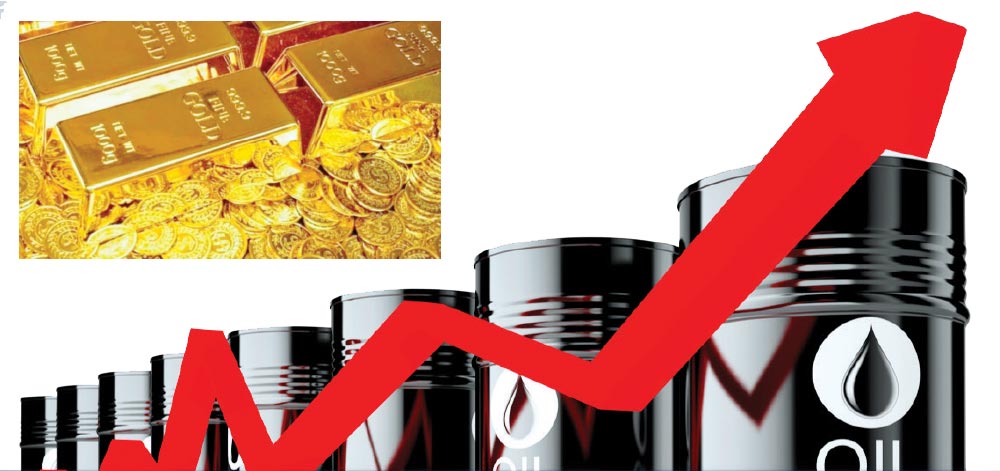 Global oil, gold and the broader commodity complex have entered a far more volatile and combustible phase, where every data release, policy hint and geopolitical flare-up can move prices in an instant. The latest growth readings have delivered a stark message: the world economy is cooling, but not cleanly enough to trigger a straightforward risk-off collapse, and not strongly enough to ignite a broad commodity boom. As one senior commodities strategist put it, “This market is no longer being priced on fundamentals alone; it is being driven by fear, positioning and the next headline.” The result is a market that may look balanced on paper but is dangerously fragile in practice, with volatility likely to remain elevated as traders react to each inflation print, inventory update and geopolitical shock.
In oil, the struggle between supply discipline and weakening demand has become increasingly acute. Brent and WTI have found support from OPEC+ restraint, persistent Middle East tensions and renewed fears over shipping disruptions, but the latest industrial data from Europe and the uneven pace of China’s recovery are capping any sustained rally. Recent inventory figures suggest the market is not drowning in crude, yet neither is it facing a true shortage �" a precarious middle ground that leaves prices exposed to abrupt swings. “Crude is trapped in a pressure chamber,” said one energy analyst. “Supply cuts are preventing a collapse, but demand is too soft to justify a breakout.” Traders are now watching every production signal, sanctions move and trade slowdown for clues, with Brent likely to remain range-bound unless a major disruption or a sharper demand shock changes the equation.
Gold, meanwhile, is acting like the market’s emergency siren. The metal has been drawing support from expectations that major central banks will eventually cut rates, from lingering geopolitical anxiety and from a more defensive tone across equities and credit. The latest macro backdrop has only strengthened its appeal: softer real yields, sticky policy uncertainty and renewed concern over fiscal strain are all feeding demand for hard assets. “Gold is still the purest expression of macro fear,” said a precious metals strategist. “As long as real yields ease and uncertainty stays high, the bid should remain firm.” Central bank buying continues to provide a powerful structural tailwind, while investors seeking protection against currency volatility and policy missteps are still treating bullion as a strategic refuge. Even so, the upside is not limitless. A stronger US dollar or a delay in rate cuts could slow the advance, but for now the balance of risks still points higher, especially if easing arrives later than markets expect and recession fears deepen.
The broader commodity landscape is telling a story of sharp divergence rather than synchronized strength. Industrial metals remain hostage to China’s property slump, weak manufacturing momentum and the uncertain scale of stimulus, while agricultural markets are being whipped around by weather shocks, logistics bottlenecks and export restrictions. “This is not a broad-based commodity rally,” one market economist observed. “It is a selective, high-stress environment where only assets with a clear defensive or supply-driven case are winning.” Energy and precious metals are benefiting from risk aversion and supply anxiety, but cyclical commodities are struggling to gain traction without convincing evidence of a global reacceleration. The latest data reinforce that split: defensive assets are attracting capital, while growth-sensitive materials are being punished for every sign of economic fatigue. The likely outcome is continued dispersion across sectors, not a unified move higher.
For investors, the message is blunt: commodities can no longer be treated as one trade. Oil is being driven by geopolitics and supply management, gold by real yields and uncertainty, and industrial commodities by the health of the global economy. In the near term, the market is likely to remain jumpy, headline-sensitive and unforgiving. The smartest strategy is to stay nimble, track central bank signals closely and recognise that in this environment, fundamentals matter �" but sentiment can overwhelm them in an instant. As one veteran trader put it, “The winners will be those who respect the macro storm, not those who assume commodities will move in lockstep.”
Loading...
Loading...
Also read



Editor : Iqbal Sobhan Chowdhury
Published by the Editor on behalf of the Observer Ltd. from Globe Printers, 24/A, New Eskaton Road, Ramna, Dhaka.
Editorial, News and Commercial Offices : Aziz Bhaban (2nd floor), 93, Motijheel C/A, Dhaka-1000.
Phone: PABX- 41053001-06; Advertisement: 41053012; 01793317829, 01550707291, E-mail: [email protected], [email protected] Online: email: [email protected] 41053014; 01550707297 Advertisement: 01550707296
Published by the Editor on behalf of the Observer Ltd. from Globe Printers, 24/A, New Eskaton Road, Ramna, Dhaka.
Editorial, News and Commercial Offices : Aziz Bhaban (2nd floor), 93, Motijheel C/A, Dhaka-1000.
Phone: PABX- 41053001-06; Advertisement: 41053012; 01793317829, 01550707291, E-mail: [email protected], [email protected] Online: email: [email protected] 41053014; 01550707297 Advertisement: 01550707296


