



| HEADLINE |

|

Digital Banking at a Crossroads
Can Bangladesh Win the War Against Mobile Fraud?
Published : Saturday, 11 July, 2026 at 12:00 AM
Faruk Ahmed


Over the past few years, a series of mobile banking fraud incidents has exposed how easily criminals can drain accounts through deception and technical manipulation. Nearly Tk 2,100 crore has already vanished through mobile banking frauds in Bangladesh, a staggering loss that highlights the urgency of the crisis.
Bangladesh's digital banking revolution is gathering unprecedented momentum. Smartphones are rapidly replacing bank counters, QR codes are replacing cash, and financial transactions are increasingly taking place with a tap on a screen rather than across a teller's desk.
Yet, at the very moment the country is accelerating towards a cashless future, a more dangerous trend is emerging alongside it: an alarming surge in mobile banking fraud.
The contradiction could not be sharper. The same technology that is expanding financial inclusion is also providing criminals with new opportunities to exploit unsuspecting customers. Unless Bangladesh strengthens its cyber defences with equal speed, digital banking risks becoming a victim of its own success.
The transformation, however, is remarkable. Over the past decade, Bangladesh has emerged as one of the world's fastest-growing digital finance markets. Millions of previously unbanked citizens now receive salaries, remittances, government benefits and business payments through mobile phones. Banking apps have become mainstream, while customers increasingly expect to open accounts, transfer money, pay bills and even obtain loans without visiting a branch. Bangladesh Bank's drive towards a cashless economy is further accelerating this transition.
Globally, digital banking has entered a new phase. Artificial intelligence, embedded finance, real-time payments, open banking and digital identity systems are reshaping financial services. Mobile applications are becoming the primary gateway between banks and customers, while traditional branches are steadily losing their dominance. Industry analysts argue that future competition will depend not merely on convenience but on security, customer trust and intelligent digital experiences.
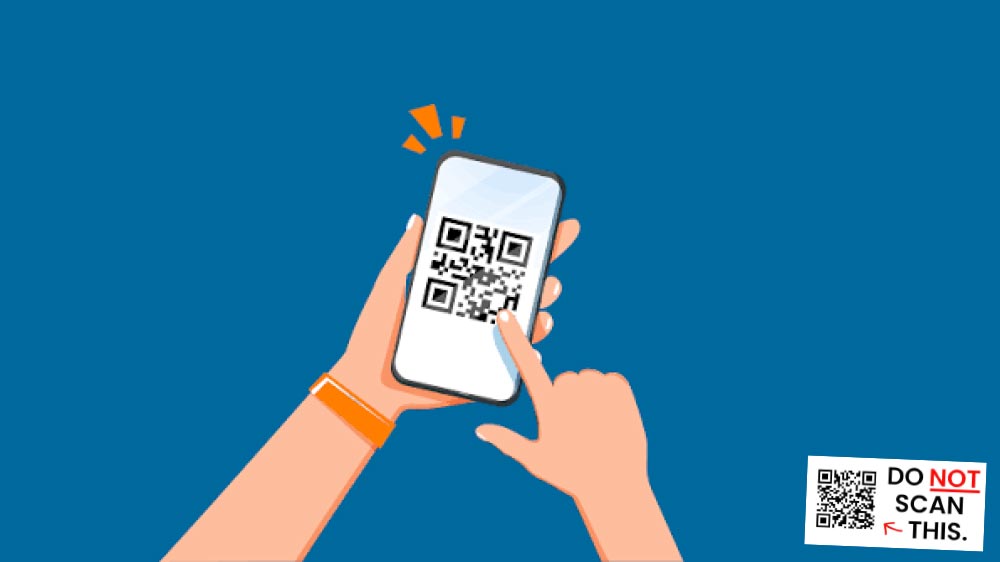 Bangladesh is embracing many of these global trends. Commercial banks are investing heavily in mobile applications, internet banking, automated customer service, QR-based payments and AI-enabled operations to improve efficiency and customer experience. Financial technology companies continue to expand digital services into every corner of the country, bringing millions of people into the formal financial system.
Yet the rapid expansion has exposed an equally fast-growing vulnerability.
Mobile banking fraud has evolved far beyond simple theft. Criminal syndicates now employ sophisticated social engineering techniques, fake customer service calls, phishing messages, malicious mobile applications, identity theft and SIM-related scams to gain access to customers' accounts. Many victims unknowingly disclose one-time passwords or personal information after receiving convincing calls from fraudsters impersonating bank officials or mobile financial service providers. Increasingly, cybercriminals are also exploiting artificial intelligence to create more convincing scams.
In Bangladesh, the scale of the damage is already alarming. Over the past few years, a series of mobile banking fraud incidents has exposed how easily criminals can drain accounts through deception and technical manipulation. Customers have lost money after responding to fake helpline numbers, clicking on fraudulent links, or sharing OTPs with impostors posing as bank representatives. In some cases, fraudsters have used SIM swap attacks to seize control of mobile wallets and bank-linked accounts. According to reports and industry estimates, nearly Tk 2,100 crore has already vanished through mobile banking frauds in Bangladesh, a staggering loss that highlights the urgency of the crisis.
This is not a uniquely Bangladeshi problem. Around the world, regulators are racing to strengthen digital payment security as fraud becomes more organised and technologically sophisticated. Countries are introducing stronger customer authentication, behavioural biometrics, real-time fraud monitoring and faster reimbursement mechanisms for victims. Banks are increasingly deploying AI systems capable of detecting suspicious transaction patterns within seconds before financial losses occur.
Bangladesh can learn valuable lessons from these international experiences.
The first priority must be to strengthen cyber resilience across the financial ecosystem. Banks, mobile financial service providers and payment service operators need to invest far more aggressively in AI-driven fraud detection, continuous transaction monitoring and behavioural analytics capable of identifying unusual customer activity before money disappears.
Second, customer authentication requires further improvement. Reliance on traditional SMS-based verification is becoming increasingly vulnerable to sophisticated attacks. Multi-factor authentication, biometric verification and device-based security should gradually become standard practice for high-risk digital transactions.
Third, customer awareness deserves equal attention. Technology alone cannot defeat fraud if users continue to share passwords, PINs or one-time verification codes with strangers. Public education campaigns should become continuous rather than occasional, reaching schools, universities, businesses and rural communities alike.
Fourth, regulators should encourage stronger collaboration between banks, telecom operators, fintech companies, law enforcement agencies and the Bangladesh Financial Intelligence Unit. Fraud intelligence shared in real time can prevent criminals from moving stolen funds through multiple institutions before accounts are frozen.
Finally, Bangladesh requires a comprehensive national cyber fraud strategy supported by modern legislation, specialised cybercrime investigation units and clear consumer protection standards. Trust remains the foundation of every successful financial system. Once public confidence is damaged, rebuilding it becomes extraordinarily difficult.
Digital banking represents one of Bangladesh's greatest economic opportunities. It can deepen financial inclusion, reduce transaction costs, improve transparency, stimulate e-commerce and strengthen economic productivity. Few developing countries have achieved such rapid digital financial adoption within such a short period.
However, history shows that every technological revolution creates new risks alongside new opportunities. The global digital banking industry has already recognised that cybersecurity is no longer an IT function but a core business strategy. Bangladesh must reach the same conclusion.
The country's digital future will ultimately be determined not by how many people download banking applications, but by how safely they can use them.
The race towards a cashless Bangladesh has undoubtedly begun. The challenge now is ensuring that cybercriminals do not reach the finish line first.
The writer is a Consulting Editor of The Daily Observer.
He may be reached at [email protected].
Loading...
Loading...
Also read



Editor : Iqbal Sobhan Chowdhury
Published by the Editor on behalf of the Observer Ltd. from Globe Printers, 24/A, New Eskaton Road, Ramna, Dhaka.
Editorial, News and Commercial Offices : Aziz Bhaban (2nd floor), 93, Motijheel C/A, Dhaka-1000.
Phone: PABX- 41053001-06; Advertisement: 41053012; 01793317829, 01550707291, E-mail: [email protected], [email protected] Online: email: [email protected] 41053014; 01550707297 Advertisement: 01550707296
Published by the Editor on behalf of the Observer Ltd. from Globe Printers, 24/A, New Eskaton Road, Ramna, Dhaka.
Editorial, News and Commercial Offices : Aziz Bhaban (2nd floor), 93, Motijheel C/A, Dhaka-1000.
Phone: PABX- 41053001-06; Advertisement: 41053012; 01793317829, 01550707291, E-mail: [email protected], [email protected] Online: email: [email protected] 41053014; 01550707297 Advertisement: 01550707296


