



| HEADLINE |

|
MAG Osmani deserves a Field Marshal's baton
Published : Tuesday, 14 July, 2026 at 12:00 AM
Commodore Jasim Uddin Bhuiyan (Retd)


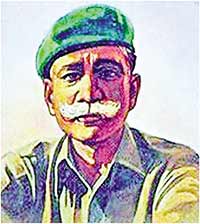 For decades, British colonial rulers and the Pakistani establishment branded Bengalis a "non-martial race." The British raised the 49th Bengali Regiment in 1916, only to quickly disband it to reinforce this false narrative. History proves otherwise. Neither India nor Pakistan won independence through an armed war of liberation. Bangladesh alone emerged through a fierce, popular armed struggle in 1971. The East Bengal Regiment dealt the decisive blow to this colonial myth. Without their strategic mutiny, professional training, and fierce battlefield leadership, achieving independence would have been nearly impossible. Their courage became the defining pillar of the nation's survival and victory.
The regiment's reputation was firmly established even before Bangladesh's independence. The 1st East Bengal Regiment was invited to Rawalpindi in 1968 to be honored for its outstanding performance during the 1965 Indo-Pak War. Yet, during the Republic Day Parade on March 23, sections of the elite spectators laughed at the sight of the comparatively shorter Bengali soldiers marching beside taller Frontier Force units. Their ridicule quickly turned into admiration when the disciplined march of the Bengal Regiment drew a standing ovation as it passed the saluting dais. It was a symbolic victory over decades of prejudice.
The roots of that achievement lay in the leadership of Colonel M. A. G. Osmani. Since assuming command of the 1st East Bengal Regiment in 1951 and later serving as Commandant of the East Bengal Regiment Centre, Osmani worked tirelessly to establish the professional identity and dignity of Bengali soldiers. Despite serving for years in senior military appointments, including Deputy Director of Military Operations, he faced systematic discrimination and repeated denial of promotion because he was Bengali. His formal grievances against these injustices were ignored by the Pakistani military hierarchy.
When war broke out in September 1965, Osmani rushed to the Lahore-Kasur front, where the East Bengal battalion had recently deployed. Standing before his soldiers, he delivered a challenge that became legendary: "This is the only chance you will get in your lifetime. Show them what stuff you are made of!" His words carried a deeper meaning. The soldiers understood that they were not merely confronting the Indian Army; they were also proving wrong the Pakistani establishment that had long questioned the courage and capability of Bengalis. Inspired by that conviction, they fought with extraordinary determination in the Bedian sector. Their CO r and Alpha Company Commander both received the Hilal-e-Jurat, while the battalion earned an unprecedented fifteen gallantry awards. Their performance established the East Bengal Regiment as the true "Defenders of Lahore."
The contrast between military professionalism and political manipulation becomes even clearer when examining the highest military rank in the subcontinent. Only four officers have been promoted to Field Marshal. Their careers demonstrate that this distinction should recognize extraordinary leadership and lasting military contribution rather than political authority.
India offers an enduring example in Field Marshal KM Cariappa, who was promoted to the rank in 1986, more than three decades after retirement. His military ethics remain legendary. During the 1965 war, when his son became a prisoner of war in Pakistan, President Ayub Khan personally offered to secure his early release. Cariappa declined, insisting that either all prisoners should be treated equally or none should receive special treatment. His response reflected the highest ideals of military honor.
Pakistan's experience presents a striking contrast. In 1951, Defense Secretary Iskander Mirza suppressed Ayub Khan’s failed World War II record, where he was removed for "tactical cowardice" to appoint him Army Chief over the senior, highly qualified Bengali Major General Ishfaqul Majid. Bypassing Majid solely due to his ethnicity stood in stark contrast to the impeccable military ethics of leaders like Cariappa. This politically engineered appointment deprived a brave Bengali general of his rightful leadership, marking the first official chapter of systemic institutional discrimination against East Pakistan.
Unlike India's General Sam Manekshaw, who led a fully equipped conventional military, General MAG Osmani began March 1971 with no established national army.Faced with scattered Bengali army units and lightly armed volunteers, he pulled off an extraordinary feat.Within nine months, Osmani forged an organized command structure across eleven strategic sectors, blending conventional tactics with guerrilla warfare to secure Bangladesh's independence.Building an effective national fighting force from scratch under active wartime conditions remains an unparalleled achievement in modern military history.
General Osmani’s enduring legacy rests on his impeccable integrity.
He never sought political power or personal military honors, remaining steadfast to professional ethics.As a primary architect of the East Bengal Regiment and Commander-in-Chief during the Liberation War, he built the foundation of Bangladesh's armed forces.
His leadership was more than a battlefield victory; it was the ultimate triumph of national identity over systemic discrimination.The demand to confer the posthumous rank of Field Marshal upon General Osmani is therefore neither sentimental nor political. It is a question of historical justice. Recognizing his unparalleled contribution would strengthen Bangladesh's military heritage and reinforce national pride for future generations.
The significance of July 11 further reinforces this call. On that day in 1971, the historic Sector Commanders' Conference formally appointed Osmani as Commander-in-Chief and finalized the operational structure of the Liberation War by organizing the country into eleven sectors. It is therefore fitting that a seminar held on July 11, 2026 at RAOWA renewed this national discussion. The initiative of RAOWA Chairman Brig Gen Hoque deserves appreciation for bringing overdue public attention to the decisive role of the East Bengal Regiment in Bangladesh's independence. The enthusiastic response from military officers, delivered in the presence of the Honorable Speaker of Parliament, demonstrated that this national conversation has now gained meaningful momentum.
History ultimately demands one conclusion. Bangladesh should posthumously confer the rank of Field Marshal upon General MAG Osmani. Such recognition would finally lay to rest the colonial myth of the "non-martial race," honor the incomparable sacrifices of the East Bengal Regiment and acknowledge one of the greatest military achievements in our national history. This is not an act of generosity. It is a debt that an independent nation owes to its own history.
The writer is a former Assistant Chief of Naval Staff and Pro-VC of BUP
Loading...
Loading...
Also read



Editor : Iqbal Sobhan Chowdhury
Published by the Editor on behalf of the Observer Ltd. from Globe Printers, 24/A, New Eskaton Road, Ramna, Dhaka.
Editorial, News and Commercial Offices : Aziz Bhaban (2nd floor), 93, Motijheel C/A, Dhaka-1000.
Phone: PABX- 41053001-06; Advertisement: 41053012; 01793317829, 01550707291, E-mail: [email protected], [email protected] Online: email: [email protected] 41053014; 01550707297 Advertisement: 01550707296
Published by the Editor on behalf of the Observer Ltd. from Globe Printers, 24/A, New Eskaton Road, Ramna, Dhaka.
Editorial, News and Commercial Offices : Aziz Bhaban (2nd floor), 93, Motijheel C/A, Dhaka-1000.
Phone: PABX- 41053001-06; Advertisement: 41053012; 01793317829, 01550707291, E-mail: [email protected], [email protected] Online: email: [email protected] 41053014; 01550707297 Advertisement: 01550707296


