



| HEADLINE |

|
BANGLADESH'S ICT INDUSTRY HOLDS BRIGHT POTENTIAL


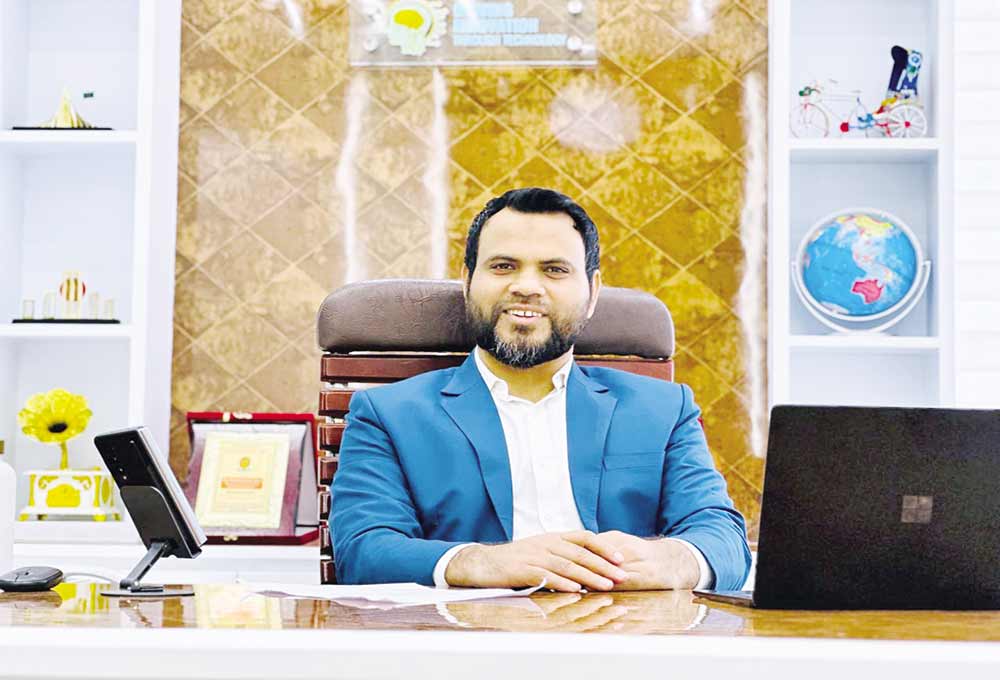 Engr. Md Mofakhkharul Islam is an accomplished technology entrepreneur and Managing Director of Mysoft Heaven (BD) Ltd. With extensive experience in Bangladesh's information technology sector, he has been leading the company in delivering innovative software solutions, digital transformation services, and advanced IT solutions for both public and private sector clients. He is committed to promoting technological innovation, developing skilled IT professionals, and fostering entrepreneurship. Under his leadership, Mysoft Heaven (BD) Ltd. has played a significant role in supporting Bangladesh's digital transformation and the continued robust growth of the country's ICT industry. Recently, he sat down for an exclusive interview with the Daily Observer to discuss various issues and emerging opportunities in Bangladesh's ICT sector. The interview was conducted by Senior Reporter Mizanur Rahman. Excerpts of the interview are as follows;
 DO: Over the past decade, Bangladesh's ICT sector has witnessed remarkable growth. As an industry leader, how do you assess the country's current position in software development, IT enabled services (ITeS), and e-governance in terms of global competitiveness?
Mofakhkharul: Bangladesh has come a long way over the last decade. When I started in this industry sixteen years ago, most of our work was limited to small outsourcing contracts and basic web development.
Today, we are building enterprise-grade ERP systems, large-scale e-governance platforms, and offering ITeS to clients across Europe, the Middle East, and North America. In terms of global competitiveness, I'd say Bangladesh is in a strong "value-for-quality" position. Our developers are technically capable, cost-competitive compared to India or the Philippines, and increasingly comfortable with modern stacks - cloud-native applications, microservices, and API-driven architectures. E-governance has also matured significantly; we've moved from paper-based systems to integrated digital platforms for tax, land records, and citizen services.
DO: The government has set an ambitious target of earning billions of dollars from ICT exports. In your opinion, what are the biggest opportunities and the key challenges that Bangladesh must address to achieve this goal?
Mofakhkharul: The opportunity is real. With a young population, increasing English proficiency, growing university output in CS/IT, and government support through initiatives like the ICT Division and Hi-Tech Parks, we have the raw ingredients to scale exports significantly. The challenges, however, are structural: • Payment and banking friction - international clients often find it cumbersome to pay Bangladeshi vendors due to banking regulations and delays, which pushes them toward competitor countries. • Branding and trust - Bangladesh is not yet perceived globally as a "go-to" tech destination the way India or Vietnam are. We need coordinated country branding, not just individual company marketing. • Talent retention - many skilled professionals migrate abroad once they gain a few years of experience, which affects our ability to deliver large, long-term contracts.
DO: MySoftHeaven (BD) Ltd. is actively engaged in e-governance, ERP solutions, retail automation, and enterprise software development. When implementing large-scale projects, how do you strike a balance between technological innovation, client requirements, and the realities of the local market?
Mofakhkharul: This is something we deal with on almost every project. Our approach is to never let technology lead the conversation - the client's actual problem does. We start by deeply understanding the operational reality: for a government agency, that might mean working around limited internet infrastructure in rural offices; for a retail client, it might mean designing for staff who have minimal technical training. Innovation is layered in carefully. For example, in e-governance projects, we introduce automation and digital workflows, but we always build in manual fallback options during the transition period, because full digital reliance isn't realistic everywhere yet.
DO: The demand for digital transformation in public services and automation in the private sector has grown significantly in recent years. Based on your experience, what tangible benefits are businesses and ordinary citizens gaining from this digital transformation?
Mofakhkharul: The benefits are visible on both sides. For citizens, digital public services mean reduced time and cost - applying for documents, paying utility bills, or accessing government services no longer requires multiple in-person visits and long queues. This especially helps people outside major cities, who previously had to travel to Dhaka or district offices for basic services. For businesses, automation - whether it's ERP adoption or retail point-of-sale digitization - brings real efficiency gains: better inventory control, reduced human error, real-time financial visibility, and faster decision-making.
DO: Technologies such as Artificial Intelligence (AI), blockchain, and automation are rapidly reshaping industries worldwide. How do you see these technologies being adopted within Bangladesh's ICT sector, and what impact will they have on business growth, innovation, and employment opportunities?
Mofakhkharul: Adoption is happening, but unevenly. AI is being used practically now - chatbots for customer service, document processing automation, predictive analytics for retail and finance. Blockchain adoption is slower and more experimental, mostly limited to supply-chain traceability pilots and some fintech exploration, since regulatory clarity is still developing. For business growth, I see AI having the most immediate impact - it allows even mid-sized companies to offer services that previously required large teams, which is a big competitive advantage for a market like ours.
DO: Bangladesh has a large pool of young ICT professionals and freelancers. What kind of coordinated initiatives are needed from the industry, universities, and the government to develop them into globally competitive talent? Furthermore, what is your vision for Bangladesh's ICT sector over the next five to ten years, particularly in establishing the country as a regional ICT hub?
Mofakhkharul: We need a three-way partnership that currently exists only in fragments: • Universities need to modernize curricula faster - cloud computing, AI/ML, cybersecurity, and DevOps should be core, not elective, subjects. Industry-academia collaboration on live projects would help students graduate job-ready rather than needing a year of retraining. Industry needs to invest more in structured mentorship and certification programs, rather than relying solely on universities or self-taught freelancers. • Government needs to expand access to reliable infrastructure (power, internet) outside Dhaka and Chattogram, so talent in smaller cities isn't excluded from opportunity, and continue supporting Hi-Tech Parks and incubation centers with real operational resources, not just physical space.
Loading...
Loading...



Editor : Iqbal Sobhan Chowdhury
Published by the Editor on behalf of the Observer Ltd. from Globe Printers, 24/A, New Eskaton Road, Ramna, Dhaka.
Editorial, News and Commercial Offices : Aziz Bhaban (2nd floor), 93, Motijheel C/A, Dhaka-1000.
Phone: PABX- 41053001-06; Advertisement: 41053012; 01793317829, 01550707291, E-mail: [email protected], [email protected] Online: email: [email protected] 41053014; 01550707297 Advertisement: 01550707296
Published by the Editor on behalf of the Observer Ltd. from Globe Printers, 24/A, New Eskaton Road, Ramna, Dhaka.
Editorial, News and Commercial Offices : Aziz Bhaban (2nd floor), 93, Motijheel C/A, Dhaka-1000.
Phone: PABX- 41053001-06; Advertisement: 41053012; 01793317829, 01550707291, E-mail: [email protected], [email protected] Online: email: [email protected] 41053014; 01550707297 Advertisement: 01550707296


