



| HEADLINE |

|

Over 300,000 flee as wildfires sweep France, Spain
Published : Sunday, 26 July, 2026 at 1:09 PM
Observer Online Report


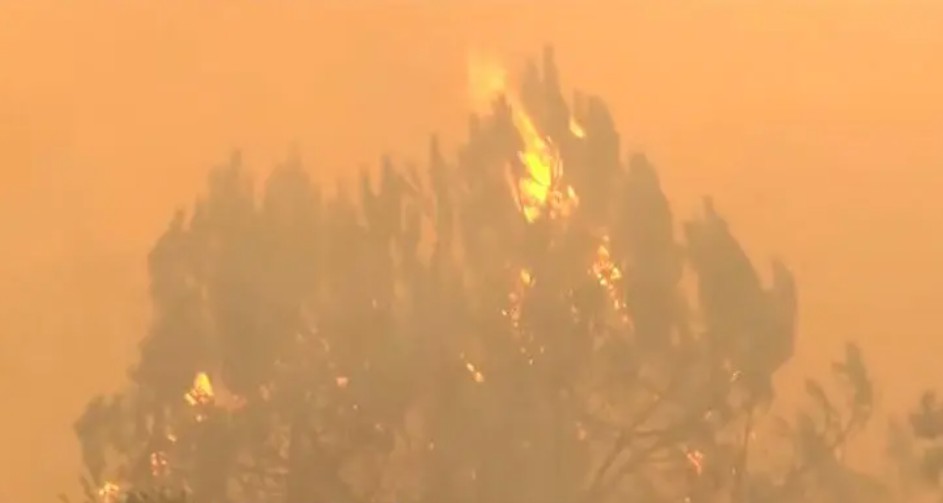
More than 300,000 people have been forced to flee their homes as wildfires continue to spread across France and Spain, with strong winds and high temperatures hampering firefighting efforts.
In south-western France, firefighters are battling to contain blazes moving towards the city of Bordeaux. Officials said the fires remain far from under control as shifting winds continue to fuel the flames.
In Spain, where a state of emergency has been declared, weather conditions have slightly improved firefighting efforts near Madrid. However, Prime Minister Pedro Sánchez warned that the country still faces "complex times ahead."
Authorities in Spain's València region confirmed the death of a man believed to be in his 70s. He was found inside his car after firefighters extinguished a blaze in the Salt de l'Aigua ravine in Manises, according to local media.
French authorities ordered another 55,000 people to evacuate late Saturday, bringing the total number of evacuees in the south-western Gironde and Landes regions to about 250,000.
Firefighter Captain Nicolas Braz told AFP that the wildfire had generated its own winds and whirlwinds, making it highly unpredictable and difficult to control. He warned that another challenging night lay ahead for emergency crews.
France has deployed military personnel to support firefighters by clearing vegetation and creating firebreaks. President Emmanuel Macron pledged that the government would support affected communities for as long as necessary and vowed the country would rebuild.
Smoke from the fires drifted towards Bordeaux on Saturday, with residents reporting a strong smell of burning across the city.
The final stage of the Tour de France on Sunday has been shortened from 133 kilometres to 89 kilometres to allow security personnel to be reassigned to wildfire-hit areas, organisers and police said.
Macron is also expected to hold an emergency meeting with ministers as around 30 wildfires continue to burn across France in what the government described as an unprecedented situation.
In Spain, fires remain active near Madrid. Interior Minister Fernando Grande-Marlaska said weather conditions had complicated efforts to contain the flames, with strong winds expected to push the fires further south overnight.
Since the outbreak of the fires, nearly 60,000 people have been evacuated from the Madrid and Ávila regions, while more than 28,000 others remain confined to their homes, according to Spain's Interior Ministry. Authorities also ordered evacuations in at least eight municipalities near Toledo late Saturday.
Madrid regional president Isabel Díaz Ayuso described the disaster as the worst wildfire in the region's history.
Sánchez said about 130,000 hectares of land have burned in Spain so far this year, exceeding the country's decade-long annual average of 100,000 hectares. France's Interior Minister Laurent Nuñez said nearly 98,000 hectares have burned across France since the beginning of 2026.
Wildfires have also affected other parts of Europe. In Italy, hundreds of fires, including 10 major blazes, broke out in Sicily this week, prompting evacuations. In Scotland, emergency services declared a major incident as crews continued battling a wildfire that has burned for 10 days in the Cairngorms National Park.
European Union Commissioner for Crisis Management Hadja Lahbib warned that this year's wildfire season could surpass previous records, noting that the fire season started unusually early. She also cautioned that another heatwave forecast for Europe could trigger further outbreaks.
To support France's response, the European Union has activated its civil protection mechanism, sending firefighting aircraft, helicopters and specialised personnel from several member states. European Commission President Ursula von der Leyen said 11 aircraft and helicopters from the EU's firefighting fleet have been deployed to assist France and Spain.
Loading...
Loading...
Also read







Editor : Iqbal Sobhan Chowdhury
Published by the Editor on behalf of the Observer Ltd. from Globe Printers, 24/A, New Eskaton Road, Ramna, Dhaka.
Editorial, News and Commercial Offices : Aziz Bhaban (2nd floor), 93, Motijheel C/A, Dhaka-1000.
Phone: PABX- 41053001-06; Advertisement: 41053012; 01793317829, 01550707291, E-mail: [email protected], [email protected] Online: email: [email protected] 41053014; 01550707297 Advertisement: 01550707296
Published by the Editor on behalf of the Observer Ltd. from Globe Printers, 24/A, New Eskaton Road, Ramna, Dhaka.
Editorial, News and Commercial Offices : Aziz Bhaban (2nd floor), 93, Motijheel C/A, Dhaka-1000.
Phone: PABX- 41053001-06; Advertisement: 41053012; 01793317829, 01550707291, E-mail: [email protected], [email protected] Online: email: [email protected] 41053014; 01550707297 Advertisement: 01550707296


