



| HEADLINE |

|

Nepal disaster: Miracle rescue of 6-year child after 3-day
Published : Sunday, 30 August, 2026 at 1:30 PM
Observer Online Desk



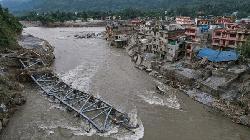
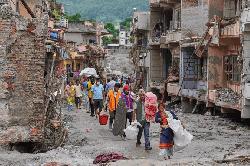
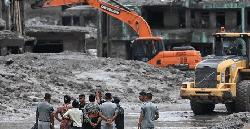
Nepal has been battling a devastating flood disaster after massive torrents swept through communities along the Bhote Koshi and Trishuli river corridors, killing hundreds and leaving thousands of people missing. Rescue teams have been searching damaged settlements, riverbanks, tunnels and hydropower sites while struggling with blocked roads, destroyed bridges and unstable slopes.
Now, in a remarkable rescue that has offered a rare moment of hope amid the devastation, a six-year-old girl has been pulled alive from beneath soil and debris in Rasuwa after surviving there for three days.
The girl was trapped in Timure, one of the areas badly affected by the Bhote Koshi floods. Her survival came to light when an armed police force team searching the disaster zone heard cries coming from beneath a large mass of soil and wreckage.
The sound immediately changed the rescue operation. Police personnel began digging toward the source of the cries, carefully removing soil and broken material in an effort to reach the trapped child.
After a difficult search, rescuers finally located the six-year-old beneath the debris and pulled her out. The dramatic rescue was captured on video, showing personnel working through mud, damaged structures and scattered wreckage before carrying the child to safety.
She was taken to the Armed Police Force Border Outpost in Timure, where officials found that her condition was deteriorating.
Authorities then tried to arrange an airlift to Kathmandu on Friday. However, darkness and poor weather prevented the transfer from going ahead.
The rescue has emerged as one of the few hopeful developments in a disaster that has left thousands of families waiting for news about missing relatives.
For rescue workers searching through destroyed communities, the discovery also showed that survivors could still be found despite the passage of several days.
The human cost of the disaster continued to rise as rescue operations expanded across the country.
Nepal's National Disaster Risk Reduction and Management Authority reported that the death toll from the Bhote Koshi and Trishuli flood disaster had reached 675 by 9.31 a.m. IST on August 30, 2026.
About 2,498 people remained unaccounted for, while more than 4,400 people had been rescued or evacuated. The rescued group included foreign nationals caught in the disaster.
Separate figures from China reported 16 deaths and 546 missing people in Tibet.
When the Nepal and Tibet figures are combined, the reported death toll stands at about 691, while more than 3,000 people remain missing or unaccounted for.
The rescue of the young girl came as Nepal faced another threat from rising water levels.
Authorities issued a fresh warning after the Bhote Koshi River began rising in Rasuwa. The downstream Trishuli River at Galchhi in Dhading was also reported to be around three metres above its normal level.
Residents living near vulnerable riverbanks were urged to remain alert and move to safer locations if conditions became dangerous.
The warning added to concerns among communities already struggling to recover from the first wave of flooding.
Nepal Army, Nepal Police and Armed Police Force teams are continuing search operations across Rasuwa, Nuwakot, Dhading and Gorkha.
Personnel are checking riverbanks and destroyed settlements while also searching hydropower facilities and tunnels where workers and residents could still be trapped.
The scale of the operation has forced rescuers to work across difficult terrain while families wait for information about relatives who disappeared during the floods.
India has also increased its support for Nepal's rescue and recovery operations.
A specialised tunnel rescue team and forensic experts have been sent to assist Nepalese authorities. The teams are supporting efforts to locate missing people and identify recovered bodies.
A fourth Indian Air Force flight delivered 11 tonnes of additional relief supplies, rescue equipment and DNA analysis equipment to Kathmandu.
India has now airlifted approximately 68.5 tonnes of relief material to Nepal.
The latest reports said 108 Indian nationals had been rescued, while around 275 Indians remained missing.
The figures have added another dimension to the disaster, with authorities working to locate foreign nationals as well as Nepalese residents caught in the floods.
What caused the Nepal floods
The disaster was initially linked to seismic activity, but further scientific analysis has pointed to a different cause.
Scientists say a glacial collapse or ice and rock avalanche triggered the catastrophic chain of events. The collapse sent huge amounts of ice, rock, mud and water into the river system.
The event generated seismic signals that were initially mistaken for an earthquake. Satellite imagery and analysis by the United States Geological Survey later indicated that the flooding was not primarily caused by an earthquake.
Instead, the collapse created a powerful debris-filled surge that moved into the Bhote Koshi and Trishuli river corridors.
The resulting flood struck communities with little warning and caused widespread destruction to homes, roads, bridges and other infrastructure.
Now, in a remarkable rescue that has offered a rare moment of hope amid the devastation, a six-year-old girl has been pulled alive from beneath soil and debris in Rasuwa after surviving there for three days.
The girl was trapped in Timure, one of the areas badly affected by the Bhote Koshi floods. Her survival came to light when an armed police force team searching the disaster zone heard cries coming from beneath a large mass of soil and wreckage.
The sound immediately changed the rescue operation. Police personnel began digging toward the source of the cries, carefully removing soil and broken material in an effort to reach the trapped child.
After a difficult search, rescuers finally located the six-year-old beneath the debris and pulled her out. The dramatic rescue was captured on video, showing personnel working through mud, damaged structures and scattered wreckage before carrying the child to safety.
She was taken to the Armed Police Force Border Outpost in Timure, where officials found that her condition was deteriorating.
Authorities then tried to arrange an airlift to Kathmandu on Friday. However, darkness and poor weather prevented the transfer from going ahead.
The girl was eventually flown to Kathmandu on Saturday afternoon. She was taken to a hospital for further medical treatment.
A rare moment of hope
The rescue has emerged as one of the few hopeful developments in a disaster that has left thousands of families waiting for news about missing relatives.
For rescue workers searching through destroyed communities, the discovery also showed that survivors could still be found despite the passage of several days.
The operation in Rasuwa came as teams across Nepal continued to search areas hit by powerful floodwaters and debris flows.
Nepal death toll reaches 675
The human cost of the disaster continued to rise as rescue operations expanded across the country.
Nepal's National Disaster Risk Reduction and Management Authority reported that the death toll from the Bhote Koshi and Trishuli flood disaster had reached 675 by 9.31 a.m. IST on August 30, 2026.
About 2,498 people remained unaccounted for, while more than 4,400 people had been rescued or evacuated. The rescued group included foreign nationals caught in the disaster.
Separate figures from China reported 16 deaths and 546 missing people in Tibet.
When the Nepal and Tibet figures are combined, the reported death toll stands at about 691, while more than 3,000 people remain missing or unaccounted for.
However, the numbers are not final. Nepal and China are releasing figures separately, while rescue teams continue to recover bodies and reach areas that remain difficult to access.
Fresh flood warning raises concern
The rescue of the young girl came as Nepal faced another threat from rising water levels.
Authorities issued a fresh warning after the Bhote Koshi River began rising in Rasuwa. The downstream Trishuli River at Galchhi in Dhading was also reported to be around three metres above its normal level.
Residents living near vulnerable riverbanks were urged to remain alert and move to safer locations if conditions became dangerous.
The warning added to concerns among communities already struggling to recover from the first wave of flooding.
Rescue operations have been made harder by damaged bridges, blocked roads and unstable slopes. Authorities are also monitoring the threat of another surge from a lake formed by an avalanche or landslide close to the Nepal China border.
Rescuers race to find the missing
Nepal Army, Nepal Police and Armed Police Force teams are continuing search operations across Rasuwa, Nuwakot, Dhading and Gorkha.
Personnel are checking riverbanks and destroyed settlements while also searching hydropower facilities and tunnels where workers and residents could still be trapped.
The scale of the operation has forced rescuers to work across difficult terrain while families wait for information about relatives who disappeared during the floods.
Every recovered survivor offers hope, but the large number of people still unaccounted for means the search remains urgent.
India expands rescue assistance
India has also increased its support for Nepal's rescue and recovery operations.
A specialised tunnel rescue team and forensic experts have been sent to assist Nepalese authorities. The teams are supporting efforts to locate missing people and identify recovered bodies.
A fourth Indian Air Force flight delivered 11 tonnes of additional relief supplies, rescue equipment and DNA analysis equipment to Kathmandu.
India has now airlifted approximately 68.5 tonnes of relief material to Nepal.
The latest reports said 108 Indian nationals had been rescued, while around 275 Indians remained missing.
The figures have added another dimension to the disaster, with authorities working to locate foreign nationals as well as Nepalese residents caught in the floods.
What caused the Nepal floods
The disaster was initially linked to seismic activity, but further scientific analysis has pointed to a different cause.
Scientists say a glacial collapse or ice and rock avalanche triggered the catastrophic chain of events. The collapse sent huge amounts of ice, rock, mud and water into the river system.
The event generated seismic signals that were initially mistaken for an earthquake. Satellite imagery and analysis by the United States Geological Survey later indicated that the flooding was not primarily caused by an earthquake.
Instead, the collapse created a powerful debris-filled surge that moved into the Bhote Koshi and Trishuli river corridors.
The resulting flood struck communities with little warning and caused widespread destruction to homes, roads, bridges and other infrastructure.
Loading...
Loading...
Also read




Editor : Iqbal Sobhan Chowdhury
Published by the Editor on behalf of the Observer Ltd. from Globe Printers, 24/A, New Eskaton Road, Ramna, Dhaka.
Editorial, News and Commercial Offices : Aziz Bhaban (2nd floor), 93, Motijheel C/A, Dhaka-1000.
Phone: PABX- 41053001-06; Advertisement: 41053012; 01793317829, 01550707291, E-mail: [email protected], [email protected] Online: email: [email protected] 41053014; 01550707297 Advertisement: 01550707296
Published by the Editor on behalf of the Observer Ltd. from Globe Printers, 24/A, New Eskaton Road, Ramna, Dhaka.
Editorial, News and Commercial Offices : Aziz Bhaban (2nd floor), 93, Motijheel C/A, Dhaka-1000.
Phone: PABX- 41053001-06; Advertisement: 41053012; 01793317829, 01550707291, E-mail: [email protected], [email protected] Online: email: [email protected] 41053014; 01550707297 Advertisement: 01550707296


