



| HEADLINE |

|

Turning e-waste into treasure
Published : Monday, 27 July, 2026 at 12:00 AM
Mizanur Rahman


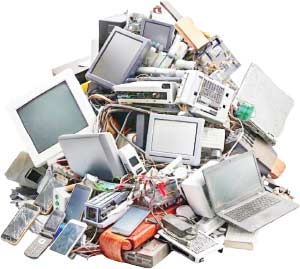 Smartphones, laptops, televisions, refrigerators and air conditioners have become an inseparable part of modern life. Yet, when these devices reach the end of their lifespan, they often become electronic waste-or e-waste-posing one of the fastest-growing environmental and public health challenges in Bangladesh.
In a scrap-yard in Keraniganj on the outskirts of Dhaka, workers dismantle discarded mobile phones, televisions and refrigerators every day, separating batteries, circuit boards and plastic components with little or no protective equipment. Years of exposure to hazardous materials have left many suffering from respiratory illnesses, skin diseases and lung complications, often without realizing the risks they face.
Bangladesh lacks updated official statistics on e-waste generation. However, a 2018 report by the Department of Environment estimated that the country produces around 400,000 tonnes of e-waste annually, while only 3 percent is formally recycled. The remaining 97 percent ends up in open dumps or mixes with municipal waste. The report warned that if current trends continue, annual e-waste generation could surge to 4.6 million tonnes by 2035.
Experts say the greatest danger lies in the toxic substances contained in electronic products. Heavy metals such as lead, mercury, cadmium, chromium and arsenic, along with plastics like polyvinyl chloride (PVC), can contaminate soil, water and air before entering the human body. Long-term exposure has been linked to cancer, kidney and liver damage, cardiovascular disease, neurological disorders and developmental problems in children.
According to the World Health Organization (WHO), informal e-waste recycling has become a significant global public health concern. Millions of children and pregnant women are exposed to hazardous chemicals during unsafe recycling activities, increasing the risks of premature birth, low birth weight, impaired brain development and chronic diseases.
Dr Shakil Akhtar, Associate Professor at Bangladesh Medical College, said e-waste affects human health in multiple ways. Initially, exposure can cause skin diseases, while prolonged contact with toxic materials may severely damage the kidneys, lungs and brain.
Despite these risks, experts emphasize that e-waste is also a valuable economic resource. Circuit boards in smartphones and computers contain precious metals such as gold, silver, copper, aluminium and palladium. With proper recycling technology, these materials can be recovered and reused. In many countries, e-waste recycling has become a profitable industry, and several companies in Bangladesh have already begun processing several tonnes of e-waste every day to recover reusable materials.
Globally, the volume of electronic waste continues to rise rapidly. Data from the United Nations University's StEP Initiative show that the world generated 45.6 million tonnes of e-waste in 2012, which increased dramatically in the following years alongside the rapid growth of digital devices. Bangladesh has also witnessed a sharp rise in mobile phone use. According to the Bangladesh Telecommunication Regulatory Commission (BTRC), nearly 130 million mobile handsets are currently in use across the country, with around 30 percent becoming e-waste every year.
Recognizing the growing threat, the government has introduced the Hazardous Waste (E-Waste) Management Rules, requiring manufacturers and assemblers of electrical and electronic equipment to take back used products. The policy aims to collect at least 50 percent of generated e-waste within the next five years. Meanwhile, BTRC is preparing separate guidelines for managing e-waste generated by the telecommunications sector.
However, specialists argue that regulations alone are not enough. Effective implementation, modern recycling infrastructure, safe collection systems, worker protection, public awareness and producer responsibility programmes are all essential. Manufacturers need to establish take-back schemes, while consumers should avoid discarding old electronic devices with household waste and instead use designated collection centres.
As Bangladesh embraces rapid digitalisation, managing electronic waste has become just as important as expanding access to technology. Without sustainable e-waste management, today's smart devices could become tomorrow's toxic legacy-threatening public health, the environment and the economy. Turning this growing waste stream into a circular economy opportunity will require coordinated efforts from government, industry and consumers alike.
Loading...
Loading...
Also read



Editor : Iqbal Sobhan Chowdhury
Published by the Editor on behalf of the Observer Ltd. from Globe Printers, 24/A, New Eskaton Road, Ramna, Dhaka.
Editorial, News and Commercial Offices : Aziz Bhaban (2nd floor), 93, Motijheel C/A, Dhaka-1000.
Phone: PABX- 41053001-06; Advertisement: 41053012; 01793317829, 01550707291, E-mail: [email protected], [email protected] Online: email: [email protected] 41053014; 01550707297 Advertisement: 01550707296
Published by the Editor on behalf of the Observer Ltd. from Globe Printers, 24/A, New Eskaton Road, Ramna, Dhaka.
Editorial, News and Commercial Offices : Aziz Bhaban (2nd floor), 93, Motijheel C/A, Dhaka-1000.
Phone: PABX- 41053001-06; Advertisement: 41053012; 01793317829, 01550707291, E-mail: [email protected], [email protected] Online: email: [email protected] 41053014; 01550707297 Advertisement: 01550707296


