



| HEADLINE |

|

Komela's success: Empowering women in farming
Published : Saturday, 8 August, 2026 at 12:00 AM
H M Imam Hasan


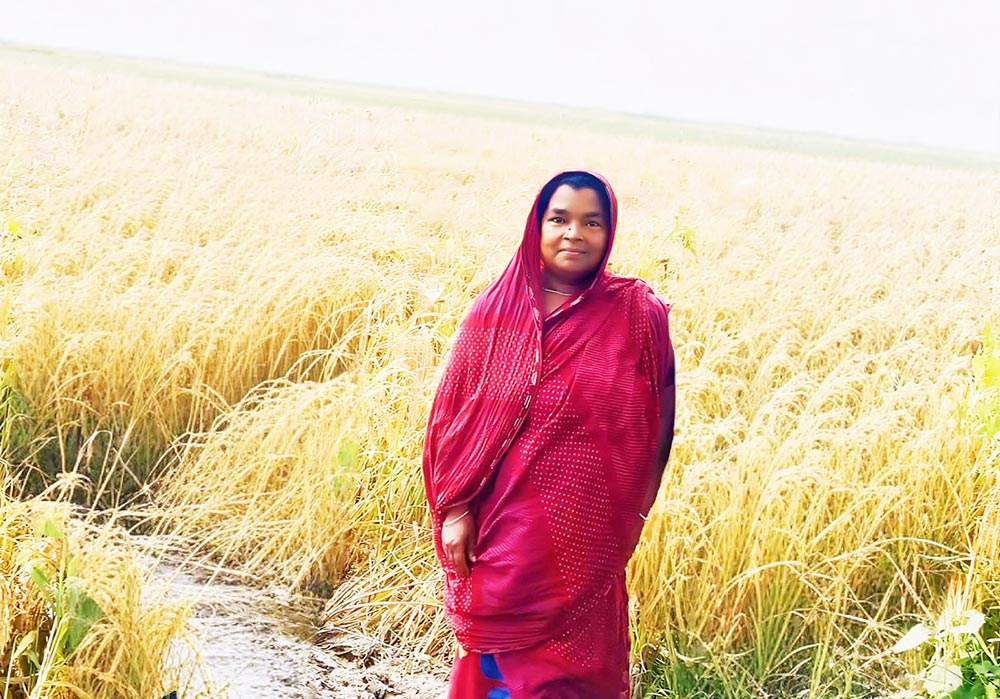 As the morning sun rises over the lush paddy fields of Jorapukuria village in Harinakundaupazila of Jhenaidah, Komela Khatun stands proudly among her thriving rice crops. Her weathered face reflects years of hard work, while her confident smile tells the story of a woman who overcame poverty, prejudice, and adversity to become a successful farmer.
"There was a time when people said farming was not a woman's job," she says. "Today, I have proved them wrong."
Komela's journey is a powerful example of resilience and determination. A few years ago, she cultivated only two bighas of leased land, struggling to earn enough to support her family. Every season brought fresh challenges, including erratic weather, pests, diseases, and fluctuating market prices. Beyond these hardships, she also faced social barriers, as many in her village believed agriculture was a man's profession.
"There were moments when I felt I couldn't continue," Komela recalls. "People's words hurt me. But whenever I looked at my family, I found the strength to start again."
Her turning point came when she received financial support from Padakhep, one of Bangladesh's leading microfinance institutions. More than a loan, the support gave her confidence to invest in quality seeds, fertilizers, irrigation, and labour instead of meeting only immediate household needs.
"If I hadn't received the support from Padakhep, I couldn't have expanded my farming," she says. "They believed in me, and that belief gave me the courage to move forward."
The investment transformed her livelihood. Better inputs led to higher yields, increased profits, and the opportunity to lease more land. Today, Komela cultivates nearly ten bighas-five times more than when she started-turning a small farming operation into a sustainable enterprise.
Her success has also challenged long-standing gender stereotypes. Villagers who once doubted her abilities now admire her achievements. Neighbour Hazera Khatun admits, "We used to think farming was only for men. Komela has changed that belief. Now we understand that hard work and determination matter far more than whether someone is a man or a woman."
Padakhep sees Komela's success as an example of how financial inclusion, entrepreneurship, and digital financial services can improve rural livelihoods. Dr. Muhammad Risalat Siddique, Deputy Executive Director of Padakhep, says Komela's achievements demonstrate that lasting change comes when financial support is combined with determination, sound planning, and technology. Her use of digital financial services has made transactions easier, safer, and more efficient, opening new opportunities for rural entrepreneurs.
Md. Saleh Bin Sums, Executive Director of Padakhep, adds that microfinance is far more than access to credit. It drives social and economic transformation by enabling women to invest in productive activities, increase household income, create employment, and strengthen their position within their communities.
Komela's ambitions now extend beyond her own farm. Her story shows that when rural women gain access to opportunity and institutional support, they not only improve their own lives but also inspire others, challenge social norms, and contribute to sustainable development. Across the green fields of Jhenaidah, Komela Khatun's greatest harvest is measured not only in rice but also in confidence, respect, and hope.
Loading...
Loading...
Also read



Editor : Iqbal Sobhan Chowdhury
Published by the Editor on behalf of the Observer Ltd. from Globe Printers, 24/A, New Eskaton Road, Ramna, Dhaka.
Editorial, News and Commercial Offices : Aziz Bhaban (2nd floor), 93, Motijheel C/A, Dhaka-1000.
Phone: PABX- 41053001-06; Advertisement: 41053012; 01793317829, 01550707291, E-mail: [email protected], [email protected] Online: email: [email protected] 41053014; 01550707297 Advertisement: 01550707296
Published by the Editor on behalf of the Observer Ltd. from Globe Printers, 24/A, New Eskaton Road, Ramna, Dhaka.
Editorial, News and Commercial Offices : Aziz Bhaban (2nd floor), 93, Motijheel C/A, Dhaka-1000.
Phone: PABX- 41053001-06; Advertisement: 41053012; 01793317829, 01550707291, E-mail: [email protected], [email protected] Online: email: [email protected] 41053014; 01550707297 Advertisement: 01550707296


