



| HEADLINE |

|

Online scams target women of all ages
Published : Saturday, 14 November, 2026 at 12:00 AM
Farhana Naznin


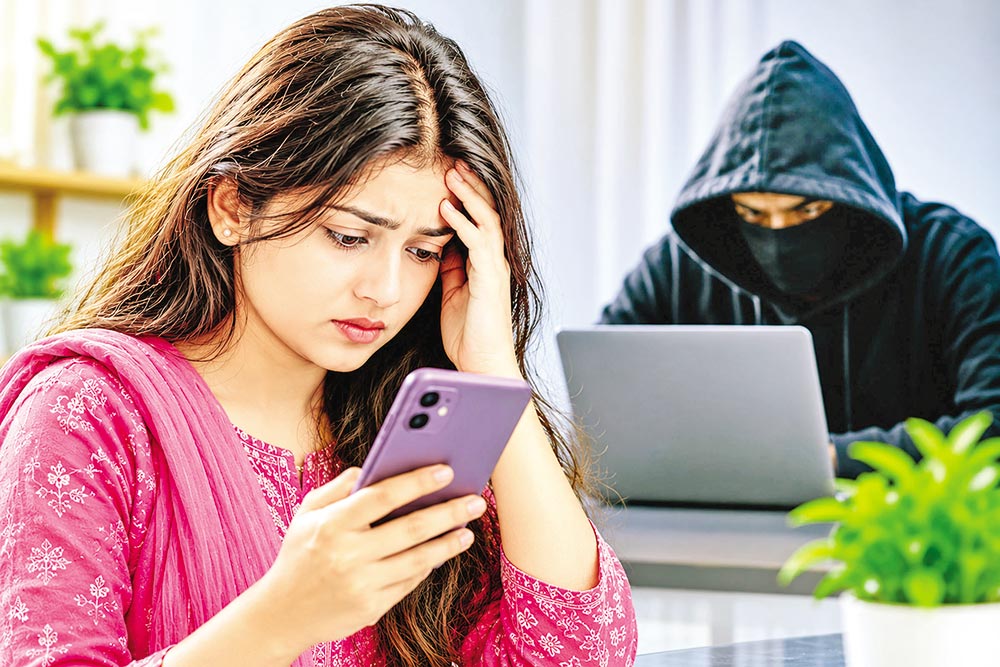 From teenage girls to adult women, online fraudsters are using emotions, trust, beauty trends and financial ambitions to trap their victims. Awareness is the strongest protection.
The digital world has made life easier for women of all ages. Social media, online shopping, digital banking and communication platforms offer opportunities to learn, work, connect and express themselves.
However, alongside these benefits, a growing threat is emerging: online scams targeting girls, teenagers and women from different walks of life.
Fraudsters are becoming increasingly clever. They use attractive offers, fake identities, emotional relationships, glamorous lifestyles and promises of financial success to gain women's trust. Their victims are not necessarily inexperienced or uneducated. Anyone can become a target.
Teenage girls are particularly vulnerable to online grooming, fake friendships and romantic deception. Scammers may create attractive profiles, pretend to be friends or celebrities, and gradually build emotional connections. Once trust develops, they may ask for personal photographs, private information or money. In some cases, victims face blackmail and threats when they refuse to cooperate.
For young women and university students, fake scholarship announcements, overseas education opportunities, modelling offers, talent competitions and part-time job advertisements can become traps. Fraudsters may demand registration fees, personal documents or photographs before disappearing. Some use the promise of quick earnings through online tasks and investment schemes to steal money and personal information.
Adult women also face different forms of digital fraud. Fake online shopping pages advertise fashionable clothes, cosmetics, jewellery and household products at unusually low prices. Customers pay in advance but receive poor-quality products, completely different items or nothing at all. Fake beauty and skincare advertisements can also promote unsafe products through misleading claims and fabricated customer reviews.
Romance scams are another serious concern. Fraudsters develop relationships through social media and dating platforms, sometimes pretending to be successful professionals or foreign nationals. After gaining emotional confidence, they invent emergencies, travel difficulties or financial problems and request money. Some victims lose substantial savings because they believe they are helping someone they love.
Financial scams are equally dangerous. Fake bank representatives, mobile financial service agents and customer-care officers may contact women through phone calls or messages, asking for PINs, passwords, one-time passwords (OTPs) or verification codes. Once these details are shared, scammers can gain access to accounts and steal money.
The psychological consequences can be devastating. Victims may experience humiliation, anxiety, financial loss and social isolation. Many remain silent because they fear family criticism, social judgement or damage to their reputation. This silence often allows criminals to continue targeting others.
Preventing online scams requires awareness and responsible digital behaviour. Women and girls should never share passwords, OTPs, private photographs or sensitive personal information with strangers. They should verify online sellers, job offers, scholarship announcements and investment opportunities before making payments. Suspicious links and unknown applications should be avoided, while privacy settings and two-factor authentication should be enabled.
Parents should maintain open communication with teenagers rather than responding with blame when something goes wrong. Schools, universities, workplaces and women's organisations can also play an important role in digital safety education.
Most importantly, victims should not feel ashamed. They should preserve screenshots, transaction records, messages and other evidence and report the incident to the relevant authorities or cybercrime support services.
The internet should be a place of opportunity, not fear. Protecting women in the digital age is not only an individual responsibility; it requires families, communities, institutions and law enforcement agencies to work together. Awareness, confidence and timely action can prevent a moment of misplaced trust from becoming a lifelong burden.

Loading...
Loading...
Also read



Editor : Iqbal Sobhan Chowdhury
Published by the Editor on behalf of the Observer Ltd. from Globe Printers, 24/A, New Eskaton Road, Ramna, Dhaka.
Editorial, News and Commercial Offices : Aziz Bhaban (2nd floor), 93, Motijheel C/A, Dhaka-1000.
Phone: PABX- 41053001-06; Advertisement: 41053012; 01793317829, 01550707291, 01550707296
E-mail: [email protected], [email protected]. [email protected], [email protected], [email protected], [email protected], Online-email: [email protected]


