



| HEADLINE |

|
Russian tanker explosion triggers oil spill off Oman coast
Published : Monday, 10 August, 2026 at 9:50 PM
Observer Online Report


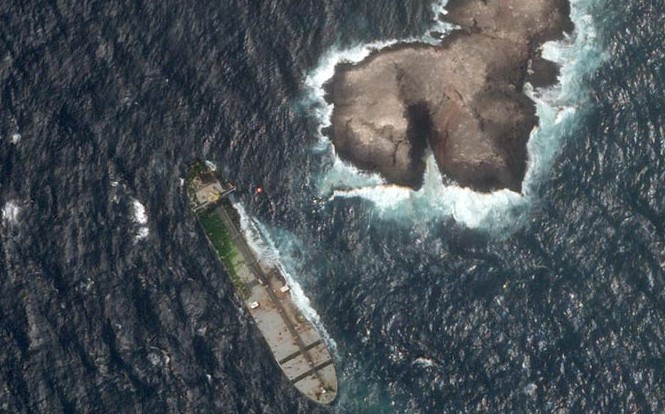
Collected Photo
A Russian crude oil tanker under Western sanctions has been damaged, triggering an oil spill covering an estimated 390 square kilometres off the coast of Oman, the Omani government said Monday. The spill was detected near the Hallaniyat Islands in the southern Dhofar Governorate, raising concerns over potential environmental damage.
Oman's Environment Authority said an analysis of the latest satellite imagery showed the oil slick had spread across about 390 square kilometres. The slick was extending northeast of the Hallaniyat Islands towards the mainland, with its closest point approximately seven kilometres from the coast.
The 274-metre tanker, 'Caroline Bezengi', was damaged before the spill occurred. Reuters' analysis of satellite imagery and vessel-tracking data also indicated that the oil slick had continued to expand by the end of last month.
The cause of the damage to the tanker remains unclear, and the Omani government has not provided an explanation. Two maritime security sources said the vessel's crew reported a problem near the southern Yemeni port of Mukalla on June 8. Initial reports suggested that an explosion had occurred on board.
According to vessel-tracking data, the 'Caroline Bezengi' had been loaded with Russian crude oil before beginning its voyage. The tanker last transmitted a signal through the public Automatic Identification System (AIS) near the Yemeni coast on June 11.
The incident has raised concerns over the potential environmental impact of the spill, particularly in waters near the Hallaniyat Islands.
The 'Caroline Bezengi' is among vessels involved in transporting Russian fuel that have been targeted by Western sanctions. The European Union and the United Kingdom have imposed sanctions on the tanker over its alleged involvement in Russia's energy trade.
Russia has increasingly relied on older tankers, many of which are considered poorly maintained, to continue exporting oil while circumventing Western sanctions. Such vessels are commonly referred to as part of Russia's “shadow fleet,” according to Reuters.
-HIS
Loading...
Loading...
Also read







Editor : Iqbal Sobhan Chowdhury
Published by the Editor on behalf of the Observer Ltd. from Globe Printers, 24/A, New Eskaton Road, Ramna, Dhaka.
Editorial, News and Commercial Offices : Aziz Bhaban (2nd floor), 93, Motijheel C/A, Dhaka-1000.
Phone: PABX- 41053001-06; Advertisement: 41053012; 01793317829, 01550707291, E-mail: [email protected], [email protected] Online: email: [email protected] 41053014; 01550707297 Advertisement: 01550707296
Published by the Editor on behalf of the Observer Ltd. from Globe Printers, 24/A, New Eskaton Road, Ramna, Dhaka.
Editorial, News and Commercial Offices : Aziz Bhaban (2nd floor), 93, Motijheel C/A, Dhaka-1000.
Phone: PABX- 41053001-06; Advertisement: 41053012; 01793317829, 01550707291, E-mail: [email protected], [email protected] Online: email: [email protected] 41053014; 01550707297 Advertisement: 01550707296


