



| HEADLINE |

|

Ebola on track to become deadliest in history: WHO chief
Published : Thursday, 13 August, 2026 at 11:05 AM
Observer Online Report


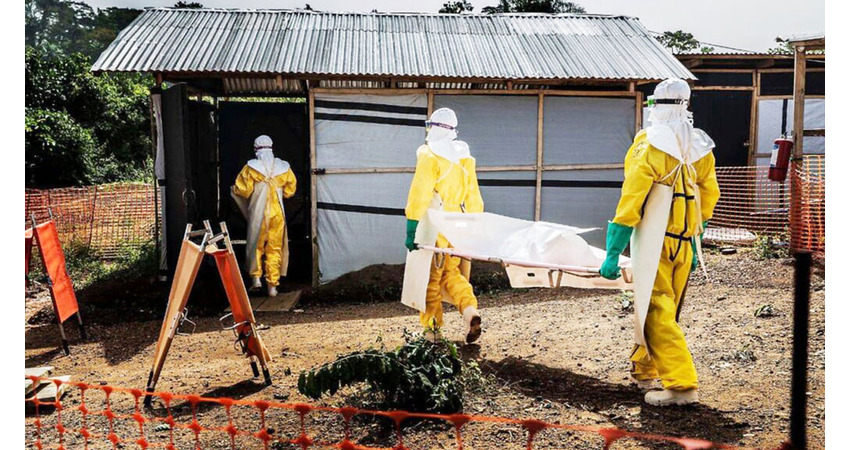
Collected Photo
World Health Organization (WHO) Director-General Tedros Adhanom Ghebreyesus warned that the Ebola outbreak in the Democratic Republic of the Congo (DR Congo) is on track to become the deadliest in history.
The WHO chief stated that if the 2026 outbreak continues at its current pace, it will surpass the 2014-2016 outbreak. That previous outbreak killed at least 11,000 people.
Officials formally declared this year's outbreak on May 15. Since then, at least 4,300 people have been infected and over 2,000 have died.
The WHO announced on Wednesday that it hopes to halt the spread within the next three months. However, the agency clarified that controlling the spread does not mean complete eradication of the outbreak.
Health officials reported this week that the outbreak likely began three months before its official May declaration.
Dr. Mohamed Janabi, WHO Regional Director for Africa, spoke at a press conference in Bunia near the epicenter. He remarked that health workers are chasing the virus, but the virus remains ahead.
Citing research data, he explained that the virus started spreading in February. Initial cases were misdiagnosed as malaria or typhoid.
The 2026 outbreak is caused by the rare Bundibugyo strain of Ebola. This strain was recorded only twice before, in 2007 and 2012.
There are no approved vaccines or treatments for this specific strain.
Ongoing regional conflict in eastern DR Congo presents additional challenges to containment efforts. Dr. Janabi noted that health workers can reach only 30 per cent of affected individuals.
Ebola is a rare but deadly viral disease. Symptoms appear between two and 21 days after infection. Patients experience sudden flu-like symptoms, including fever, headache, and fatigue. The disease can progress to vomiting, diarrhea, and organ failure.
The virus spreads through contact with infected body fluids, such as blood or vomit.
The UK Medicines and Healthcare products Regulatory Agency (MHRA) approved the first human trial for a Bundibugyo vaccine. A team at Oxford University developed the vaccine using Oxford-AstraZeneca COVID-19 technology. Three other teams are developing separate vaccines, though clinical trials have not begun yet.
Meanwhile, a separate WHO-funded trial is underway in DR Congo. It evaluates whether two existing antiviral treatments can improve patient survival rates.
-SA

Loading...
Loading...
Also read




Editor : Iqbal Sobhan Chowdhury
Published by the Editor on behalf of the Observer Ltd. from Globe Printers, 24/A, New Eskaton Road, Ramna, Dhaka.
Editorial, News and Commercial Offices : Aziz Bhaban (2nd floor), 93, Motijheel C/A, Dhaka-1000.
Phone: PABX- 41053001-06; Advertisement: 41053012; 01793317829, 01550707291, E-mail: [email protected], [email protected] Online: email: [email protected] 41053014; 01550707297 Advertisement: 01550707296
Published by the Editor on behalf of the Observer Ltd. from Globe Printers, 24/A, New Eskaton Road, Ramna, Dhaka.
Editorial, News and Commercial Offices : Aziz Bhaban (2nd floor), 93, Motijheel C/A, Dhaka-1000.
Phone: PABX- 41053001-06; Advertisement: 41053012; 01793317829, 01550707291, E-mail: [email protected], [email protected] Online: email: [email protected] 41053014; 01550707297 Advertisement: 01550707296


