



| HEADLINE |

|
Hormuz disruption: LNG supply to Bangladesh-Pakistan postponed
Published : Tuesday, 1 September, 2026 at 12:44 PM
Observer Online Report


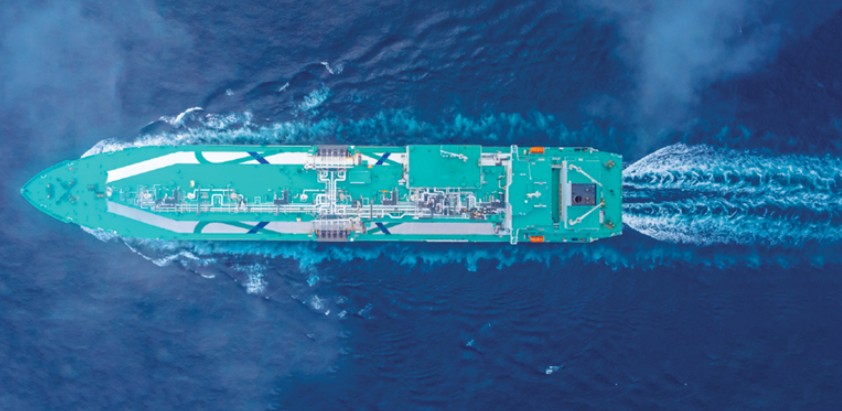
QatarEnergy has extended its force majeure on liquefied natural gas (LNG) supplies to several buyers in Europe and Asia until November, citing security concerns and disruptions to shipping through the Strait of Hormuz amid the ongoing US-Iran conflict.
Bangladesh and Pakistan are among the Asian buyers affected by the cancellations.
Force majeure is a contractual provision that temporarily releases parties from their obligations when unforeseen and unavoidable circumstances- such as war, natural disasters or pandemics--prevent them from fulfilling a contract.
Qatar is Bangladesh’s largest supplier under long-term LNG import agreements. Bangladesh receives at least 40 LNG cargoes from Qatar every year. Had the conflict not disrupted supplies, the country was scheduled to receive 56 cargoes from Qatar under two long-term contracts in the current fiscal year. Petrobangla now expects to receive only about half of those cargoes.
QatarEnergy’s force majeure has forced LNG buyers in Asia and Europe to seek alternative sources. Bangladesh has been particularly hard hit by the supply disruption, prompting the government to arrange LNG imports through the direct procurement method (DPM).
However, suppliers have failed to deliver at least six cargoes under the arrangement, creating a significant shortfall. The shortage has affected power generation, industries, households and the compressed natural gas (CNG) sector.
With long-term LNG supplies becoming increasingly uncertain, Petrobangla has stepped up purchases from the spot market. Officials said the government was prioritising supply security over cost to keep the supply chain running.
Petrobangla purchased two spot-market LNG cargoes last week at prices exceeding $24 per million British thermal units (MMBtu).
To ensure uninterrupted supplies and boost competition, Petrobangla is also expanding its list of eligible LNG suppliers. Twenty-nine companies are currently on the list, while another nine companies have been considered eligible and contacted for inclusion.
Officials said the supplier list was being expanded primarily to increase competition in LNG tenders and help maintain a stable supply.
QatarEnergy first suspended its LNG operations and declared force majeure on March 4 following disruptions to shipping through the Strait of Hormuz and the outbreak of the US-Iran war. The disruption effectively removed most of Qatar’s LNG cargoes from the global market.
According to data from Kpler, a global market-monitoring firm, Qatar exported only 18 LNG cargoes during the first six months of the war, compared with 509 cargoes during the same period a year earlier.
The sharp drop in exports is estimated to have cost Qatar around $24 billion (€20.7 billion) in gas-sales revenue. QatarEnergy President and CEO and Qatar’s Minister of State for Energy Affairs Saad Sherida Al-Kaabi said Iranian missile attacks had reduced Qatar’s LNG export capacity by 17 per cent.
A report by the US-based Institute for Energy Economics and Financial Analysis (IEEFA) said Qatar and the United Arab Emirates jointly supply 99% of Pakistan’s LNG imports, 72per cent of Bangladesh’s and 53per cent of India’s.
LNG consumption in these countries is concentrated mainly in power generation and industry. Amid supply shortages, India has restricted LNG supplies to the industrial sector, Bangladesh has increasingly turned to spot-market purchases, while Pakistan has implemented an emergency gas management plan.
Bangladesh and Pakistan are among the Asian buyers affected by the cancellations.
Force majeure is a contractual provision that temporarily releases parties from their obligations when unforeseen and unavoidable circumstances- such as war, natural disasters or pandemics--prevent them from fulfilling a contract.
Qatar is Bangladesh’s largest supplier under long-term LNG import agreements. Bangladesh receives at least 40 LNG cargoes from Qatar every year. Had the conflict not disrupted supplies, the country was scheduled to receive 56 cargoes from Qatar under two long-term contracts in the current fiscal year. Petrobangla now expects to receive only about half of those cargoes.
Citing Bloomberg, Qatar-based Doha News reported that the force majeure period for Qatar’s LNG supplies to Bangladesh has been extended beyond September. Petrobangla officials, however, said they had not yet received an official notification from QatarEnergy.
Meanwhile, Pakistan, another Asian buyer of QatarEnergy LNG, was notified last week that cargo cancellations would continue through October. Several European buyers have also reportedly begun receiving similar notices, according to Doha News.
QatarEnergy’s force majeure has forced LNG buyers in Asia and Europe to seek alternative sources. Bangladesh has been particularly hard hit by the supply disruption, prompting the government to arrange LNG imports through the direct procurement method (DPM).
However, suppliers have failed to deliver at least six cargoes under the arrangement, creating a significant shortfall. The shortage has affected power generation, industries, households and the compressed natural gas (CNG) sector.
With long-term LNG supplies becoming increasingly uncertain, Petrobangla has stepped up purchases from the spot market. Officials said the government was prioritising supply security over cost to keep the supply chain running.
Petrobangla purchased two spot-market LNG cargoes last week at prices exceeding $24 per million British thermal units (MMBtu).
To ensure uninterrupted supplies and boost competition, Petrobangla is also expanding its list of eligible LNG suppliers. Twenty-nine companies are currently on the list, while another nine companies have been considered eligible and contacted for inclusion.
Officials said the supplier list was being expanded primarily to increase competition in LNG tenders and help maintain a stable supply.
QatarEnergy first suspended its LNG operations and declared force majeure on March 4 following disruptions to shipping through the Strait of Hormuz and the outbreak of the US-Iran war. The disruption effectively removed most of Qatar’s LNG cargoes from the global market.
According to data from Kpler, a global market-monitoring firm, Qatar exported only 18 LNG cargoes during the first six months of the war, compared with 509 cargoes during the same period a year earlier.
The sharp drop in exports is estimated to have cost Qatar around $24 billion (€20.7 billion) in gas-sales revenue. QatarEnergy President and CEO and Qatar’s Minister of State for Energy Affairs Saad Sherida Al-Kaabi said Iranian missile attacks had reduced Qatar’s LNG export capacity by 17 per cent.
A report by the US-based Institute for Energy Economics and Financial Analysis (IEEFA) said Qatar and the United Arab Emirates jointly supply 99% of Pakistan’s LNG imports, 72per cent of Bangladesh’s and 53per cent of India’s.
LNG consumption in these countries is concentrated mainly in power generation and industry. Amid supply shortages, India has restricted LNG supplies to the industrial sector, Bangladesh has increasingly turned to spot-market purchases, while Pakistan has implemented an emergency gas management plan.
Loading...
Loading...
Also read









Editor : Iqbal Sobhan Chowdhury
Published by the Editor on behalf of the Observer Ltd. from Globe Printers, 24/A, New Eskaton Road, Ramna, Dhaka.
Editorial, News and Commercial Offices : Aziz Bhaban (2nd floor), 93, Motijheel C/A, Dhaka-1000.
Phone: PABX- 41053001-06; Advertisement: 41053012; 01793317829, 01550707291, E-mail: [email protected], [email protected] Online: email: [email protected] 41053014; 01550707297 Advertisement: 01550707296
Published by the Editor on behalf of the Observer Ltd. from Globe Printers, 24/A, New Eskaton Road, Ramna, Dhaka.
Editorial, News and Commercial Offices : Aziz Bhaban (2nd floor), 93, Motijheel C/A, Dhaka-1000.
Phone: PABX- 41053001-06; Advertisement: 41053012; 01793317829, 01550707291, E-mail: [email protected], [email protected] Online: email: [email protected] 41053014; 01550707297 Advertisement: 01550707296


