



| HEADLINE |

|

‘Penis Theft’ rumours turn deadly in Africa
Published : Saturday, 5 September, 2026 at 4:24 PM
Observer Online Report


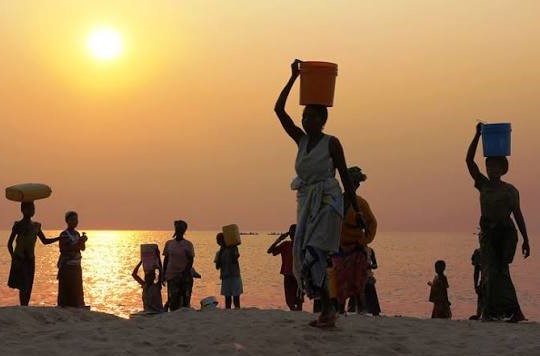
Symbolic Photo
More than 80 people have been killed in six African countries between October 2025 and July 2026 over false allegations linked to so-called “penis theft,” according to figures collected from police departments by the BBC Global Disinformation Unit.
The rumours claim that a man’s genitals can shrink or disappear after another person touches or taps him on the back. Such claims, amplified by false information circulating on social media, have triggered panic and deadly mob violence in several African countries.
Bonifas Mgala, a mechanic from Tanzania, told the BBC about an attack he suffered in April.
“They were shouting that I had stolen someone’s genitals. There was no way to escape because a huge crowd had gathered,” he said.
Videos verified by the BBC show people claiming that their penis or testicles had disappeared or shrunk after coming into contact with strangers. In some cases, angry crowds have confronted those accused of causing the alleged disappearance and demanded that the “stolen” body parts be returned.
Such incidents are not new in Africa, particularly in areas where beliefs in witchcraft and supernatural practices remain strong. The rumours are rooted in longstanding fears and superstition, while social media has helped amplify them.
The rumours appear to have resurfaced in the Democratic Republic of Congo last year. Similar allegations were also reported there in 2008.
The claims subsequently spread to neighbouring countries, including Burundi, Zambia, Tanzania, Mozambique, Angola, Malawi and Kenya.
In Zambia, the rumours intensified in March after a woman was beaten to death. The panic then spread across the border into Tanzania.
Mgala recalled his ordeal at his home in Tunduma, a busy trading town near the Zambian border.
“If I had known how close I was to death that day, I would never have gone to that restaurant. We really have no idea how close death can be,” he said.
On April 1, Mgala and a friend travelled to Tunduma to meet a client over the sale of a car. Before completing their business, they decided to have lunch.
But shortly after they sat down at a restaurant, a group of people dragged them outside and attacked them.
Mgala still has two small injuries on his chin and a broken tooth, visible reminders of the assault. He lost consciousness during the beating and regained consciousness in hospital two days later, where he learned that his friend had died.
Mgala still walks with a limp and has been unable to return to work. He now lives with his wife and four children, while neighbours and friends have helped cover the cost of some of his medicines.
Photographer and businessman Michael Silavwe witnessed another similar attack in Tunduma on the same day.
He said anxiety had been growing after videos related to alleged genital theft began circulating on TikTok.
Silavwe, 23, said he saw people running outside his shop and later learned that a man nearby had been accused of stealing someone’s genitals, beaten and eventually set on fire.
“They set him on fire, and when the police arrived, everyone scattered and fled,” he told the BBC.
The BBC Global Disinformation Unit verified a video viewed more than 100,000 times on TikTok and Facebook. It showed a group of people beating a man while demanding that he return another man’s allegedly stolen genitals.
“Those incidents kept increasing, and many people were beaten,” Silavwe said.
He added that many young people, including himself, were genuinely frightened at the time, although he now understands that the rumours had no basis in fact.
A 50-year-old fashion designer from Tunduma, Momba District, Asha Steven Mwakilasa, said she had also realised that the claims were false.
However, the experience has not completely eased her fears, particularly when her husband or sons leave home. She said regular police patrols have provided some reassurance.
Elias Daniel Mwandobo, commissioner of Momba District, told the BBC that investigations suggested some of the incidents had been driven by specific criminal motives.
“Some individuals conspired to spread fear among the public in order to commit crimes and benefit themselves,” he said.
Another video recorded in Tanzania’s main city, Dar es Salaam, showed a man being beaten and dragged through a market street while people demanded that he return the allegedly stolen genitals, despite his insistence that he was innocent.
The BBC Disinformation Unit has also verified videos of similar attacks in Mozambique and Kenya.
Numerous videos showing mob violence, alleged eyewitness accounts, warnings of impending attacks and claims about incidents in specific areas have circulated on TikTok and Facebook. Many of the videos verified by the BBC remain online.
A spokesperson for Meta told the BBC that the company was reviewing the content and would take action against material found to violate its policies. TikTok had not responded to the BBC’s request for comment.
Mozambique appears to have been the worst-affected country. Police said in May that 55 people, including a police officer, a health worker and a government employee, had been killed in six weeks.
Mozambican President Daniel Chapo condemned the rumours and the resulting deaths, saying the claims were false and that the government had found no medical evidence that anyone had lost any part of their body.
In Cabo Delgado province, which has faced nearly a decade of instability linked to Islamist militancy, two health centres were attacked in April.
Authorities launched public awareness campaigns to counter the rumours, while health facilities in the area had to remain closed for several weeks.
As part of its health campaign, the government said some of the fear could be linked to 'koro syndrome', a psychological condition involving the belief that the genitals are shrinking or retracting.
The latest incidents occurred in Kenya’s coastal counties of Kwale and Mombasa, where five people were killed.
Following the first such incident in July, Mombasa County Commissioner Mohamed Noor blamed some content creators for spreading the claims in an effort to increase views and engagement.
“Such misinformation can easily lead to loss of life,” Noor told the BBC.
He said police had brought the violence under control and arrested several people, including a father and son who were sentenced to one year in prison.
Similar allegations also triggered mob attacks in Malawi, where eight people were killed.
In neighbouring Tanzania, Mgala has recovered physically from the attack in Tunduma, but the psychological impact remains.
He said he continues to struggle with the senseless death of his friend and the fact that he still does not understand what was happening when the attack began.
“How can you suddenly find yourself being attacked for no reason, and ultimately lose your life?” he said.
Some social media content creators have urged people to remain vigilant, although it is often unclear whether they genuinely believe the claims or are spreading them primarily to gain views and engagement.
Alongside the posts, some people have promoted charms and amulets claiming to protect users from genital theft. Comedians have also parodied the rumours.
Julien Bonhomme, an author who has studied the phenomenon, said smartphones and social media accelerate the spread of rumours, expose them to much larger audiences and make them difficult to contain once they go viral.
In his book 'The Sex Thieves: The Anthropology of a Rumour', Bonhomme examines how rumours about “penis thieves” spread and why people come to believe them.
He said videos shared on social media can make such claims appear more credible because of their immediacy.
Source: BBC Bangla
-HIS

Loading...
Loading...
Also read








Editor : Iqbal Sobhan Chowdhury
Published by the Editor on behalf of the Observer Ltd. from Globe Printers, 24/A, New Eskaton Road, Ramna, Dhaka.
Editorial, News and Commercial Offices : Aziz Bhaban (2nd floor), 93, Motijheel C/A, Dhaka-1000.
Phone: PABX- 41053001-06; Advertisement: 41053012; 01793317829, 01550707291, 01550707296
E-mail: [email protected], [email protected]. [email protected], [email protected], [email protected], [email protected], Online-email: [email protected]
Published by the Editor on behalf of the Observer Ltd. from Globe Printers, 24/A, New Eskaton Road, Ramna, Dhaka.
Editorial, News and Commercial Offices : Aziz Bhaban (2nd floor), 93, Motijheel C/A, Dhaka-1000.
Phone: PABX- 41053001-06; Advertisement: 41053012; 01793317829, 01550707291, 01550707296
E-mail: [email protected], [email protected]. [email protected], [email protected], [email protected], [email protected], Online-email: [email protected]


