



| HEADLINE |

|
Don't handover Ctg Port ops to foreigners, says Anu Muhammad
Published : Wednesday, 9 September, 2026 at 12:00 AM
Staff Correspondent


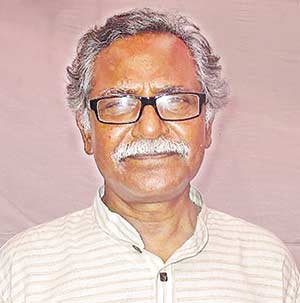 Former Jahangirnagar University Professor and prominent economist Anu Muhammad has warned that handing over terminal operations of the Chittagong Port to foreign companies could put Bangladesh’s economy and national interests at serious risk.
He made the remarks at a discussion titled “Chittagong Port and National Interest”, organised by the Media and Civil Rights Society at the Jatiya Press Club.
Speakers discussed the management of Chittagong Port, proposals to hand over terminal operations to foreign companies, the port’s capacity, national interests and possible future economic risks.
Anu Muhammad said the resistance by Chittagong Port workers and employees not only saved the port but also protected Bangladesh from a major danger. Their unity and determination are now a source of hope for the country, he said.
He said the proposal to hand over the port operations to a foreign company is not new. In 1 997, during the Awami League government, an initiative was taken to give a long-term lease of the port to SSA (Stevedoring Services of America), a plan considered to lease the port for about 200 years.
The Asian Development Bank and the World Bank were among international organisations active in favour of the project, while a six-member government secretarial committee also supported it. However, an investigation raised serious questions about the financial capacity and structure of SSA’s Bangladeshi subsidiary, he said.
After the four-party coalition government, including the BNP, came to power in 2001, the issue came up again. Anu Muhammad said the ten US ambassador had reportedly included the proposal to hand over the port operations to SSA on the government’s “honeymoon period” to-do list.
He said a movement by the National Committee for the Protection of Oil-Gas-Electricity-Port, resistance by port workers and employees and legal proceedings were then taking place simultaneously. Various inconsistencies emerged during the court proceedings, and the project was eventually not implemented.
Anu Muhammad said governments have changed, but similar initiatives, opacity and secrecy keep returning.
Criticising the current plan to hand over different terminals to foreign companies, he said the government should provide clear arguments and information if increasing port capacity is necessary. However, credible answers are not being given to various questions and the contracts are not being made public.
He said the New Mooring Container Terminal is profitable and has received huge state investment. He questioned the rationale for increasing port charges, saying higher charges would raise import and export costs and reduce the competitiveness of Bangladesh’s economy.
He also rejected the argument that foreign companies would increase national capacity. Bangladesh could face long-term risks if it becomes dependent on foreign operators instead of developing its own capacity, he warned.
Citing Singapore and Vietnam, he said they developed their own capacity to manage ports. He added that national security and sovereignty must also be considered alongside economic interests.
Anu Muhammad said about 90 percent of Bangladesh’s total imports and exports pass through Chittagong Port, making it the “heart” of the country’s economy.
He said port efficiency should instead be improved by reforming customs, removing bureaucratic complications, developing infrastructure and strengthening national capacity. He demanded accountability for agreements and decisions concerning the port and said citizens have the right and responsibility to resist actions against national interests.
At the discussion, Dhaka University teacher and researcher Mosahida Sultana said a full review of the country’s capacity and future needs should be conducted before handing over terminals to foreign operators.
She said lengthy customs procedures are a major reason for congestion at the New Mooring Container Terminal. Delays in unloading containers leave trucks and containers stuck while ships wait, increasing port waiting times.
She also warned that operating terminals before developing necessary rail and other connectivity could create a mismatch between port capacity and demand.
Loading...
Loading...
Also read



Editor : Iqbal Sobhan Chowdhury
Published by the Editor on behalf of the Observer Ltd. from Globe Printers, 24/A, New Eskaton Road, Ramna, Dhaka.
Editorial, News and Commercial Offices : Aziz Bhaban (2nd floor), 93, Motijheel C/A, Dhaka-1000.
Phone: PABX- 41053001-06; Advertisement: 41053012; 01793317829, 01550707291, E-mail: [email protected], [email protected] Online: email: [email protected] 41053014; 01550707297 Advertisement: 01550707296
Published by the Editor on behalf of the Observer Ltd. from Globe Printers, 24/A, New Eskaton Road, Ramna, Dhaka.
Editorial, News and Commercial Offices : Aziz Bhaban (2nd floor), 93, Motijheel C/A, Dhaka-1000.
Phone: PABX- 41053001-06; Advertisement: 41053012; 01793317829, 01550707291, E-mail: [email protected], [email protected] Online: email: [email protected] 41053014; 01550707297 Advertisement: 01550707296


