



| HEADLINE |

|

Report:
Saudi Arabia requests Israeli intelligence amid escalating Houthi threats
Published : Wednesday, 16 September, 2026 at 12:07 PM
Observer Online Report


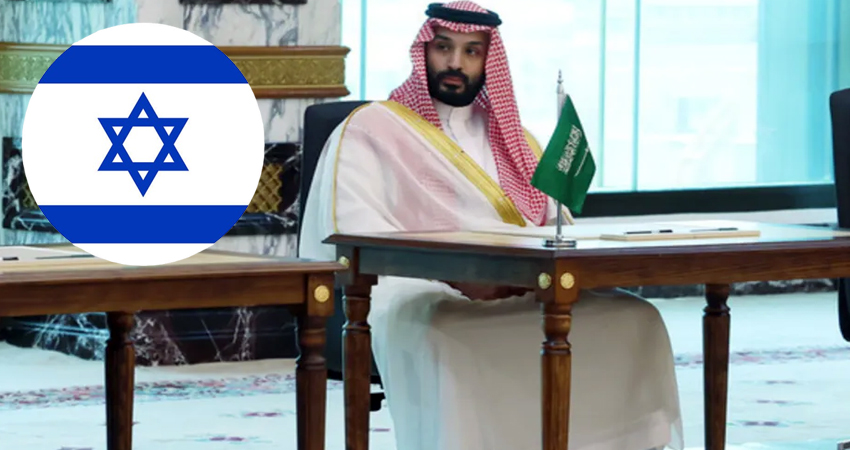
Image: MEMO
In a grotesque geopolitical turn, Saudi Arabia has reportedly sought discreet intelligence support from Israel through US intermediaries to counter escalating Houthi strikes along the Red Sea, bypassing its newly formed defense agreements with Muslim allies.
Surprising Intelligence Coordination amid Red Sea Pressure
In an unexpected back-channel move, Saudi Arabia has reportedly requested Intelligence, Surveillance, and Reconnaissance (ISR) support from Israel via US Central Command (CENTCOM). As reporting highlighted by Middle East Monitor (MEMO) and Türkiye's Daily Sabah notes, the informal arrangement aims to monitor Houthi troop deployments and secure vital maritime chokepoints without requiring direct military intervention or boots on the ground. Neither Riyadh nor Jerusalem has officially confirmed the cooperation on the record.
Bypassing the Newly Formed Makkah Defense Alliance
The development raises immediate questions given the recent signing of the landmark Makkah Joint Defense Agreement on August 7, 2026, between Saudi Arabia, Türkiye, and Pakistan. Positioned as a mutual defense framework where an attack on one member is treated as an attack on all, the treaty appears to sit idle as Riyadh seeks actionable intelligence elsewhere.
Analysts observe that the Makkah pact remains in its infancy—having only established its initial secretariat structure in Istanbul—and lacks an operational joint command or automated trigger mechanisms for rapid military action. Furthermore, senior officials confirm that Türkiye has yet to finish parliamentary ratification, leaving the pact without binding domestic legal force in Ankara.
Unused Defense Tools and Regional Hedging
Strangely, Riyadh is bypassing older, fully functional defense mechanisms alongside its newest alliance. Under the 2025 Saudi-Pakistan Strategic Mutual Defense Agreement, roughly 8,000 Pakistani troops and air-defense units are already deployed inside the kingdom, yet they have not been mobilized for this crisis.
Similarly, the 14-nation Multinational Maritime Defence Alliance launched by Riyadh on July 30—which includes both Türkiye and Pakistan—remains uninvoked.
The decision to seek Israeli ISR capabilities points to specialized technical requirements. Israel maintains a combat-tested intelligence apparatus tracking Iranian and Houthi naval positioning around the Bab al-Mandab Strait and the Strait of Hormuz. Neither Türkiye nor Pakistan possesses an equivalent operational footprint in that specific maritime domain.
Political Constraints in Partner Capitals
Broader political dynamics also restrict Riyadh's treaty partners. Both Islamabad and Ankara maintain diplomatic and economic hedging strategies with Tehran, making a direct confrontation against Iran-aligned Houthi forces politically complex.
For Pakistan—which holds no diplomatic ties with Israel and leads the Makkah secretariat—engaging in a crisis adjacent to Israeli intelligence channels carries significant domestic sensitivity. As a result, discreet ISR sharing via CENTCOM offers Riyadh a low-visibility, targeted solution while its broader multilateral frameworks continue drafting their operational rulebooks.
-SA

Loading...
Loading...
Also read








Editor : Iqbal Sobhan Chowdhury
Published by the Editor on behalf of the Observer Ltd. from Globe Printers, 24/A, New Eskaton Road, Ramna, Dhaka.
Editorial, News and Commercial Offices : Aziz Bhaban (2nd floor), 93, Motijheel C/A, Dhaka-1000.
Phone: PABX- 41053001-06; Advertisement: 41053012; 01793317829, 01550707291, E-mail: [email protected], [email protected] Online: email: [email protected] 41053014; 01550707297 Advertisement: 01550707296
Published by the Editor on behalf of the Observer Ltd. from Globe Printers, 24/A, New Eskaton Road, Ramna, Dhaka.
Editorial, News and Commercial Offices : Aziz Bhaban (2nd floor), 93, Motijheel C/A, Dhaka-1000.
Phone: PABX- 41053001-06; Advertisement: 41053012; 01793317829, 01550707291, E-mail: [email protected], [email protected] Online: email: [email protected] 41053014; 01550707297 Advertisement: 01550707296


