



| HEADLINE |

|

Up to 3yrs jail for solar theft under new Special Ordinance
Published : Tuesday, 20 October, 2026 at 12:41 PM
Observer Online Report


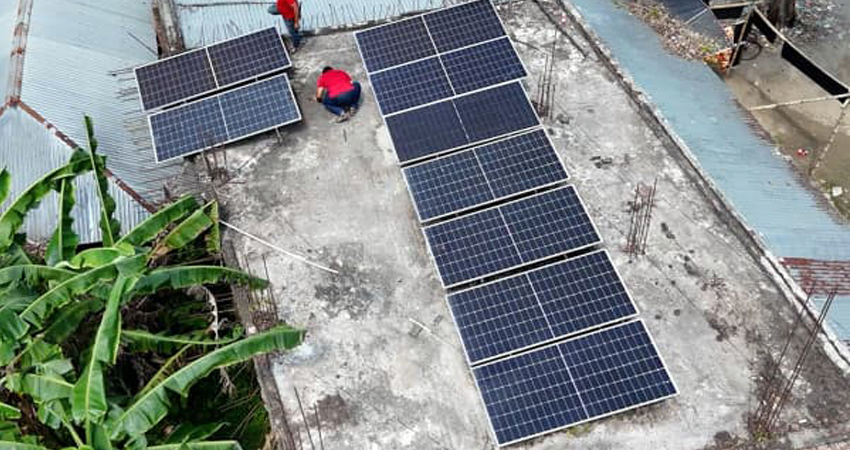
Symbolic Photo
The government has promulgated the 'Special Solar Power Installation Ordinance, 2026' to expand solar energy usage, attract private investment, and streamline operations in the sector, introducing strict penal provisions including up to five years imprisonment for damaging solar installations.
Under the provisions of the ordinance, theft of solar electricity or equipment carries a maximum penalty of three years imprisonment, a fine of Tk 50,000, or both. Meanwhile, damaging components of a solar power system is punishable by up to five years in prison, a fine of Tk 5 lakh, or both.
The Legislative and Parliamentary Affairs Division under the Ministry of Law, Justice and Parliamentary Affairs officially issued the ordinance on Monday (October 19) night.
The cabinet, chaired by Prime Minister Tarique Rahman, granted final and principled approval to the draft ordinance on Sunday (October 18).
Speaking at a press briefing held at the Press Information Department (PID) conference room in the Secretariat, Cabinet Secretary Nasimul Gani highlighted the strategic urgency of the measure. "Solar energy was always important for Bangladesh, but it has now become far more critical.
Recent global conflicts demonstrated the vulnerability of our energy sector. Consequently, the government has attached top priority to solar power expansion," he stated.
Implementation Models and Coverage
The ordinance allows for the installation of solar systems with a maximum capacity of up to 5 megawatts on roofs, yards, adjoining vacant land, and water bodies belonging to government, semi-government, autonomous, and local government bodies, as well as state-owned enterprises and private residences.
Eligible applications encompass solar-powered irrigation pumps, cold storage facilities, electric vehicle charging stations, tea gardens, floating solar platforms, and agro-photovoltaic systems. However, large land-based utility-scale solar projects are excluded from the scope of this ordinance.
To facilitate execution, the ordinance provides for two financial frameworks: Operational Expenditure (Opex) and Capital Expenditure (Capex). Under the Opex model, third-party investors bear the entire setup cost and sell power to consumers, whereas under the Capex model, consumer entities finance and retain complete ownership of the system.
Net-Metering and Procurement Guidelines
To accelerate execution, the ordinance introduces a special procurement provision under the Capex model, raising the financial limit for limited tendering of goods and related services up to Tk 5 crore without mandatory reliance on electronic Government Procurement (e-GP).
Projects will operate under tripartite agreements between the consumer, service provider, and designated authority, incorporating guidelines on equipment quality, safety, maintenance, billing, ownership terms, and e-waste management.
The ordinance further integrates net-metering facilities, permitting consumers to supply surplus solar-generated electricity back to the national grid. Net grid contributions will be offset against regular electricity bills, with any net excess compensated at government-approved tariff rates.
Penalties and Judicial Enforcement
The ordinance sets out stringent criminal penalties to safeguard solar infrastructure:
Theft and Possession (Section 12): Stealing solar power or equipment, or knowingly purchasing, selling, or possessing stolen components, carries up to three years imprisonment, a fine of Tk 50,000, or both.
Property Damage (Section 13): Intentionally damaging solar equipment attracts up to five years imprisonment, a fine of Tk 5 lakh, or both.
Unauthorized Connections (Section 14): Providing illegal power connections from a solar setup without written authorization incurs up to three years imprisonment, a fine of Tk 5 lakh, or both.
Obstruction of Duty (Section 15): Obstructing authorized personnel or service providers during installation, inspection, or maintenance carries up to three years imprisonment, a fine of Tk 5 lakh, or both.
Abetment (Section 16): Abetting or conspiring to commit any offense under the ordinance carries the same penalty as the primary crime.
Offenses under the ordinance will be tried in the Courts of First-Class Magistrates or Metropolitan Magistrates, while mobile courts are also empowered to try designated offenses under the Mobile Court Act.
-SA

Loading...
Loading...
Also read









Editor : Iqbal Sobhan Chowdhury
Published by the Editor on behalf of the Observer Ltd. from Globe Printers, 24/A, New Eskaton Road, Ramna, Dhaka.
Editorial, News and Commercial Offices : Aziz Bhaban (2nd floor), 93, Motijheel C/A, Dhaka-1000.
Phone: PABX- 41053001-06; Advertisement: 41053012; 01793317829, 01550707291, E-mail: [email protected], [email protected] Online: email: [email protected] 41053014; 01550707297 Advertisement: 01550707296


