



| HEADLINE |

|

Italy moves to ban burqas and niqabs in schools
Published : Monday, 21 September, 2026 at 10:15 AM
Observer Online Report


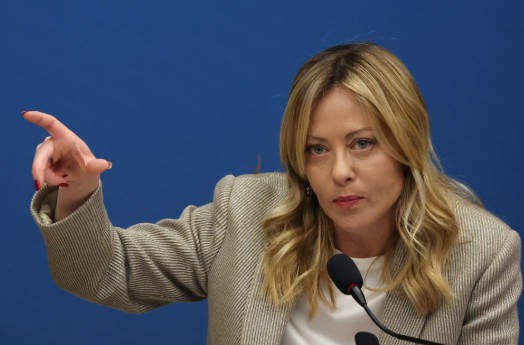
Italy is planning to ban burqas and niqabs in schools and introduce limits on the number of foreign students in classrooms, right-wing Prime Minister Giorgia Meloni has said.
Meloni announced the proposals on Sunday (September 21) at a rally of the youth wing of her nationalist-conservative Brothers of Italy (FdI) party.
The issue could become an important topic in next year’s general election.
She said parents of foreign students who face “serious problems integrating into the school system” would be required to attend Italian-language classes.
Speaking at the Gioventu Nazionale festival in Rome, Meloni said anyone who comes to Italy seeking to build a future must learn the Italian language, understand the country’s culture and respect its rules. She described these requirements as the only realistic way to welcome newcomers.
Once approved by the government, the proposed changes would require parliamentary approval within 60 days to become law.
Meloni’s right-wing government is the longest-serving Italian government since World War II.
However, her FdI party could face a major challenge in 2027 from National Future (FN), a party positioned further to the right. Its support has reportedly risen rapidly in opinion polls since February. In July, FN called for tighter restrictions on wearing burqas in schools.
A burqa is a garment worn by some Muslim women that covers the entire face and body, including the eyes. A niqab also covers the face, but leaves the eyes visible.
Neither garment is currently directly banned in Italy. However, a 1975 law prohibits the use of helmets or clothing that makes identification difficult without a valid reason.
A 2008 ruling clarified the issue, stating that full-face coverings could be worn for religious or cultural reasons. However, the face must be uncovered when identity verification is required.
Meanwhile, the anti-immigration League party, which is part of Meloni’s governing coalition, submitted a bill earlier this year proposing a ban on helmets or clothing that makes identification difficult in certain situations, except at places such as sports events or places of worship.
Alongside the proposed ban on burqas and niqabs, Meloni also called for legal limits on the number of foreign students in classrooms.
Italian law already limits the proportion of foreign students in a class or school to 30%. Meloni did not provide details on how the existing limit would be changed.
Foreign students currently account for around 12% of all students in Italian schools.
-MT

Loading...
Loading...
Also read




Editor : Iqbal Sobhan Chowdhury
Published by the Editor on behalf of the Observer Ltd. from Globe Printers, 24/A, New Eskaton Road, Ramna, Dhaka.
Editorial, News and Commercial Offices : Aziz Bhaban (2nd floor), 93, Motijheel C/A, Dhaka-1000.
Phone: PABX- 41053001-06; Advertisement: 41053012; 01793317829, 01550707291, E-mail: [email protected], [email protected] Online: email: [email protected] 41053014; 01550707297 Advertisement: 01550707296
Published by the Editor on behalf of the Observer Ltd. from Globe Printers, 24/A, New Eskaton Road, Ramna, Dhaka.
Editorial, News and Commercial Offices : Aziz Bhaban (2nd floor), 93, Motijheel C/A, Dhaka-1000.
Phone: PABX- 41053001-06; Advertisement: 41053012; 01793317829, 01550707291, E-mail: [email protected], [email protected] Online: email: [email protected] 41053014; 01550707297 Advertisement: 01550707296


