



| HEADLINE |

|
We must keep Hilsa in Bangladesh waters with love
Published : Thursday, 24 September, 2026 at 12:00 AM
Dr Anisur Rahman


 I have spent more than three decades studying the hilsa-our national fish, our heritage, our pride. I have worked alongside Australian scientists at CSIRO. And I have watched, with growing alarm, as its numbers dwindle.
More than 1% of our GDP comes from hilsa production. Around 11% of our total fish production is hilsa. Millions depend on this resource for their livelihoods. In taste, in aroma, in economic terms-this fish is of immense importance.
Why Large Hilsa Matter: My research with CSIRO and Australian scientists revealed a critical finding: after two years plus-when hilsa move from the first year into the second year-their fecundity, their egg potential, their capacity, is much greater. Their offspring survive in greater numbers.
When these mature, highly fertile fish are removed, the entire reproductive capacity of the species diminishes. This is why the loss of large hilsa is particularly devastating.
A Perilous Journey: This fish's life cycle is extremely diverse-dangerously diverse. Although it mainly lives in the sea, it must enter freshwater to spawn. From the sea through the estuary and into the Padma, Meghna, and Jamuna-it must travel a long distance.
My research shows that in every 24 hours, against the current, they are capable of covering 72 to 74 kilometers. If they encounter the slightest obstacle-pollution, overfishing, harmful nets-they may not feel comfortable, and later they may not come again.
Even so, we are fortunate that they always prefer Bangladesh's waters. But even this loyalty has limits.
Uncontrolled Trawling: Wooden-boat bottom trawling outside designated areas is catching undersized jatka, hilsa, and other fish in an uncontrolled, unwarranted way. The stock in the Bay of Bengal-Bengal's granary-is gradually being exhausted. It is as if we are reaching a situation where our backs are against the wall.

Modern Technology: Fishermen no longer rely on traditional knowledge like observing birds over water. They use echo sounders, fish finders, sonar systems. They can see a school of fish-how big, at what speed, in which direction. They catch them from a greater distance. Once they catch them, where will the next generation come from?
Harmful Nets: Bottom trawling, industrial trawling-even beyond 40 meters depth-illegal-sized catches, uncontrolled catches, unregulated and unreported fishing has been going on for a long time. Small-mesh nets and current nets trap hilsa and other species as they come to release eggs.
Environmental Degradation: When water flow decreases, siltation increases. Chars, submerged chars, and hidden chars increase. In Chandpur and other river mouths, the topography has changed so much that to go from one bank to the other, one sometimes has to travel ten or fifteen kilometers in the opposite direction. In winter, some areas cannot even be recognized-they seem to have homesteads, cattle and goats being reared.
Pollution: Effluent, pesticides, heavy metal pollution, plastic pollution-it is becoming a disaster. It has gone as far as the sea. If you cut open the belly of any fish, you see plastic pollution, heavy metal pollution. Buriganga, Shitalakhya-now even bathing has become difficult. The Heat Generation Centre: I remember very well, in a magazine, when I said that the negative effect of this heat generation centre is not only in the Ilish river, but also in other fish and phytoplankton. After that, my promotion was suspended for a long time. I still say what I say. When a heat generation centre is running, water temperature increases, water quality changes-DO, carbon dioxide, hardness, PAC-creating conditions outside the designated range for fish and aquatic animals.
A Regional Concern:In some regions of India-Gujarat, the Narmada River, Allahabad-hilsa is now being seen more, which did not appear before. Taking advantage of the huge demand in Bangladesh, dishonest traders are exporting from there. We imported. This is extremely shameful, extremely humiliating.
Strengthen Institutional Capacity: The Department of Fisheries does not have enough capacity. If manpower increases, financial capacity increases, especially vehicles-for guarding the deep sea, the coast, the major rivers, for conservation operations and court proceedings-their logistic support, financial support, skilled manpower, and infrastructure are needed. In Bangladesh's waters, Indian fishermen seem to have greater capacity-more nets, equipment, modern gear. Our capacity needs to be increased greatly. The navy, coast guard, and naval police work tirelessly.
Engage Multiple Sectors: Hydrologists, the Water Development Board, BIWT, environmental development, forest conservation-if all this is left only to the Department of Fisheries, it will not work. If we can fix this migratory route, not only hilsa but other fish too will return to feed and breed.
Build a Social Movement: A vigorous mass movement, a social movement, can be built in a coordinated way. People's awareness about hilsa can be increased. I firmly believe it will not be difficult to turn this situation around. A Call to Politicians: Our country's politicians must own this, and out of love ensure that its rules and regulations are implemented. They must not, in any place, again become the protector-predator.
We must try to keep hila environment right-their habitat is being destroyed, their migratory route is being obstructed-we will try to fix that, so that sunlight falls and plankton is produced well, so that they get their desired food, phytoplankton, zooplankton. They can move and live here, loving the environment in the same equal way.
We must keep them in Bangladesh's waters with love. This is a big challenge for us. We must face this challenge at any cost. For a long time, mega projects for research must be undertaken. After implementing them, the recommendations, along with all existing laws and management tools, must be modernized. Otherwise, we are under threat regarding this fisheries resource, especially the hilsa resource.
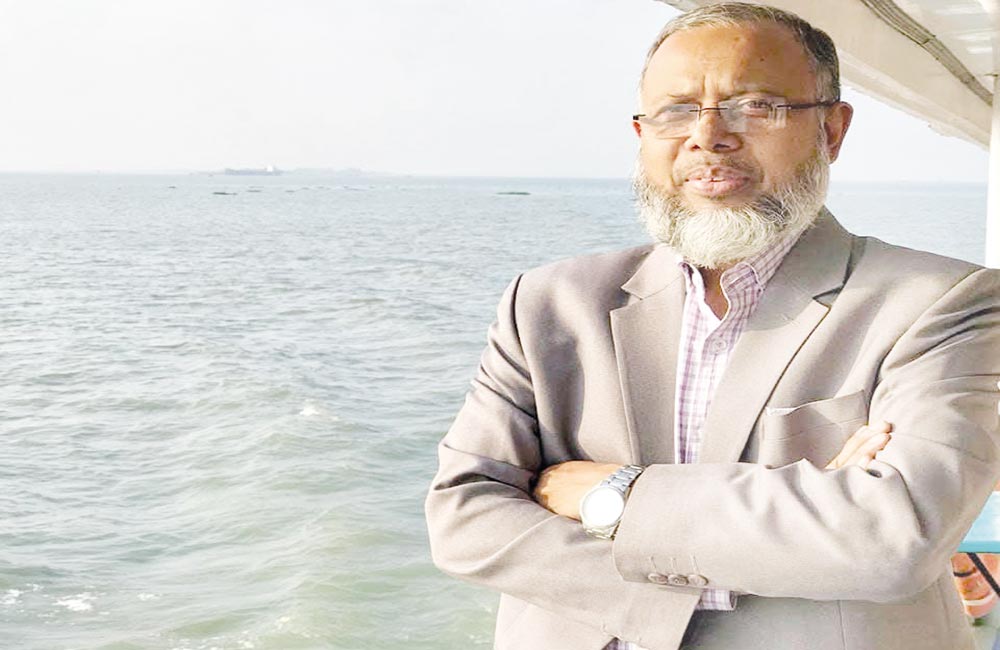
The writer is a veteran hilsa researcher with over 33 years of experience and he was the former Director of Bangladesh Fisheries Research Institute (BFRI)
Loading...
Loading...
Also read



Editor : Iqbal Sobhan Chowdhury
Published by the Editor on behalf of the Observer Ltd. from Globe Printers, 24/A, New Eskaton Road, Ramna, Dhaka.
Editorial, News and Commercial Offices : Aziz Bhaban (2nd floor), 93, Motijheel C/A, Dhaka-1000.
Phone: PABX- 41053001-06; Advertisement: 41053012; 01793317829, 01550707291, E-mail: [email protected], [email protected] Online: email: [email protected] 41053014; 01550707297 Advertisement: 01550707296
Published by the Editor on behalf of the Observer Ltd. from Globe Printers, 24/A, New Eskaton Road, Ramna, Dhaka.
Editorial, News and Commercial Offices : Aziz Bhaban (2nd floor), 93, Motijheel C/A, Dhaka-1000.
Phone: PABX- 41053001-06; Advertisement: 41053012; 01793317829, 01550707291, E-mail: [email protected], [email protected] Online: email: [email protected] 41053014; 01550707297 Advertisement: 01550707296


