



| HEADLINE |

|

Reconciliation with AL requires admission of crime: Adviser Zahed
Published : Wednesday, 7 October, 2026 at 12:00 AM
Staff Correspondent


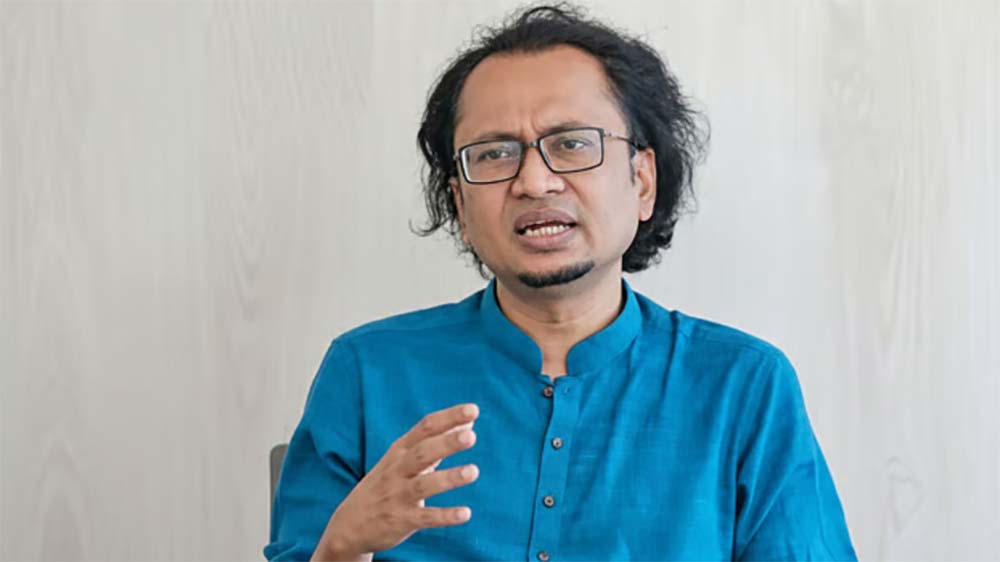 Reconciliation with the Awami League requires an admission of wrongdoing and genuine remorse, Prime Minister’s Adviser on Information and Broadcasting Dr Zahed Ur Rahman said on Tuesday.
Speaking at a press conference on government activities at the Secretariat, he said reconciliation with the AL would be difficult as Sheikh Hasina continued to blame the government and issue threats.
“There have been discussions at various levels about reconciliation with the Awami League since August 5, 2024,” Zahed said.
He acknowledged that a section of the population still supports the party and said reconciliation with those currently in the country who were actively involved with the AL could be a positive initiative.
But such a process must have a fundamental basis, he said, citing South Africa’s Truth and Reconciliation Commission as an example.
Any individual, group or political party that has committed crimes must first acknowledge the wrongdoing and show genuine remorse, Zahed said. However, admitting wrongdoing would not automatically end criminal proceedings, and legal action could still be taken for offences committed.
Referring to statements by Sheikh Hasina and the AL, he said they had continued to blame the government and issue threats since August 5, 2024.
“She keeps threatening to ‘teach everyone a lesson’ and calling for retaliatory actions. Given this situation, it is difficult for us, at least, to entertain the idea of reconciliation,” he said.
The initiative for reconciliation, he added, must come from the Awami League itself. He also urged those advocating reconciliation to communicate with the party and engage in dialogue.
Fuel prices
The government will consider reducing domestic fuel prices if global oil prices stabilise at a lower level, Zahed said.
He said international prices had fallen slightly but warned that the decline might not last amid continuing geopolitical uncertainty.
When Bangladesh last adjusted fuel prices, the international price was around $102 a barrel, but it later rose to $106-$107 after a brief decline. The current price therefore cannot yet be considered a stable long-term rate, he said.
He attributed the recent fall partly to the release of oil from strategic reserves by European countries and said US President Donald Trump had also urged European nations to release reserves.
Zahed stressed the direct link between fuel prices and inflation, saying higher fuel costs increase inflationary pressure and can discourage investment, ultimately affecting employment and wages.
“If oil prices reach a relatively stable state and specifically, if they stabilise at a lower price point, then the government will certainly consider it,” he said.
Teesta plan
The government is strongly committed to implementing the Teesta Master Plan, but its funding source has yet to be finalised, Zahed said.
Funding could come from China, Bangladesh or another country, he said, adding that the government would independently decide which option best serves the country’s interests.
The original plan included river training, dredging, erosion prevention, bank protection and land reclamation. The government is now also examining whether water storage can be incorporated into the revised plan.
A fresh feasibility assessment is underway to determine whether monsoon water can be stored through a barrage for use during the dry season. Zahed acknowledged that storing water in the Teesta would be difficult because of its rapid flow, but said experts considered it possible.
Regarding Chinese cooperation, he said a broad consensus had been reached on technical aspects, but no final decision had been made on implementation.
Meanwhile, restrictions on tourist visits to Saint Martin’s will remain in place to protect the island’s fragile ecosystem.
Zahed also said criminal and organisational action would be taken against those involved in attacks on journalists, depending on the nature of the offences.

Loading...
Loading...
Also read



Editor : Iqbal Sobhan Chowdhury
Published by the Editor on behalf of the Observer Ltd. from Globe Printers, 24/A, New Eskaton Road, Ramna, Dhaka.
Editorial, News and Commercial Offices : Aziz Bhaban (2nd floor), 93, Motijheel C/A, Dhaka-1000.
Phone: PABX- 41053001-06; Advertisement: 41053012; 01793317829, 01550707291, E-mail: [email protected], [email protected] Online: email: [email protected] 41053014; 01550707297 Advertisement: 01550707296
Published by the Editor on behalf of the Observer Ltd. from Globe Printers, 24/A, New Eskaton Road, Ramna, Dhaka.
Editorial, News and Commercial Offices : Aziz Bhaban (2nd floor), 93, Motijheel C/A, Dhaka-1000.
Phone: PABX- 41053001-06; Advertisement: 41053012; 01793317829, 01550707291, E-mail: [email protected], [email protected] Online: email: [email protected] 41053014; 01550707297 Advertisement: 01550707296


