



| HEADLINE |

|

Behind the RMG protests: Genuine grievance, political allegations, the road to calm
Published : Tuesday, 3 November, 2026 at 4:12 PM
Observer Special Report


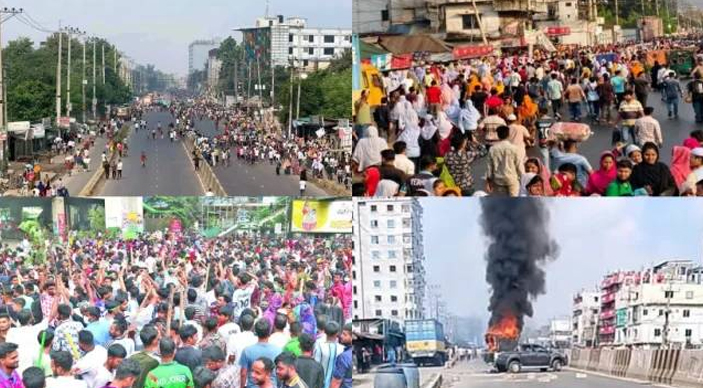
Garment workers’ protests demanding a minimum monthly wage of Tk 30,000, against the current Tk 12,500, have entered a fourth day across Mirpur, Gazipur, Savar, Ashulia and Narayanganj.
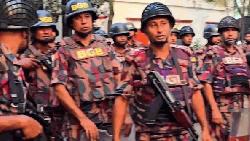
The government has formed a six-member wage board and deployed BGB in the worst-hit areas. Police have kept order under repeated attacks, and local talks have brought some blockades to an end.
Mirpur: A Warzone
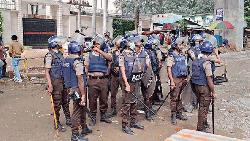
Clashes began on Sunday when workers blocked the Mirpur-10 intersection. After repeated requests to clear the road, police met brick-throwing with baton charges, water cannon, sound grenades and tear gas.
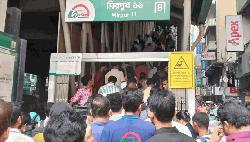
A police vehicle was set on fire below the Mirpur-11 metro station, and three metro stations were closed for several hours. Services were back to normal by 1:58 PM. Twenty-six people were arrested over the fire, 11 of them by the Detective Branch.

By Monday, police had stopped workers from forming large crowds and traffic around Mirpur-10 was normal. On Tuesday, after police pushed protesters from Mirpur-11 toward Kalshi, a group of miscreants ambushed a few isolated officers from Pallabi Police Station.
Police arrested five people at the scene and cleared the main roads. Residents spent the week indoors, shops closed on police instructions, and 11 cases were filed against more than 10,000 unidentified people.
Gazipur, Savar and Ashulia Turned to Battlefield
In Gazipur, 250 factories declared holidays on Sunday and Monday. Workers blocked the Dhaka-Tangail highway at Palli Bidyut and Mouchak, halting traffic over about 10 km, and more than 50 vehicles and shops were vandalised. According to one report, police and local BNP activists chased the protesters. In Naojor, two police vehicles were vandalised and one burned.

In Savar and Ashulia, 264 factories closed on Monday. Workers there also demanded an end to blacklisting and layoffs. Police persuaded workers to leave the Nabinagar-Chandra highway at Baraipara without force. Tear gas was used later, after bricks were thrown outside several factories. On Tuesday, fresh clashes broke out in Narsinghapur, and no casualties were reported.
Police Composure
Police have worked under sustained provocation. An Industrial Police member was struck by a brick in Ashulia, a Gazipur Metropolitan Police member was hurt in Naojor, and isolated officers were ambushed in Pallabi. Even so, the Gazipur police statement said they were “maintaining restraint and professionalism.” It also said police fired no shots and promised support for lawful, peaceful demonstrations.
The statement asked workers and the public not to believe rumours of police firing, and urged people not to circulate unverified reports of attacks and casualties. In Ashulia and Mirpur, officers first tried persuasion before using dispersal measures.

The government’s information adviser, Dr Zahed Ur Rahman, said police must act within the law and in proportion, and that “Bangladesh’s police will never be like Hasina’s police.” He also acknowledged that some footage on social media appeared to show disproportionate force, which he said the government does not want.
MP Nazrul Islam Azad Breaks the Narayanganj Deadlock
On Monday, workers blocked the Dhaka-Narayanganj Link Road at Shibu Market for about three and a half hours, leaving traffic stuck over roughly eight kilometres. Around 4 PM, Narayanganj-2 MP Nazrul Islam Azad, who is also BNP’s Dhaka divisional joint organising secretary, reached the spot with BNP, Jubo Dal, Chhatra Dal and Sramik Dal activists. The Deputy Commissioner, Md Raihan Kabir, and the Superintendent of Police, Md Habibur Rahman, joined him.
Azad spoke directly with the workers and gave assurances on their demands. He told them the Prime Minister is supportive of everyone, problems would be solved through discussion, and they should not fall victim to anyone’s provocation.

The Deputy Commissioner promised to carry their legitimate demands to the government. The workers lifted the blockade and traffic returned to normal. The Superintendent of Police said police stand with ordinary workers and would not tolerate vested groups provoking them. The episode shows that talking to workers can clear a road more quickly than force.
Wage Board
The Labour Ministry notified a six-member board on Sunday. It is chaired by Senior District and Sessions Judge Sheikh Ashfaqur Rahman. Owners are represented by ABM Shamsuddin (BGMEA) and Asif Ayub (Bangladesh Employers’ Federation), and workers by Babul Akter and Anwar Hossain.
Dhaka University’s Professor Mosleh Uddin Ahmed is the neutral member. Babul Akter said worker representatives will settle on one proposal before the first meeting, since demands now range from Tk 27,000 to Tk 37,000. Dr Zahed said wages are normally reviewed every five years, last in 2023, so the board was formed early out of concern over living costs, inflation and fuel prices.
Home Minister’s Appeal and Government Steps
After meeting owners and labour leaders on Monday, Home Minister Salahuddin Ahmed said video footage showed masked outsiders, not workers or labour leaders, behind the disorder. He promised “special consideration” for ordinary workers arrested in the unrest and proper treatment for the injured. He asked workers to return to their factories now that the board exists.

Other steps include:
• BGB has 12 platoons in Gazipur and Narayanganj, with drone and body-camera surveillance monitored from headquarters.
• Executive magistrates are deployed alongside BGB in Gazipur.
• Kaliakair’s administration warned landlords against sheltering outsiders or suspected criminals.
• Labour leaders, including Najma Akter, appealed to workers to return to work.
Who Is Behind the Unrest?
Officials say organised outside interests have exploited the workers’ grievances. Police say the Detective Branch linked the Mirpur vehicle fire to Alif Molla, nephew of an absconding former Awami League MP. They allege that at least three arrestees sent photos and videos to a number and were paid Tk 3,000 to Tk 3,500 each.
Police headquarters says it found about 25 WhatsApp and Telegram groups used to gather people and track police positions, and the five arrested in Pallabi were initially identified as Awami League and affiliate members. The Home Minister has also alleged instigation from across the border.
According to a report published in one media outlet that an intelligence report has allegedly listed several industrialists and former politicians as having links to the unrest. This is unverified. The report’s contents have not been made public, and the people mentioned have not been charged or heard from in the material available.
Workers’ leaders also say hawkers, political figures and people with unpaid dues have joined in. These are police and ministerial statements that no court has tested, and the 11 DB arrestees went to jail on Monday without a lawyer present.
Economic Impact
Production was disrupted at 529 factories in five main industrial zones on November 1, and BGMEA put the figure at 679 the next day. Closures cost workers their daily and overtime income and put pressure on export deliveries.
Outlook: Reasons for Cautious Optimism
Several signs point toward easing. The wage board was formed within a day of the first major clashes. Mirpur was calm on Monday and largely controlled on Tuesday, metro services recovered within hours, and the Narayanganj blockade ended through dialogue.
The BGB deployment, police restraint and local engagement have given the administration control of the main roads. Dr Zahed expects the movement to end soon now that workers’ demands have an official forum, and has said that if workers leave the streets, it will be hard for anyone else to cause trouble.
The harder test is ahead. The gap between Tk 12,500 and the Tk 30,000 demand is large, and workers will want a firm timeline from the wage board. If the board meets quickly and publishes its progress, and if police and magistrates keep the restraint they have shown, the government’s steps give grounds to expect the unrest to subside and factories to return to full production.

Loading...
Loading...
Also read


Editor : Iqbal Sobhan Chowdhury
Published by the Editor on behalf of the Observer Ltd. from Globe Printers, 24/A, New Eskaton Road, Ramna, Dhaka.
Editorial, News and Commercial Offices : Aziz Bhaban (2nd floor), 93, Motijheel C/A, Dhaka-1000.
Phone: PABX- 41053001-06; Advertisement: 41053012; 01793317829, 01550707291, 01550707296
E-mail: [email protected], [email protected]. [email protected], [email protected], [email protected], [email protected], Online-email: [email protected]


