



| HEADLINE |

|

Rural culture slowly fading in country's coastal region
Technology, changing lifestyles push traditional games, songs, crafts and customs to the brink
Published : Saturday, 17 October, 2026 at 12:00 AM
Our Correspondent


 AMTALI, BARGUNA, Oct 16: Traditional rural culture is gradually disappearing from Amtali and other coastal areas of Barguna as technology and modern lifestyles reshape everyday life.
Many of the games once popular among children and teenagers -- kanamachi, gollachhut, bouchi, kutkut, dariabandha, danguli, marbles, hide-and-seek, ekka-dokka and rope jumping -- are rarely seen now.
Instead, smartphones, tablets, laptops and computers have become part of children's everyday lives. Many spend hours watching videos, films and other programmes on mobile phones and television, moving further away from traditional outdoor activities.
Only a few years ago, children, teenagers and young people regularly gathered to play these rural games.
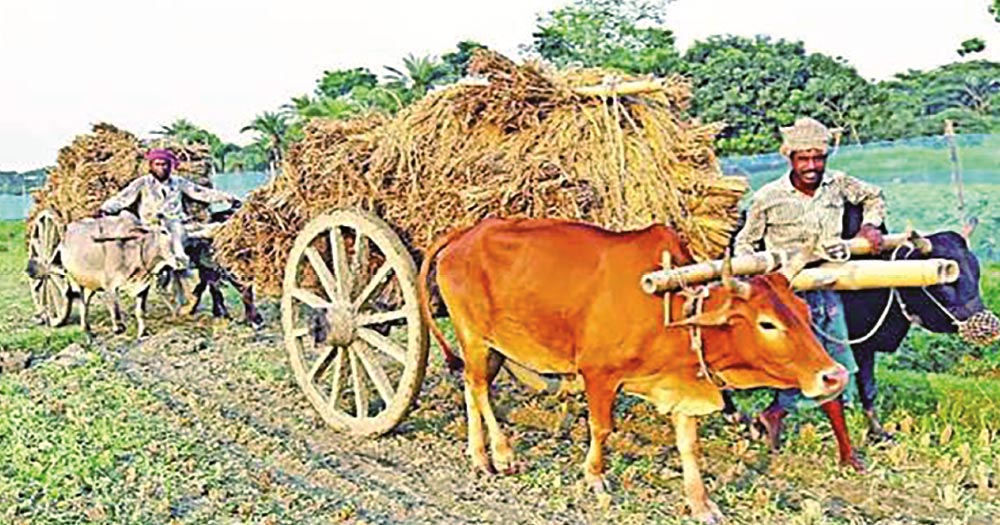
Traditional customs surrounding weddings have also changed significantly. Palanquins, horse-drawn carriages and bullock or buffalo carts were once commonly used to carry wedding parties across villages. Even a few years ago, newlyweds and guests could be seen travelling by vans.
Today, microbuses, minibuses, auto-rickshaws and taxis dominate wedding transportation, while wealthier families sometimes use helicopters or planes.
The old atmosphere of rural weddings is disappearing as well. Women would gather to sing traditional songs, while festivities often included playful colour throwing and other community activities.
Now, wedding ceremonies are increasingly compressed into a short programme, with guests busy taking photographs and recording videos. The pace of modern life has replaced many of the slower, communal traditions that once surrounded marriage.
Traditional expressions of love have changed too. In the past, young men and women would wait for letters from their loved ones, sometimes writing them late at night and sending them through village post offices.
Postmen would cycle from one village to another to deliver the letters. Receiving a letter from a loved one was an event in itself.
But with mobile phones and instant messaging, many postboxes now stand unused, some rusting away.
Traditional folk music has also become less visible. Bhatiyali and Bhawaiya songs, once heard among farmers and boatmen, are rarely heard in the countryside now. The sound of shepherds' flutes and the sight of large herds of cattle, buffaloes, goats and sheep grazing on chars have also become increasingly uncommon.
The traditional clothing and household practices of rural women are fading as well. The sound of the dheki, once heard early in the morning as women husked rice, has largely disappeared. Rice and wheat are now processed by machines.
Women once worked together to make nakshi kantha, decorating quilts with images of birds, flowers, vines and other motifs. The craft was both an expression of artistic skill and a way to spend leisure time. Such practices are now becoming increasingly rare.
Agriculture has undergone perhaps the most visible transformation.
Farmers once headed to their fields at dawn carrying ploughs, yokes and levelling boards. Oxen and buffaloes were used to till the land, while farmers wore traditional bamboo-and-leaf headgear called mathal to protect themselves from the sun and rain.
Wives would often carry food wrapped in a gamcha to their husbands working in the fields. Such scenes have largely disappeared with the spread of tractors and power-operated agricultural machinery.
Although mechanisation has made farming easier and faster, it has also changed the rural landscape and many traditions associated with agriculture.
The Nabanna harvest festival and seasonal pitha-making once brought families and communities together. Many traditional crops that farmers grew for household consumption have also become less common.
Rural festivals have changed too. During Poush and Magh, children and young people once built temporary huts from banana leaves and straw on river chars after the harvest and organised overnight picnics. They listened to music and watched films on VCD players and televisions, spending long winter nights together.
Such gatherings are now rarely seen.
Even the entertainment technology once associated with rural celebrations -- radios, cassette players, microphones and VCD players -- has almost disappeared, replaced by smartphones, iPods, iPhones and laptops.
The physical landscape of villages has changed alongside their culture. Thatched roofs, bamboo fencing, straw and leaf walls, and mud houses are increasingly rare as brick houses and tin-roofed buildings become common.
Traditional wells beside homesteads have also been replaced by tube wells and motorised water pumps.
The decline of rural culture is also reflected in nature. The filling of canals, wetlands and rivers for housing and other development has reduced the availability of many native fish.
Species such as baim, tengra, punti, chingri, shol, boal, gajar, taki, shing, magur, pabda, koi and other native fish are now far less common in local markets than they once were.
Many birds, including sparrows, baya weavers, doves, herons, kingfishers, parakeets, mynas, bulbuls, cormorants and vultures, are also becoming increasingly difficult to spot.
Several native animals, including sheep, buffaloes, foxes and rabbits, have similarly become less common.
As lifestyles advance with modernisation, much of the culture associated with earlier generations risks being lost.
Experts and conscious citizens believe collective efforts are needed to preserve the rural traditions that are now on the verge of disappearing.
“Children and teenagers need to be made more aware if we want to preserve our rural culture. We must change our mindset and take collective steps to protect these traditions,” said Advocate Shahabuddin Panna, a veteran journalist and Executive Director of NSS in Amtali.

Loading...
Loading...
Also read



Editor : Iqbal Sobhan Chowdhury
Published by the Editor on behalf of the Observer Ltd. from Globe Printers, 24/A, New Eskaton Road, Ramna, Dhaka.
Editorial, News and Commercial Offices : Aziz Bhaban (2nd floor), 93, Motijheel C/A, Dhaka-1000.
Phone: PABX- 41053001-06; Advertisement: 41053012; 01793317829, 01550707291, E-mail: [email protected], [email protected] Online: email: [email protected] 41053014; 01550707297 Advertisement: 01550707296
Published by the Editor on behalf of the Observer Ltd. from Globe Printers, 24/A, New Eskaton Road, Ramna, Dhaka.
Editorial, News and Commercial Offices : Aziz Bhaban (2nd floor), 93, Motijheel C/A, Dhaka-1000.
Phone: PABX- 41053001-06; Advertisement: 41053012; 01793317829, 01550707291, E-mail: [email protected], [email protected] Online: email: [email protected] 41053014; 01550707297 Advertisement: 01550707296


