



| HEADLINE |

|

Carrying a bag on one shoulder? Know the health risks
Published : Monday, 19 October, 2026 at 8:40 AM
Observer Online Report


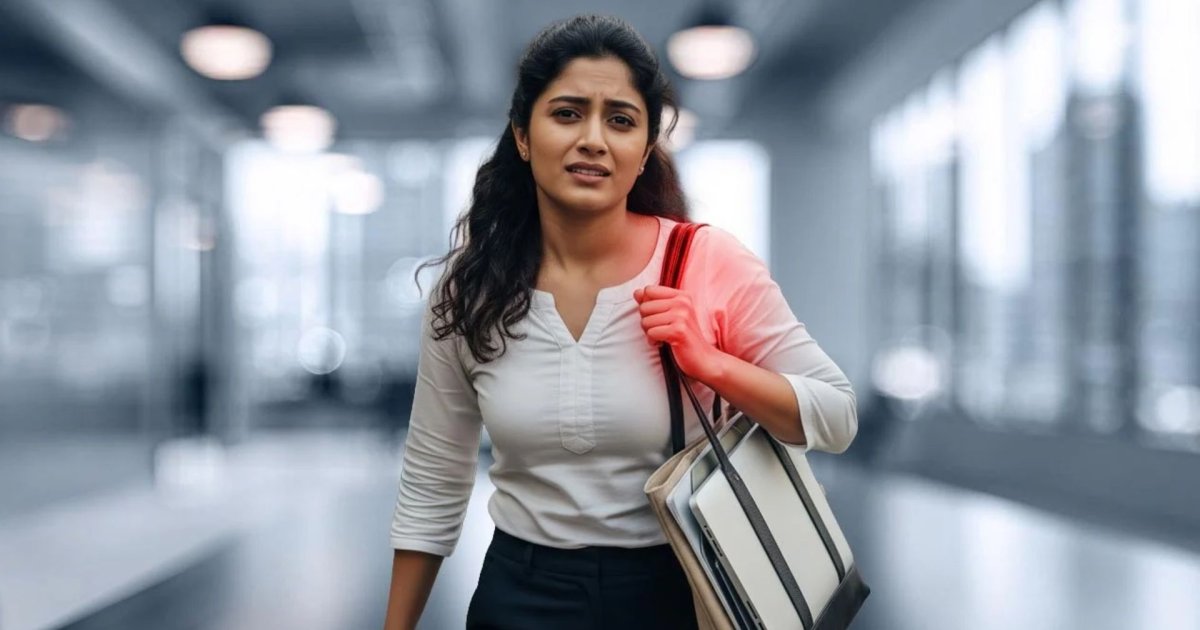
Symbolic Photo
Do you habitually hoist your bag onto the same shoulder every time you step out of the house? Whether it is a heavy laptop bag on the commute to the office or a sturdy jute tote for groceries, many people feel comfortable carrying all the weight on one side of their body.
While it may seem harmless at first, continuing this habit over a long period can severely damage the muscles of the neck, shoulders, and back—especially if the bag is heavy and carried for extended periods.
What Happens to the Body When Carrying a Bag on One Shoulder?
According to physicians, regularly carrying a bag on the same shoulder disrupts the body's natural posture. To compensate for the weight of the bag, the body unconsciously struggles to maintain balance. As a result, one shoulder slightly elevates, and the torso tilts to one side.
The muscles on either side of the spine stop working symmetrically. Excessive pressure falls on one side while the other remains inactive, leading to severe muscle fatigue over time.
This can cause chronic pain in the neck and shoulders, along with stiffness in the upper back. For individuals who work desk jobs all day or already suffer from neck and lower back problems, this risk multiplies significantly.
How to Change the Habit
To avoid this physical discomfort and stay healthy, developing a few simple habits is essential:
Reduce Weight: Review what you carry in your bag daily. Remove unnecessary items and keep the bag as light as possible.
Use Both Shoulders: When using a backpack, always hang both straps over both shoulders. Using only one strap places excessive strain on one side of the body.
Keep It Close: Adjust the straps of your backpack so that the bag sits close to your body. If the bag hangs too low, your posture can become distorted to manage the load.
Alternate Shoulders: If you use a single-strap shoulder bag out of necessity or style, regularly switch shoulders. Avoid bearing the load on one side for a long duration.
Regular Exercise: Perform light physical exercises regularly to strengthen the muscles of your neck, shoulders, back, and core. However, if you already experience pain, consult a physiotherapist before starting any strenuous routine.
-SA

Loading...
Loading...
Also read









Editor : Iqbal Sobhan Chowdhury
Published by the Editor on behalf of the Observer Ltd. from Globe Printers, 24/A, New Eskaton Road, Ramna, Dhaka.
Editorial, News and Commercial Offices : Aziz Bhaban (2nd floor), 93, Motijheel C/A, Dhaka-1000.
Phone: PABX- 41053001-06; Advertisement: 41053012; 01793317829, 01550707291, E-mail: [email protected], [email protected] Online: email: [email protected] 41053014; 01550707297 Advertisement: 01550707296


