



| HEADLINE |

|

Fire safety rules must be enforced strictly in tourist spots
The government must demonstrate strong political commitment to prioritising public safety and ensuring that no compromises are made on safety standards. Regulatory agencies, including Fire Service and Civil Defence, must be given adequate powers and held accountable for their performance.
Published : Tuesday, 20 October, 2026 at 12:00 AM


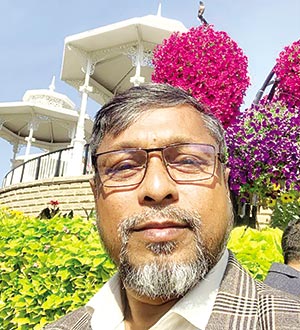 Brigadier General (Retd) Ali Ahmed Khan, psc, former Director General of Bangladesh Fire Service and Civil Defence, has warned that weak enforcement of fire safety regulations, inadequate inspections and the influence of businesspeople are putting lives at risk at resorts, cottages and hotels across Bangladesh. In an interview, he discussed the weaknesses in the country's fire safety system, the responsibilities of government agencies and the measures needed to protect lives. The interview is conducted by Mizanur Rahman, Senior Correspondent of the Daily Observer.
Ahmed Khan said risks exist in every sector, including tourism. But if regulations are not followed, regulatory agencies fail to discharge their responsibilities and establishments are not compelled to ensure safety, accidents will continue to happen. He said the possibility of sabotage could not be ruled out in some incidents, but it should be investigated separately from the broader issue of fire safety.
“There may be risks in a country, but the state and its institutions exist to reduce those risks. Regulatory agencies, ministries and government organisations must ensure public safety. Everyone must properly discharge their assigned responsibilities,” he said.
Khan said Bangladesh has numerous laws and regulations, but their enforcement remains inadequate. Agencies responsible for ensuring safety often lack the necessary authority to perform their duties effectively.
He argued that businesspeople often wield greater influence than government authorities in Bangladesh, making it difficult for regulators to take action against them. Some businesspeople also become lawmakers and policymakers, further complicating enforcement.
“This is unfortunate. In our country, the value placed on human life is very low. In foreign countries, human safety is given tremendous importance. Life safety is an extremely important issue,” he said.
Khan stressed that the government must demonstrate strong political commitment to prioritising public safety and ensuring that no compromises are made on safety standards. Regulatory agencies, including Fire Service and Civil Defence, must be given adequate powers and held accountable for their performance.
 He also called for stricter enforcement of building codes, saying development authorities in areas such as Chattogram, Khulna and Cox’s Bazar must take greater responsibility for overseeing construction and the operation of establishments.
He said inspections should focus on essential safety requirements, including proper fire protection systems and the safe separation of kitchens and electrical installations.
Asked whether Bangladesh has a comprehensive database on fire safety at tourist destinations, resorts and residential hotels, Khan said a complete database was not available. He stressed that an effective information system covering the number, condition and safety compliance of establishments was necessary.
He acknowledged that Fire Service and Civil Defence alone might find it difficult to collect and regularly update information on every hotel, resort and other establishment nationwide. A coordinated initiative involving multiple government agencies would therefore be needed.
“When I was Director General, we undertook some work to assess the number and condition of hotels in phases, particularly buildings in high-risk areas of Dhaka and Chattogram. Such initiatives should be expanded further,” he said.
Khan suggested clearly assigning responsibility for public safety to designated authorities, including district commissioners, while ensuring accountability for their performance.
“If a district commissioner is told that ensuring public safety is their responsibility and that they will have to answer for loss of life in an accident, the issue will receive greater attention. However, safeguards must also be put in place to prevent the misuse of authority for personal interests,” he said.
He also highlighted political and administrative obstacles that discourage officials from taking strict action. Officials acting in the public interest may face hostility because of their decisions, creating reluctance to enforce the law.
“In our country, good people are not valued. If we fail to recognise and appreciate good people, everyone will leave. Justice must be ensured. If someone commits a crime but the judicial process is obstructed even after a case is filed, accountability cannot be established,” he said.
Khan said public safety depends on the effective functioning of the entire state system, including the police, administration, judiciary and regulatory agencies. Journalists also have an important role in identifying the causes of recurring accidents and holding authorities accountable.
“We have many laws, but they are not being implemented because of a lack of political commitment. Administrative officials are also often reluctant to take initiatives because they may face political hostility if they take strict action,” he said.
He reiterated that political commitment, administrative accountability, effective coordination and proper enforcement of the law must work together to improve fire safety at tourist destinations and prevent avoidable loss of life.

Loading...
Loading...
Also read



Editor : Iqbal Sobhan Chowdhury
Published by the Editor on behalf of the Observer Ltd. from Globe Printers, 24/A, New Eskaton Road, Ramna, Dhaka.
Editorial, News and Commercial Offices : Aziz Bhaban (2nd floor), 93, Motijheel C/A, Dhaka-1000.
Phone: PABX- 41053001-06; Advertisement: 41053012; 01793317829, 01550707291, E-mail: [email protected], [email protected] Online: email: [email protected] 41053014; 01550707297 Advertisement: 01550707296


