



| HEADLINE |

|

Judges share courtrooms in Dhaka: Justice delayed by space crunch
Published : Saturday, 24 October, 2026 at 1:33 PM
By M. A. Latif


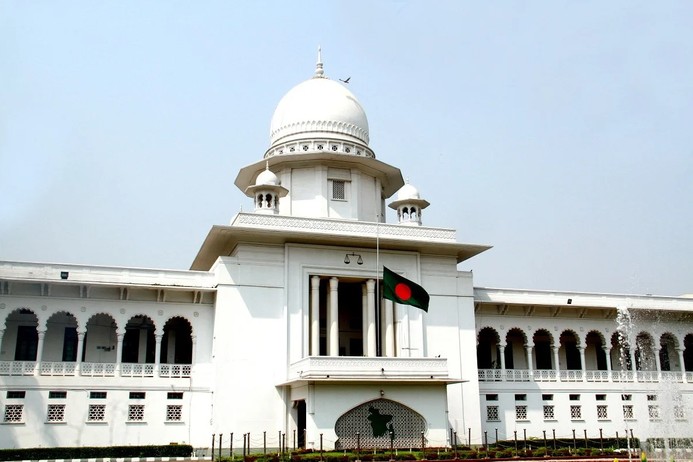
A severe shortage of courtrooms in Dhaka has exposed the mounting infrastructure challenges facing the country's lower judiciary, with raising concerns about the smooth functioning of judicial proceedings and timely delivery of justice.
The shortage has placed additional pressure on one of Bangladesh's busiest judicial centres, where thousands of litigants, lawyers, witnesses and accused persons depend on the regular operation of courts. The problem has also drawn attention to the need for better planning, adequate facilities and stronger administrative coordination across the lower judiciary.
According to a report published by New Age, the High Court monitoring committee for subordinate courts in the Dhaka division expressed concern over the courtroom shortage during an inspection of the Dhaka court premises. Justice JBM Hassan directed the relevant judicial authorities to explore ways to end courtroom sharing and improve the rate of case disposal.
The report also cited a backlog of more than one lakh cases in different courts under the Dhaka District and Sessions Judge Court, highlighting the pressure on an already burdened judicial system.
For litigants, particularly those travelling long distances to attend hearings, uncertainty over proceedings can mean additional expenses, lost working days and prolonged legal uncertainty. Lawyers may also face difficulties managing cases when hearing schedules are affected by limited courtroom availability.
The consequences can be especially serious for people involved in criminal proceedings, including accused persons in custody, as well as victims and witnesses waiting for cases to progress. Nevertheless, the impact on particular cases must be established through documented evidence rather than assumed from the infrastructure shortage alone.
The High Court monitoring committee's intervention has brought renewed attention to the need for practical solutions. The reported proposal to expand an existing eight-storey court building to 10 storeys could help ease the space constraints, although construction, funding and implementation timelines would need to be confirmed by the relevant authorities.
Simply increasing the number of courtrooms, however, may not resolve every problem. Effective case management, timely submission of investigation reports, proper service of summonses, adequate staffing and coordination among courts, police and prosecution offices are also important for reducing delays.
A comprehensive review could examine courtroom utilisation, daily hearing schedules, case backlogs, adjournment patterns and the time required to complete different categories of cases. Publishing reliable statistics would help identify where delays are most severe and whether the sharing arrangement is affecting judicial productivity.
The authorities should also clarify what immediate measures are being taken to improve the situation while longer-term infrastructure projects remain under consideration.
The shortage of courtrooms in Dhaka presents a significant challenge to these objectives. Addressing it will require coordinated action by the Supreme Court administration, the Ministry of Law, Justice and Parliamentary Affairs and the relevant judicial authorities.
Ultimately, the success of any reform should be measured not only by the number of courtrooms constructed, but also by whether cases are disposed of more efficiently and litigants receive justice without unnecessary delay.
The immediate priority is to establish a clear plan, set measurable targets and ensure regular monitoring of progress. Without adequate infrastructure and effective case management, the burden on Dhaka's courts and the people who depend on them, is likely to remain a serious concern.
The shortage has placed additional pressure on one of Bangladesh's busiest judicial centres, where thousands of litigants, lawyers, witnesses and accused persons depend on the regular operation of courts. The problem has also drawn attention to the need for better planning, adequate facilities and stronger administrative coordination across the lower judiciary.
According to a report published by New Age, the High Court monitoring committee for subordinate courts in the Dhaka division expressed concern over the courtroom shortage during an inspection of the Dhaka court premises. Justice JBM Hassan directed the relevant judicial authorities to explore ways to end courtroom sharing and improve the rate of case disposal.
The report also cited a backlog of more than one lakh cases in different courts under the Dhaka District and Sessions Judge Court, highlighting the pressure on an already burdened judicial system.
Courtroom shortage disrupts judicial work
The practice of courtroom sharing means that judges must use the same facilities at different times. Such arrangements can restrict the time available for hearings and create difficulties in coordinating daily court schedules. The extent to which the shortage has contributed to adjournments or delays in individual cases, however, requires verification through court records and official data.
For litigants, particularly those travelling long distances to attend hearings, uncertainty over proceedings can mean additional expenses, lost working days and prolonged legal uncertainty. Lawyers may also face difficulties managing cases when hearing schedules are affected by limited courtroom availability.
The consequences can be especially serious for people involved in criminal proceedings, including accused persons in custody, as well as victims and witnesses waiting for cases to progress. Nevertheless, the impact on particular cases must be established through documented evidence rather than assumed from the infrastructure shortage alone.
A wider administrative challenge
The problem raises broader questions about whether judicial infrastructure has kept pace with the growing demands on Dhaka's courts. Adequate courtrooms, sufficient support staff, functional record-management systems and proper facilities for witnesses and people in custody are essential to the effective administration of justice.
The High Court monitoring committee's intervention has brought renewed attention to the need for practical solutions. The reported proposal to expand an existing eight-storey court building to 10 storeys could help ease the space constraints, although construction, funding and implementation timelines would need to be confirmed by the relevant authorities.
Simply increasing the number of courtrooms, however, may not resolve every problem. Effective case management, timely submission of investigation reports, proper service of summonses, adequate staffing and coordination among courts, police and prosecution offices are also important for reducing delays.
Accountability and transparency
The courtroom shortage should not automatically be treated as evidence of corruption or personal misconduct by judges or court employees. Rather, it points to an administrative problem that requires a transparent assessment of its causes, consequences and possible remedies.
A comprehensive review could examine courtroom utilisation, daily hearing schedules, case backlogs, adjournment patterns and the time required to complete different categories of cases. Publishing reliable statistics would help identify where delays are most severe and whether the sharing arrangement is affecting judicial productivity.
The authorities should also clarify what immediate measures are being taken to improve the situation while longer-term infrastructure projects remain under consideration.
Litigants need timely justice
For ordinary citizens, access to justice means more than the ability to file a case. It also requires a functioning court, predictable hearings and decisions delivered without avoidable delay.
The shortage of courtrooms in Dhaka presents a significant challenge to these objectives. Addressing it will require coordinated action by the Supreme Court administration, the Ministry of Law, Justice and Parliamentary Affairs and the relevant judicial authorities.
Ultimately, the success of any reform should be measured not only by the number of courtrooms constructed, but also by whether cases are disposed of more efficiently and litigants receive justice without unnecessary delay.
The immediate priority is to establish a clear plan, set measurable targets and ensure regular monitoring of progress. Without adequate infrastructure and effective case management, the burden on Dhaka's courts and the people who depend on them, is likely to remain a serious concern.

Loading...
Loading...
Also read







Editor : Iqbal Sobhan Chowdhury
Published by the Editor on behalf of the Observer Ltd. from Globe Printers, 24/A, New Eskaton Road, Ramna, Dhaka.
Editorial, News and Commercial Offices : Aziz Bhaban (2nd floor), 93, Motijheel C/A, Dhaka-1000.
Phone: PABX- 41053001-06; Advertisement: 41053012; 01793317829, 01550707291, E-mail: [email protected], [email protected] Online: email: [email protected] 41053014; 01550707297 Advertisement: 01550707296


