



| HEADLINE |

|

Rampal to turn into Tk 2,498cr solar power plant
Published : Monday, 26 October, 2026 at 12:00 AM
Special Correspondent


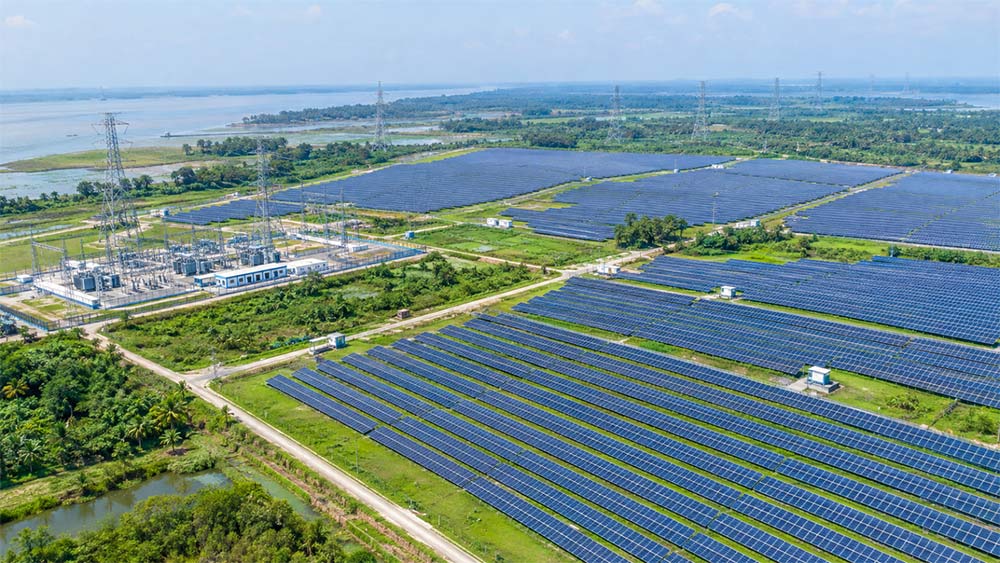 In a landmark move that signals a significant shift in its energy strategy, Bangladesh is set to transform a piece of land once reserved for coal-powered electricity generation into a cornerstone of its renewable future.
The Bangladesh Power Development Board (BPDB) is preparing to invite tenders for a massive 442-megawatt (MW) solar power plant in Rampal, a project poised to become a major source of clean electricity for the nation.
The construction is slated to begin next year, with the ambitious goal of bringing the plant into full operation by June 2029. Once complete, this grid-connected solar facility will stand as a major renewable energy project alongside its coal-fired neighbour, symbolizing a transition towards a greener era.
Engineer Rezaul Karim, the Chairman of BPDB, confirmed that preparations for the tender documents are underway, following the project's approval by the Executive Committee of the National Economic Council (ECNEC) on Saturday.
The story of this project begins with a change of priority. The land in question, a sprawling 918.50-acre plot known as Block-B in Rampal, was originally acquired in 2012 as part of a larger 1,834-acre purchase for a coal-fired power plant. While the 1,320-MW Maitree Super Thermal Power Plant now stands on the adjacent Block-A, Block-B remained with the BPDB. Now, this land is set to host a solar giant.
This shift is not just about economics; it's about environmental stewardship. The new solar plant will be connected to the national grid via a new 230-kilovolt transmission system. It is expected to reduce carbon emissions, lower the country's dependence on imported fossil fuels, and crucially, help ease environmental pressure on the ecologically sensitive Sundarbans, the world's largest mangrove forest.
The economic and environmental benefits are compelling. The plant is expected to offer a competitive tariff of Tk 6.18 per unit, making it a financially sound investment. This is nearly 30 percent cheaper than the estimated Tk 8.87 per unit for another proposed solar plant in Sonagazi. The impact on the regional power grid will be substantial. For the Khulna division, which had a peak demand of 1,972 MW on a day in October 2026, this new plant will inject 442 MW of green electricity, significantly reducing the need for costly subsidies and curbing the region's reliance on fossil fuels.
The project is a significant undertaking. With an estimated cost of Tk 2,498.08 crore, the plant will feature 442-megawatt-peak (MWp) solar capacity and will be equipped with an eight-hour battery storage system, a critical component for ensuring a stable power supply. The BPDB will finance the project through a combination of its own funds (Tk 374.71 crore) and the rest financing from the Power Sector Development Fund (PSDF) (Tk 2,123.37 crore), comes with a low 2 percent interest rate.
The Rampal project is a key part of a broader national strategy. The government has launched a nationwide programme to expand rooftop solar and develop a network of renewable energy entrepreneurs. With the country's total on-grid power generation capacity standing at 29,143 MW, of which solar currently accounts for 1,642.7 MW, the new 442-MW plant will provide a major boost. A Planning Commission official stated that this project will be instrumental in helping Bangladesh achieve its ambitious target of generating 20 percent of its electricity from renewable sources by 2030.
The financial breakdown of the project highlights its technological core: solar modules and mounting structures will constitute the largest expense at Tk 1,238.61 crore, roughly half the total cost, followed by electrical equipment like inverters and transformers at Tk 732.25 crore. With a favourable feasibility study from the Infrastructure Investment Facilitation Company (IIFC) and alignment with the Sustainable Development Goal 7 for affordable and clean energy, the Rampal solar project is more than just a power plant. It is a story of transformation, turning a legacy of fossil fuel into a beacon of clean, sustainable energy for generations to come.

Loading...
Loading...



Editor : Iqbal Sobhan Chowdhury
Published by the Editor on behalf of the Observer Ltd. from Globe Printers, 24/A, New Eskaton Road, Ramna, Dhaka.
Editorial, News and Commercial Offices : Aziz Bhaban (2nd floor), 93, Motijheel C/A, Dhaka-1000.
Phone: PABX- 41053001-06; Advertisement: 41053012; 01793317829, 01550707291, E-mail: [email protected], [email protected] Online: email: [email protected] 41053014; 01550707297 Advertisement: 01550707296


