



| HEADLINE |

|

3 closed fertiliser factories to resume from Nov
Published : Tuesday, 27 October, 2026 at 12:14 PM
Observer Online Report


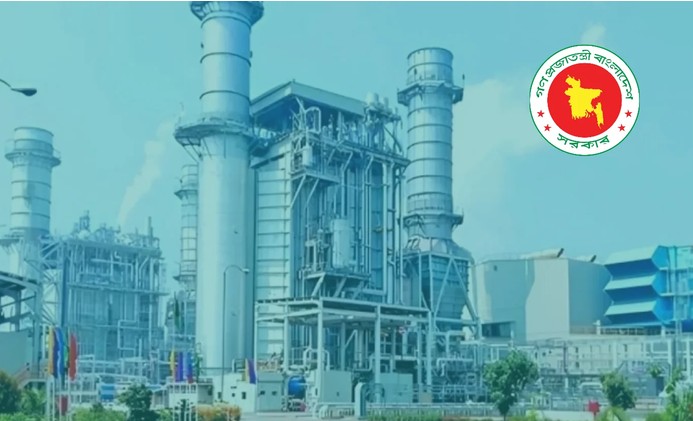
The government is moving to restart three state-owned fertiliser factories by November to boost domestic production and reduce dependence on imports, while the Bangladesh Chemical Industries Corporation (BCIC) plans to increase annual fertiliser output to 2.7 million metric tonnes within the next three to five years.
According to BCIC sources, four of the corporation's seven fertiliser factories are currently operational. Three others-- the TSP Complex Limited (TSPL) and the DAP Fertilizer Company Limited (DAPFCL) in Chattogram, and the Ashuganj Fertilizer and Chemical Company Limited (AFCCL) in Brahmanbaria-- remain shut due to shortages of gas and raw materials.
Preparations are underway to resume operations after ensuring adequate supplies of gas and raw materials and completing necessary repairs.
BCIC Chairman Md Babul Mia told Bangladesh Sangbad Sangstha (BSS) that the Ashuganj plant requires an uninterrupted gas supply at the prescribed pressure to restart production.
The TSP and DAP plants, meanwhile, need adequate supplies of raw materials. Coordination is underway with the relevant agencies to address these requirements, he said.
Bangladesh's annual urea demand stood at 2.6 million tonnes during the fiscal year, with domestic production meeting approximately 42.34 per cent of that requirement.
Increasing local production would reduce import expenditure and save foreign currency, he said.
The corporation aims to raise annual fertiliser production to 2.7 million tonnes within three to five years.
Achieving that target, however, will depend on uninterrupted supplies of gas and raw materials, adequate investment and effective maintenance of the plants.
BCIC expects the planned measures to reduce reliance on imported fertilisers, ease pressure on foreign exchange reserves and improve the availability of fertilisers to meet farmers' needs.
According to BCIC sources, four of the corporation's seven fertiliser factories are currently operational. Three others-- the TSP Complex Limited (TSPL) and the DAP Fertilizer Company Limited (DAPFCL) in Chattogram, and the Ashuganj Fertilizer and Chemical Company Limited (AFCCL) in Brahmanbaria-- remain shut due to shortages of gas and raw materials.
Preparations are underway to resume operations after ensuring adequate supplies of gas and raw materials and completing necessary repairs.
BCIC Chairman Md Babul Mia told Bangladesh Sangbad Sangstha (BSS) that the Ashuganj plant requires an uninterrupted gas supply at the prescribed pressure to restart production.
The TSP and DAP plants, meanwhile, need adequate supplies of raw materials. Coordination is underway with the relevant agencies to address these requirements, he said.
“If the necessary supplies can be ensured, we hope to bring the factories back into operation by November,” the chairman said.
BCIC data show that state-owned factories produced 1,007,732.50 metric tonnes of urea, 68,259 tonnes of triple superphosphate (TSP) and 82,142 tonnes of diammonium phosphate (DAP) in the 2025–26 fiscal year.
Bangladesh's annual urea demand stood at 2.6 million tonnes during the fiscal year, with domestic production meeting approximately 42.34 per cent of that requirement.
Domestic production covered only 9.10 per cent of the country's TSP demand and 5.53 per cent of its DAP demand, highlighting the heavy reliance on imported fertilisers.
According to BCIC Chairman Babul Mia, Bangladesh imported 1.644 million tonnes of urea in fiscal 2024–25 and 1.479 million tonnes in 2025-26.
Increasing local production would reduce import expenditure and save foreign currency, he said.
The government is targeting savings of Tk 22,000 crore in urea import costs by bringing all fertiliser factories back into operation.
Beyond restarting the three closed plants, BCIC is pursuing a longer-term strategy to modernise ageing facilities, improve production capacity and establish new urea and TSP factories.
The corporation aims to raise annual fertiliser production to 2.7 million tonnes within three to five years.
Achieving that target, however, will depend on uninterrupted supplies of gas and raw materials, adequate investment and effective maintenance of the plants.
BCIC expects the planned measures to reduce reliance on imported fertilisers, ease pressure on foreign exchange reserves and improve the availability of fertilisers to meet farmers' needs.

Loading...
Loading...
Also read









Editor : Iqbal Sobhan Chowdhury
Published by the Editor on behalf of the Observer Ltd. from Globe Printers, 24/A, New Eskaton Road, Ramna, Dhaka.
Editorial, News and Commercial Offices : Aziz Bhaban (2nd floor), 93, Motijheel C/A, Dhaka-1000.
Phone: PABX- 41053001-06; Advertisement: 41053012; 01793317829, 01550707291, E-mail: [email protected], [email protected] Online: email: [email protected] 41053014; 01550707297 Advertisement: 01550707296


