



| HEADLINE |

|

Bank Looting, Weak Banks Undermine Monetary Policy: Warn Economists
Published : Thursday, 29 October, 2026 at 12:00 AM
Business Correspondent


 Bangladesh’s monetary policy is losing its effectiveness as a crippled banking sector, rampant loan irregularities and political patronage undermine financial discipline, leading economists and bankers warned on Wednesday, demanding sweeping reforms to restore credit flows and revive economic growth.
They called for an end to the use of state-owned banks as instruments of political patronage and unjustified financial favours, warning that political interference in lending decisions could further destabilise the banking and financial system.
Former interim government adviser Professor Dr Wahiduddin Mahmud delivered a stark assessment, saying Bangladesh had moved beyond its longstanding culture of loan defaults to a more dangerous phase of bank looting.
“This is now a culture of bank looting,” he said, attributing the crisis to money being siphoned off from banks in blatant disregard of rules and regulations.
He called for borrowers and businesses seeking financial assistance to be assessed individually on their merits, stressing the need to distinguish genuine entrepreneurs facing difficulties from those responsible for wilful abuse of bank funds.
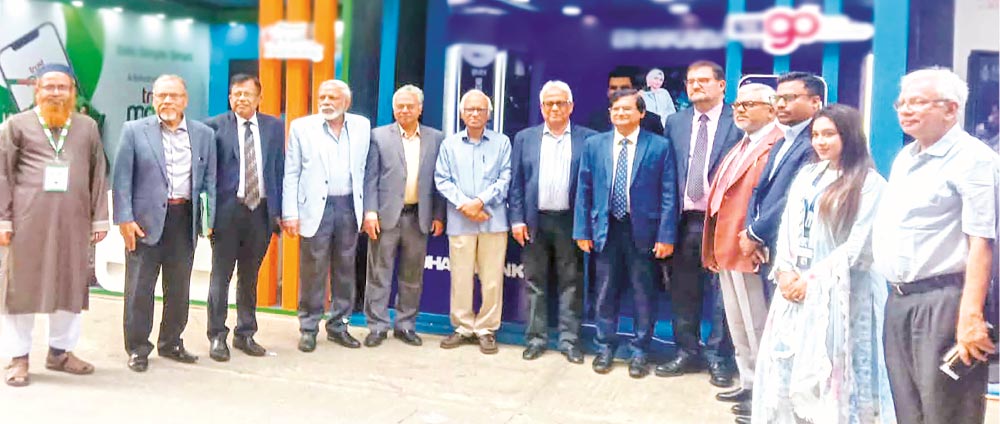
The warnings came at the 11th Annual Banking Conference organised by the Bangladesh Institute of Bank Management (BIBM) at its premises in Mirpur, Dhaka.
Presenting the keynote paper, Policy Research Institute of Bangladesh (PRI) Chairman Dr Zaidi Sattar said Bangladesh could not restore economic growth without repairing its banking system, while high interest rates alone would not be enough to tame inflation.
He called for a coordinated policy response combining banking reforms, fiscal discipline, greater exchange-rate flexibility and tariff reductions to restore macroeconomic stability and revive investment.
“Rebuilding banks’ balance sheets, ensuring credit flows to productive sectors and strengthening governance in the banking industry are therefore essential,” Sattar said.
Bangladesh’s banking sector remains burdened by massive non-performing loans, provisioning shortfalls and capital deficiencies, reflecting years of weak supervision, concentrated and related-party lending by influential business groups, and repeated concessions to weak borrowers, he said.
Sattar said Bangladesh had the weakest banking-sector capital adequacy position in South Asia, arguing that the financial system’s vulnerabilities were directly undermining the effectiveness of monetary policy.
On inflation, he said price pressures stemmed not only from excess demand but also from taka depreciation, rising food and energy prices, and higher costs of imported inputs.
A weaker taka makes imports more expensive and increases the effective burden of tariffs, feeding inflation and raising production costs. Although monetary tightening remains necessary, it cannot contain these pressures without support from fiscal, exchange-rate and supply-side policies, he said.
Sattar also warned that financing a substantial portion of the budget deficit through domestic sources, including the banking system, could constrain monetary policy and weaken the central bank’s independence.
He called for closer coordination between fiscal and monetary authorities and cautioned against relying excessively on bank financing to meet government borrowing needs.
Referring to the Mundell-Fleming framework, he said the effectiveness of monetary and fiscal policies depended partly on the exchange-rate regime.
“Bangladesh needed to manage its exchange rate in a way that supported price stability, external balance and economic growth, given its relatively limited capital mobility”, he observed.
The taka has depreciated from around Tk 86 per US dollar in May 2022 to Tk 123, a fall of roughly 43 per cent in its dollar value, Sattar said. The adjustment has raised import costs, while import growth has slowed to around 5�"6 per cent, constraining economic activity and export competitiveness.
To address these pressures, he proposed “compensated depreciation”�"combining exchange-rate adjustments with reductions in import tariffs to ease cost pressures and strengthen export competitiveness.
Other speakers said there was scope to reduce existing tariffs by 10�"20 per cent, arguing that lower duties could stimulate imports of productive inputs, strengthen manufacturing and export capacity, and help ease inflationary pressures.
They reiterated that sustainable recovery required more than high interest rates. Banks must repair their balance sheets, restore productive lending and strengthen governance, while the government maintains fiscal discipline and pursues a more coherent exchange-rate and tariff policy.
Association of Bankers, Bangladesh (ABB) Chairman Abdul Hai Sarker and Bangladesh Association of Banks (BAB) Chairman Mashrur Arefin attended the conference as special guests.

Loading...
Loading...
Also read



Editor : Iqbal Sobhan Chowdhury
Published by the Editor on behalf of the Observer Ltd. from Globe Printers, 24/A, New Eskaton Road, Ramna, Dhaka.
Editorial, News and Commercial Offices : Aziz Bhaban (2nd floor), 93, Motijheel C/A, Dhaka-1000.
Phone: PABX- 41053001-06; Advertisement: 41053012; 01793317829, 01550707291, 01550707296
E-mail: [email protected], [email protected]. [email protected], [email protected], [email protected], [email protected], Online-email: [email protected]


