



| HEADLINE |

|

B’desh’s LDC graduation postponed to Nov 2029


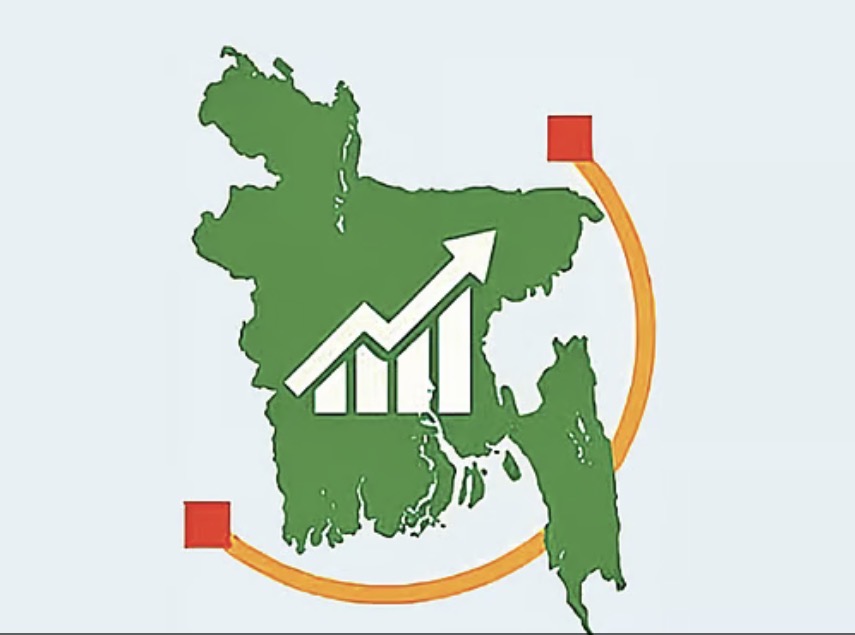
Bangladesh’s graduation from the Least Developed Countries (LDC) category has been postponed by three years to November 2029, instead of the previously scheduled November 2026.
The United Nations has approved the extension, with no country opposing the proposal. Representatives from France, Canada and Ireland supported giving Bangladesh additional time to prepare, while also stressing the need to implement necessary reforms.
The decision follows a recommendation sent by the United Nations Economic and Social Council (ECOSOC) to the UN General Assembly on July 21 to consider Bangladesh’s request for an extended preparatory period.
Before that, the UN Committee for Development Policy (CDP) reviewed the applications from Bangladesh and Nepal and recommended that their requests for additional preparation time be placed before the General Assembly. Nepal’s graduation has also been deferred by three years.
The CDP assesses the progress of LDCs every three years based on three criteria: gross national income per capita, the Human Assets Index and the Economic and Environmental Vulnerability Index. A country qualifies for graduation if it meets the required thresholds in at least two of the three criteria or if its per capita income reaches twice the specified threshold.
Bangladesh has met all three criteria. It was included in the LDC category in 1975 and has since enjoyed various preferential benefits, including duty-free access for its exports.
Following its successful performance in the 2018 and 2021 triennial reviews, Bangladesh was recommended for graduation in 2021, initially scheduled for 2024. However, the timeline was extended by two years to allow the country to recover from the impact of the Covid-19 pandemic and make necessary preparations. November 2026 was the revised graduation date.
In its letter to the United Nations, Bangladesh said that although it had fulfilled all three graduation criteria, a series of prolonged global and domestic challenges had seriously disrupted its preparations.
The country cited the long-term effects of the Covid-19 pandemic, the Russia-Ukraine war, volatility in global energy and food markets, global financial uncertainty, conflicts in the Middle East and Red Sea region, and uncertainties in international trade.
Among domestic challenges, Bangladesh highlighted irregularities in the financial sector, the change of government following the mass uprising and significant expenditure from the national budget to support Rohingya refugees.
The application said these challenges had slowed economic growth, increased inflation and weakened public and private investment as well as the tax-to-GDP ratio.
Pressure on foreign exchange reserves, declining imports of capital machinery and raw materials, and reduced investment had also hampered employment generation. The banking and capital markets faced additional challenges, while prolonged economic difficulties slowed progress in poverty reduction.
As a result, the government had to prioritise managing crises and restoring economic stability rather than preparing for graduation, the application said.
Bangladesh also cited uncertainty over securing GSP Plus trade benefits from the European Union and the impact of US reciprocal tariffs as additional risks to exports and employment.
Against this backdrop, the country sought an additional three years to restore economic stability and address the risks associated with post-graduation.
Leading business organisations in Bangladesh had also been pressing for a three-to-five-year extension, expressing concerns about the potential impact of losing LDC-related trade preferences.
They have warned that graduation could lead to the loss of duty-free trade benefits under World Trade Organization arrangements, stricter intellectual property restrictions on the pharmaceutical sector and limitations on cash incentives and subsidies for goods and services.
Bangladeshi products could face tariffs of up to 12% in major export markets, including the European Union and the United Kingdom, potentially reducing exports by 6% to 14%, according to estimates cited by business representatives.
Stricter rules of origin for raw materials could particularly affect the readymade garment sector.
Meanwhile, sources at the Finance and Commerce Ministries said the government plans to implement at least 25 reform and preparatory programmes during the extended period until November 2029.
The initiatives will prioritise trade, the financial sector, revenue administration, the investment climate and export competitiveness.
Under the plan, Bangladesh will pursue free trade agreements or comprehensive economic partnership agreements with South Korea, Malaysia, Oman, the United Arab Emirates, Hong Kong and New Zealand as priority partners.
The government also plans to strengthen Bangladesh Bank’s supervisory powers, introduce a law on distressed asset management and conduct annual health assessments of commercial banks.





Published by the Editor on behalf of the Observer Ltd. from Globe Printers, 24/A, New Eskaton Road, Ramna, Dhaka.
Editorial, News and Commercial Offices : Aziz Bhaban (2nd floor), 93, Motijheel C/A, Dhaka-1000.
Phone: PABX- 41053001-06; Advertisement: 41053012; 01793317829, 01550707291, 01550707296
E-mail: [email protected], [email protected]. [email protected], [email protected], [email protected], [email protected], Online-email: [email protected]


