



| HEADLINE |

|

Unlicensed battery-run rickshaws banned in Dhaka under new rules
Published : Friday, 30 October, 2026 at 11:42 AM
Observer Online Report


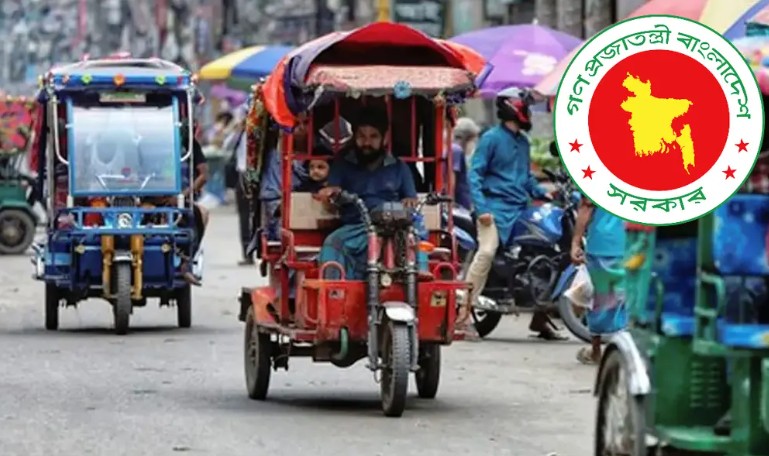
The government has published new regulations governing battery-run rickshaws to restore discipline on city roads and improve passenger transport, prohibiting the operation of unlicensed vehicles in Dhaka.
The Local Government Division under the Ministry of Local Government, Rural Development and Co-operatives published the Three-Wheeled Low-Speed Battery-Operated Rickshaw (E-Rickshaw) Operation Rules, 2026 on Thursday.
The rules will apply to e-rickshaws operating in all city corporation areas across the country.
Under the regulations, applicants must submit the prescribed documents and fees to the relevant authority to register an e-rickshaw. The authority will issue registration within 30 working days of receiving an application if the vehicle meets the technical standards and safety specifications set by the Bangladesh University of Engineering and Technology (BUET).
Each registered e-rickshaw will receive a unique registration number with a QR code and a number plate. The registration number must be displayed in a visible place on the vehicle and will remain valid for five years.
An individual may register up to five e-rickshaws across one or more city corporations against a single national identity card. However, an e-rickshaw registered in one city corporation cannot operate commercially in another.
Registration and renewal will require a fitness certificate confirming compliance with BUET's technical and safety standards, countersigned by the relevant traffic department. Authorities must maintain records of fitness certificates and registration.
Existing e-rickshaws may also be approved after structural modifications to meet the prescribed standards and obtain the required fitness certification.
The rules set the economic lifespan of an e-rickshaw at 12 years from its registration date. Its registration and number plate must be cancelled after that period. Every vehicle must also have a speedometer or odometer, while defective, unsafe and unregistered e-rickshaws are prohibited from operating on roads.
Traffic departments, law enforcement agencies and authorised executive magistrates may take joint or separate action to stop the operation of illegal e-rickshaws.
The regulations prohibit e-rickshaws from operating on national highways, expressways, elevated expressways, major bus routes and other roads restricted by the authorities. They are also barred from footpaths, and drivers must keep to the left lane, refrain from using mobile phones while driving, and avoid illegal overtaking and lane changes.
Depending on the vehicle's size, an e-rickshaw may carry no more than two or four passengers, excluding the driver. It cannot transport commercial goods other than passengers' hand-carried belongings. Horns exceeding 40 decibels are prohibited, while the maximum speed near schools, hospitals, religious establishments and crowded places is set at 15 kilometres per hour.
The relevant city corporation and traffic department will jointly determine routes and divide city corporation areas into zones. E-rickshaws will be assigned specific zones, and vehicles operating in one zone will not be allowed to enter another. Authorities will also determine the number of vehicles, routes and designated colours for each zone.
The rules allow authorities to arrange driver training on traffic laws, road safety, battery maintenance and e-rickshaw upkeep through recognised training institutions. They will also designate parking areas in wards or other suitable locations in consultation with the relevant traffic departments.
E-rickshaw batteries may be charged only at approved charging points or designated garages licensed by the relevant city corporation. Authorities will encourage the use of renewable energy, particularly solar power, at charging facilities and take initiatives to establish approved charging stations, garages and battery-swapping centres in consultation with electricity distribution authorities and traffic departments.
Charging stations must obtain the necessary government approvals. Unauthorised electricity use for charging will be punishable under existing laws. The regulations also encourage financial institutions, scheduled banks, finance companies and public and private organisations to provide loans to e-rickshaw owners and drivers for purchasing approved vehicles and developing supporting infrastructure.
The rules further require compliance with the Bangladesh Environment Conservation Act, 1995, and related regulations covering e-rickshaw production, imports, use and battery recycling and management.
No individual or organisation will be allowed to discard or burn old or unusable batteries, or parts of them, in open spaces, soil, water bodies or general waste.
source: BSS news
sks

Loading...
Loading...
Also read








Editor : Iqbal Sobhan Chowdhury
Published by the Editor on behalf of the Observer Ltd. from Globe Printers, 24/A, New Eskaton Road, Ramna, Dhaka.
Editorial, News and Commercial Offices : Aziz Bhaban (2nd floor), 93, Motijheel C/A, Dhaka-1000.
Phone: PABX- 41053001-06; Advertisement: 41053012; 01793317829, 01550707291, 01550707296
E-mail: [email protected], [email protected]. [email protected], [email protected], [email protected], [email protected], Online-email: [email protected]


