



| HEADLINE |

|

Traditional diplomacy cannot resolve Rohingya crisis: Shama Obayed
Published : Sunday, 8 November, 2026 at 4:49 PM
Observer Online Report


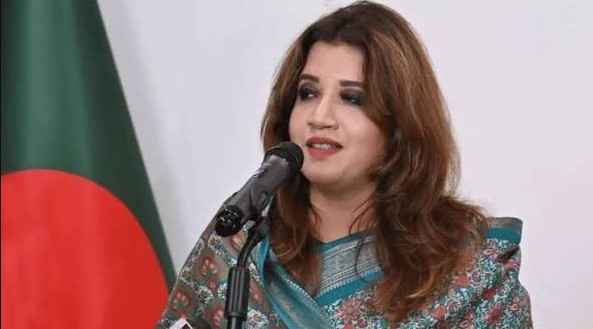
Foreign Affairs State Minister Shama Obayed has said traditional diplomatic efforts alone cannot ensure a lasting solution to the Rohingya crisis, stressing the need for broader political engagement and coordinated international efforts.
She said the government was maintaining both formal and informal communication with Myanmar authorities and the Arakan Army, the local power controlling Rakhine, given the current political and territorial situation in the region. Efforts were also underway to engage key partners, including China, India and ASEAN member states, in the process.
She made the remarks at a dialogue held at the CIRDAP auditorium in the capital on Sunday (November 8).
The state minister said the government was giving top priority to building national political consensus on the Rohingya crisis and keeping the issue active on the international agenda.
She said the crisis was not merely a humanitarian issue but fundamentally a deep-rooted political problem. Therefore, national consensus, institutional coordination and engagement at all levels were essential to resolving it. Against the backdrop of changing global circumstances, the government had adopted a 'whole-of-government' approach to ensure the repatriation of Rohingyas.
Shama Obayed said a national strategy formulation committee, led by the highest level of the government and involving the ministries of home affairs, foreign affairs and social welfare, along with relevant agencies, was working towards this goal.
Highlighting the multifaceted challenges arising from the crisis, she said the prolonged presence of a large Rohingya population had pushed local communities, particularly in Cox's Bazar, into severe economic and social difficulties.
She added that drug and human trafficking along the border, clashes among armed groups inside the camps and incidents involving the detention of Bangladeshi fishermen had turned the crisis into a national security concern for Bangladesh.
The state minister said the situation was becoming increasingly complicated as a large number of children were born every year among the approximately 1.3 million Rohingyas, while funding remained inadequate.
Regarding proposals raised at the United Nations to resolve the crisis, she said a clear roadmap was essential to ensure the dignified, safe and voluntary repatriation of Rohingyas to their homeland, end violence in Rakhine and ensure accountability for those responsible for crimes.
Amid ongoing wars and emerging refugee crises across the world, Shama Obayed urged the media and all relevant stakeholders to play an active role in keeping the Rohingya issue alive and high on the international agenda.
- MaT

Loading...
Loading...
Also read








Editor : Iqbal Sobhan Chowdhury
Published by the Editor on behalf of the Observer Ltd. from Globe Printers, 24/A, New Eskaton Road, Ramna, Dhaka.
Editorial, News and Commercial Offices : Aziz Bhaban (2nd floor), 93, Motijheel C/A, Dhaka-1000.
Phone: PABX- 41053001-06; Advertisement: 41053012; 01793317829, 01550707291, 01550707296
E-mail: [email protected], [email protected]. [email protected], [email protected], [email protected], [email protected], Online-email: [email protected]


