



| HEADLINE |

|

Who can benefit from BB’s Tk100cr E-Loan Scheme?
The scheme prioritises people in remote areas, financially underserved communities and individuals engaged in small-scale income-generating activities. Marginalised women and micro and small women entrepreneurs are also eligible.
Published : Monday, 16 November, 2026 at 12:00 AM
Md Khairul Hasan


 Financial inclusion is essential for sustainable economic development and reducing social inequality. It requires more than access to bank accounts; affordable credit, savings and other financial services must also reach underserved communities. Low-income individuals, small entrepreneurs, women, students and people in remote areas often face barriers to formal financing. Against this backdrop, Bangladesh Bank’s Tk 100 crore E-Loan Refinance Scheme is a timely initiative to expand financial inclusion and create economic opportunities.
Under the scheme, eligible customers can obtain loans or investment facilities of up to Tk 50,000 at a maximum annual interest or profit rate of 9 per cent. Participating banks will receive refinancing from Bangladesh Bank at just 1 per cent.
Through a recent directive, Bangladesh Bank’s Financial Inclusion Department renamed the existing ‘Digital Microcredit Refinance Scheme’ as the ‘E-Loan Refinance Scheme’. Introduced in 2022, the initiative aims to expand digital microcredit, finance income-generating activities and promote cashless transactions. The Tk 100 crore fund, financed by Bangladesh Bank, will remain operational until 30 June 2028. Its revolving nature will allow recovered funds to be used for further lending.
Who Can Benefit of this E-Loan Scheme?: The scheme prioritises people in remote areas, financially underserved communities and individuals engaged in small-scale income-generating activities. Marginalised women and micro and small women entrepreneurs are also eligible.
Students aged 18-25 holding Student Banking accounts can obtain financing for educational expenses, learning materials, technical and IT training, and self-employment or business ventures based on acquired skills. Persons with disabilities, people with special needs and members of the third-gender community engaged in income-generating activities will also receive priority.
Thus, the scheme goes beyond small-business financing by supporting education, skills development and self-employment, potentially strengthening the long-term economic capacity of disadvantaged groups.
The maximum loan tenure is 12 months, with interest or profit calculated on the declining balance. As borrowers repay the principal, the interest or profit payable on the outstanding amount will decrease accordingly.
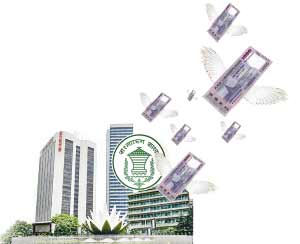
Digital processing can reduce transaction costs, paperwork and the need for branch visits, particularly benefiting entrepreneurs in remote areas. However, banks must assess borrowers’ repayment capacity and comply with relevant Credit Information Bureau (CIB) guidelines. Easier access to credit must therefore be supported by responsible lending and sound risk management. Opportunities for Commercial and Shariah-Based Banks: The 1 per cent refinancing facility offers participating banks an opportunity to expand microcredit operations at a relatively low funding cost. To participate, banks must complete a pilot programme under BRPD Circular No. 11/2026, adopt a board-approved Policy and Procedure Guideline (PPG), and sign a participation agreement with Bangladesh Bank’s Financial Inclusion Department.
For disbursement through MFS providers, banks must have an MoU with the relevant service provider and regularly monitor loan disbursement, recovery and utilisation.
Importantly, banks will remain liable to Bangladesh Bank for refinancing even if borrowers default. The ultimate credit risk therefore rests with participating banks, making proper borrower selection, credit assessment and risk management essential.
The scheme also creates opportunities for Shariah-based banks to offer financing through their approved Shariah-compliant investment modes, subject to the maximum annual customer profit rate of 9 per cent.
Given their extensive customer networks and experience in Islamic financial products, these banks can expand digital investment facilities for women entrepreneurs, small traders and low-income communities. This would strengthen financial inclusion while promoting Shariah-compliant financing.
Challenges: Many small entrepreneurs and low-income individuals remain excluded from affordable institutional credit because of inadequate collateral, geographical barriers, complicated procedures and limited financial awareness. Consequently, some depend on informal financing at substantially higher costs.
The E-Loan Scheme can help address these challenges. Small traders can finance inventory and raw materials, women can expand their businesses, and trained young people can establish self-employment ventures. Such financing can increase household incomes, stimulate local production and generate employment.
However, success should not be measured only by the volume of loans disbursed. It is equally important to determine whether funds reach the intended beneficiaries, support productive activities and improve borrowers’ financial capacity.
Digital lending also involves risks such as over-indebtedness, data breaches, cyber threats and financial fraud. Before obtaining consent, banks must clearly disclose the loan amount, interest or profit rate, total repayment obligation, instalment schedule and consequences of default. Effective data protection, cybersecurity and complaint-resolution mechanisms are equally important.
Financial literacy must also accompany digital lending. Borrowers need to understand how to use funds productively and repay their obligations on time.
Effective Implementation Will Determine Success: The success of financial inclusion should be assessed not merely by the number of accounts opened or loans disbursed, but by how many people enter the formal financial system, how much their incomes improve, how many sustainable micro-enterprises emerge and how many jobs are created.
Although Tk 100 crore may appear modest, the revolving nature of the fund offers scope for a much wider impact. Timely recovery and reuse of funds will be essential to maximising its benefits. Active participation by banks, secure digital services, transparent lending, strong customer protection and effective Bangladesh Bank supervision will determine the scheme’s success. Improving digital literacy and financial awareness among marginalised communities must also remain a priority.
Ultimately, the E-Loan Scheme is more than a small-scale digital credit programme; it is a potential instrument for bringing underserved communities into the mainstream economy through employment and self-reliance. Its success will depend less on the amount disbursed than on the lasting improvements it brings to people's incomes, livelihoods and economic capabilities. Effective implementation could make it an important contributor to a more inclusive, technology-driven and sustainable financial system in Bangladesh.
The writer is a banker, communication professional and freelance writer

Loading...
Loading...
Also read



Editor : Iqbal Sobhan Chowdhury
Published by the Editor on behalf of the Observer Ltd. from Globe Printers, 24/A, New Eskaton Road, Ramna, Dhaka.
Editorial, News and Commercial Offices : Aziz Bhaban (2nd floor), 93, Motijheel C/A, Dhaka-1000.
Phone: PABX- 41053001-06; Advertisement: 41053012; 01793317829, 01550707291, 01550707296
E-mail: [email protected], [email protected]. [email protected], [email protected], [email protected], [email protected], Online-email: [email protected]
Published by the Editor on behalf of the Observer Ltd. from Globe Printers, 24/A, New Eskaton Road, Ramna, Dhaka.
Editorial, News and Commercial Offices : Aziz Bhaban (2nd floor), 93, Motijheel C/A, Dhaka-1000.
Phone: PABX- 41053001-06; Advertisement: 41053012; 01793317829, 01550707291, 01550707296
E-mail: [email protected], [email protected]. [email protected], [email protected], [email protected], [email protected], Online-email: [email protected]


