



| HEADLINE |

|

Is privacy at stake in the age of neurotechnology?
Published : Monday, 23 November, 2026 at 12:00 AM
MD Noor Hamza Peash


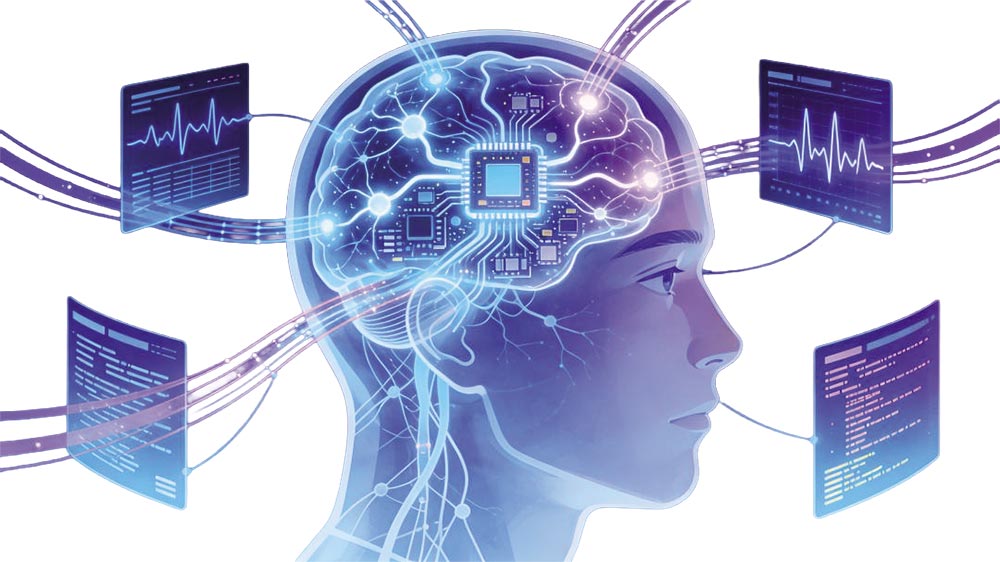 One of the biggest technological breakthroughs of the modern era is the development of brain-computer interfaces (BCIs). Neuro-devices that are implanted or worn into the body directly measure the electrical activity of the brain, translating its signals into digital orders that can be fed to computers, robotic prosthetics or communication devices. These technologies also represent profound advances in treatment for people with spinal cord injuries, motor paralysis and neurodegenerative diseases, but they also provide an unprecedented digital pathway into the human mind. Commercial scaling applications and the cognitive profiling opportunities of neural interfaces generate legal, regulatory, and human rights issues concerning neural data protection, personal identity, and cognitive liberty.
The sensitive nature of neural data, also known as "brain data," is at the heart of neurotechnology governance. Neural data is not like more traditional biometric identifiers like fingerprints or iris scan, it unveils non-conscious thoughts, emotions, cognitive focus, memory access and subconscious inclinations in real time. Consumer EEG headsets and clinical BCI devices are collecting huge amounts of brain metrics tech developers have access to the source of human decision-making. The unchecked commercial manipulation of neural streams poses serious threats such as hidden manipulation of behavior, targeted neuro-advertising, dynamic psychological profiling and unauthorized cognitive surveillance. As a result, laws need to be developed to specifically acknowledge that neural privacy is a right of all humans and separate from the protection of general data privacy.
In emerging economies, the use of advanced neuro-medical systems and consumer neurotechnology poses complex challenges for regulatory frameworks relating to technological adoption, clinical trial ethics and data protection. In developing countries, it is common for legal protection to be lacking before the use of foreign medical hardware and software platforms. Citizens in developing states are at greater risk of predatory use of their data and unauthorized neural profiling if there is no clear legislation to regulate the processing, export and secondary commercialization of raw neural streams. To implement localized governance, there should be transparency in clinical trial governance, rigorous consent procedures, and explicit legislation defining neural data as an especially sensitive category of biometric personal data.
The High Court Division decision in State and Others v. Oli and Others is one of the important precedents of Bangladesh in relation to private communication metrics and digital subscriber data privacy. The High Court said in Oli that the police officers have encroached on the constitutional rights of the individuals by getting private cellular call detail records directly from telecom companies without any formal requirement of a judicial order or any specific order. The court repeated that the data of subscribers may not be accessed or used without any prior procedure of safeguards, which once again confirmed the basic expectancy of digital privacy as enshrined in Article 43 of the Constitution of Bangladesh. This principle is particularly applicable to emerging neurotechnologies, and it stands to reason that personal digital metrics, such as neural signals, cannot be openly collected or analysed without judicial control.
In the technical and architectural aspects of BCI systems, there is a need for the implementation of ‘privacy by design' principles, cryptographic security, and edge computing architectures. Local processing of the device is crucial since neural interfaces are based on machine learning models that need to convert raw electrical brain signals into commands for the device to execute, so that raw neural streams are not beamed continuously across an open, unsecured network. Localised decoding of raw neural signals at the client side helps to ensure that user-intended action commands are only sent to external applications and reduces the chances of unauthorized interception of cognitive signals.
The combination of GPTs and BCI raises additional ethical issues related to the notion of human agency and criminal responsibility. Advanced AI decoding algorithms can even decode incomplete neural signals to predict what the person is going to say, synthesizing complete sentences, synthetic voice outputs, or motor actions automatically for the user. These legal uncertainty challenges are of a different order, as the question of who is liable for the results of an AI-augmented BCI system is left open for the first time if the system acts unintentionally or produces offensive digital speech, for example, because the user intended something different or because the algorithm misinterprets the user's meaning.
Companies working on commercial applications of neurotechnology are increasingly under pressure to create a broad-based ethics board and an open consent process. As with any other data, informed consent for neural data processing is best obtained through a standard end-user license agreement and a lengthy click-through privacy policy, neither of which is adequate. Users are not usually aware of the long-term risks of continuous neural monitoring for cognitive profiling. Compliance programs need to provide fine-grained consent choices that let consumers choose to disconnect from the cloud and to opt in or out of analytics services while allowing them to remain the sole owner of their neural data and any resulting cognitive insights.
In the workplace, as employers seek to understand more about the wearer's brain and monitor attentiveness, fatigue, and operation via wearable EEG headsets and focus-monitoring software, neurotechnology governance is also a major challenge. When neural tracking is used in the workplace, there's a huge power imbalance that forces employees to give up their mental privacy just to keep their jobs. Strict workplace bans are needed on non-consensual neural monitoring, so that employers are not able to monitor their employees subconscious psychological state with their neural monitoring devices.
Public-private partnerships and international standards organizations are developing international technological standards for BCI safety, interoperability and cyber security. End-to-end encryption protocols, device-level firewalls, and tamper-resistant firmware are essential for keeping malicious actors at bay when it comes to implantable neural devices. Once an active brain interface is compromised, it could cause serious bodily infection, steal cognitive information or even manipulate the mind of the user. The establishment of international technical standards with a rigid definition guarantees that neuro-devices are developed with human safety and system resilience as the top priority before entering the commercial market.
A forward-looking governance approach is needed to human-machine interaction which combines scientific innovation with robust legal protection. Allies of the BCI think that it can have a transformative impact on the recovery of lost sensory and motor functions, but at the same time it has to not exceed basic human rights. Therefore, global society can soothen the benefits of technological development while respecting the inviolable space of the human mind by establishing clear neurorights laws, applying proper technical encryption, exercising judicial control of data processing and guaranteeing cognitive autonomy.
The writer is a student, Department of Law, World University of Bangladesh

Loading...
Loading...
Also read



Editor : Iqbal Sobhan Chowdhury
Published by the Editor on behalf of the Observer Ltd. from Globe Printers, 24/A, New Eskaton Road, Ramna, Dhaka.
Editorial, News and Commercial Offices : Aziz Bhaban (2nd floor), 93, Motijheel C/A, Dhaka-1000.
Phone: PABX- 41053001-06; Advertisement: 41053012; 01793317829, 01550707291, 01550707296
E-mail: [email protected], [email protected]. [email protected], [email protected], [email protected], [email protected], Online-email: [email protected]


