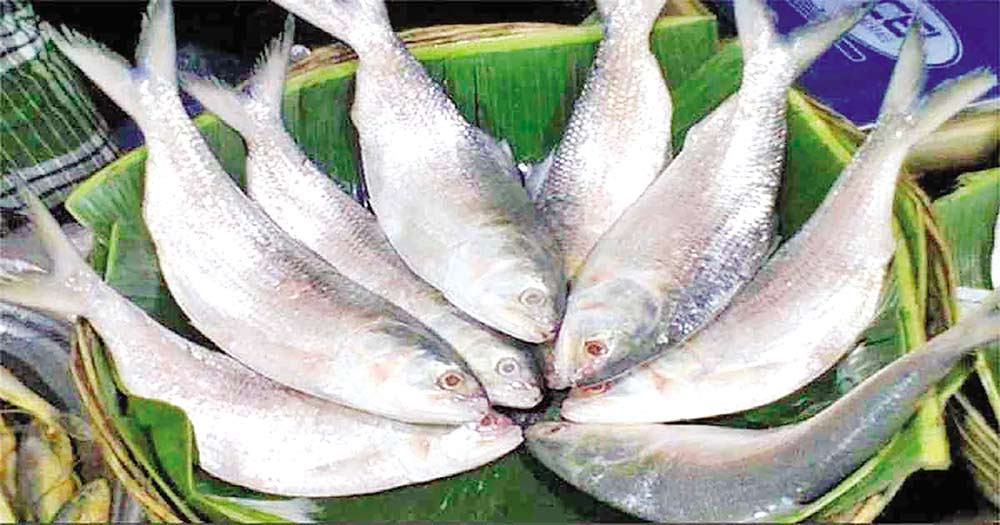
Bangladesh's hilsa catch is shrinking at an alarming pace as rising temperatures, erratic rainfall and shifting river flows disrupt breeding cycles, threatening supplies of the country's national fish and a key source of income for thousands of fishermen.
Researchers warn that without urgent climate adaptation and river management measures, the decline could deepen, posing long-term risks to food security and rural livelihoods.
Even during the peak season, rivers across the country are yielding far fewer hilsa, a geographical indication (GI) product and Bangladesh's national fish, compared to previous years, fishermen say.
In Chandpur's Haimchar upazila, widely known as the hilsa capital, veteran fisherman Asad Hossain, who has been casting nets in the Meghna basin for nearly four decades, said the current season has been disappointing.
"During the September-October and March-April peak seasons, my boat would return brimming with silver hilsa. This year, even at the height of the season, the catch has been far from satisfactory," he said.
Subhas Paik from Shahrasti upazila echoed similar concerns, saying that despite fishing throughout the night, catches remain poor. Hilsa supply in Shahrasti and Chandpur Sadar markets has nearly halved compared to previous peak seasons, he added.
The same frustration is heard in the southern district of Barishal, particularly along the Gajaria River flowing through Mehendiganj and Hizla upazilas, once considered a prime hilsa zone.
Moslem Hawlader, a fisherman from Hizla, said the large-sized hilsa has almost disappeared from the river. "We comply with the government's fishing bans, but after the restriction period ends, we still fail to get expected catches. Mostly small-sized hilsa are being caught now. Fishermen are getting lower prices while consumers are paying more."
Another fisherman, Abdul Karim, blamed increasing siltation and formation of shoals in the erosion-prone Gajaria River for shrinking fish stocks.
According to the latest report of the Department of Fisheries, hilsa production in fiscal year 2024-25 stood at 512,000 metric tonnes, down from 529,000 tonnes in 2023-24 and 571,000 tonnes a year earlier.
Although production remained above 550,000 tonnes for three consecutive years since FY2020-21, output has declined by more than 10 percent in recent years.
Acknowledging the concern, Fisheries and Livestock Adviser Farida Akhter said hilsa catch during July-August 2025 dropped by around 45 percent compared to the same period in 2024. "Both natural and man-made factors are responsible for the decline of hilsa in Bangladesh's rivers." �"UNB





