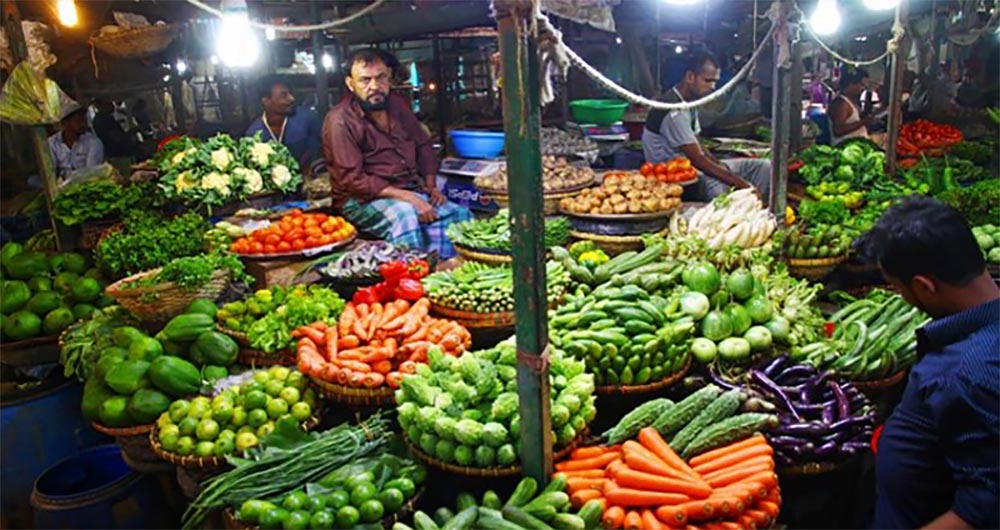
The annual Ramadan shopping surge has descended on Bangladesh's two largest cities with familiar intensity - but this year, devotion is colliding head-on with inflation, as vegetable staples breach triple digits and meat prices leap overnight, squeezing households already stretched by months of economic strain.
From Mugda and Mirpur to Old Dhaka's labyrinthine bazaars, shoppers crowd narrow aisles clutching lists for the holy month. The scene is mirrored in Chattogram's bustling Chawkbazar, Kazir Dewry and Reazuddin Bazar, where traders report brisk sales but buyers speak of shock.
Three symbols of the Ramadan iftar table - lemon, cucumber and brinjal - have crossed what consumers call the "century line". In the capital, cucumber and brinjal are selling between Tk 100 and Tk 140 per kg, while lemons range from Tk 60 to Tk 140 apiece depending on size. Watermelons, newly arrived for the season, are fetching Tk 65 to Tk 90 per kg.
In Chattogram, brinjal is priced at Tk 80-100 per kg, cucumber at Tk 50, and ladies' finger at Tk 150. Poultry is selling at Tk 200 per kg, while beef has climbed to Tk 950 per kg. Traders say poultry and other meats rose by Tk 50-60 in a single evening at the start of fasting, with vegetables increasing Tk 20-30 per kg.
Yet the most striking feature of this year's Ramadan market is its contradiction: record imports and official claims of surplus stock alongside palpable price pressure at retail level.
According to the Ministry of Commerce, Ramadan demand stands at roughly 300,000 tonnes of soybean oil and sugar each, up to 200,000 tonnes of chickpeas, 250,000 tonnes of lentils, 500,000 tonnes of onions and 60,000-80,000 tonnes of dates. Data from the National Board of Revenue (NBR) indicate stocks of most essential commodities exceed demand by 25 to 75 per cent.
In the past four months alone, Bangladesh has imported 225,000 tonnes of onions, 370,000 tonnes of sugar, 47,000 tonnes of dates, 205,000 tonnes of lentils, nearly 400,000 tonnes of crude soybean oil and 1.4 million tonnes of wheat. More than 40 vessels carrying over one million tonnes of Ramadan essentials have docked at Chattogram Port, with imports of several items nearly doubling year-on-year. Chickpea imports, officials say, exceeded estimated demand by 28 per cent.
Despite these figures, retail markets tell a different story.
There is some relief. Chickpeas have fallen Tk 10-15 per kg year-on-year to around Tk 90-100. Sugar, once Tk 120-145 before Ramadan last year, now trades at Tk 100-110. Eggs have eased to Tk 120 per dozen from Tk 140, and potatoes remain steady at Tk 20-25 per kg.
But these gains are offset by sharp increases elsewhere. Small-grain lentils that sold for Tk 135 per kg on the eve of Ramadan last year now command Tk 140-150 in Dhaka and up to Tk 160 in Chattogram. Coarse lentils have climbed from Tk 80 to Tk 100. Ankar dal has surged from Tk 70 to as high as Tk 120 per kg. Flour has risen from Tk 100 to Tk 120 for a two-kg packet, while soybean oil has increased from Tk 175 to Tk 195-200 per litre. Onions, which were Tk 40-45 last year, now hover between Tk 60 and Tk 80 per kg.
Traders attribute the volatility to a recent port strike that delayed unloading and to a spike in demand during the election holiday. They insist supplies are normalising and dismiss suggestions of artificial scarcity.
Consumers remain unconvinced.
At Mugda market, shopper Mozammel Mia voiced a sentiment heard repeatedly across both cities.
"Every year before Ramadan, prices rise. We hear excuses about transport or shortages. But now goods are arriving - so why are prices still going up?" he asked.
The seasonal pattern of price spikes in brinjal, lemon and green chilli is well established, driven by concentrated demand during iftar. But this year's broader rise in lentils, edible oil and onions - despite ample imports - has revived debate over market oversight, supply-chain inefficiencies and alleged syndicate influence.
Economists note that Ramadan amplifies both demand and expectations. Consumption of sugar, oil and pulses rises sharply as households stock up, and any supply disruption - even temporary - can translate quickly into retail hikes. Yet when imports are robust and inventories healthy, persistent price increases point to structural weaknesses rather than scarcity.
For millions of low- and middle-income families, the arithmetic is unforgiving. Even modest increases across multiple staples compound into a significant monthly burden. With two to three million people entering the labour market annually and wage growth struggling to match food inflation, the Ramadan table has become an economic litmus test.
As faith calls the faithful to restraint and reflection, the marketplace tells another story - one of tight margins, fragile trust and the uneasy balance between abundant imports and expensive meals.





